
Introduction to the Strawberry Varieties Page
If you have decided to plant strawberries and need help sorting through the myriad of strawberry varieties to pick the right one for you, you’ve come to the right spot! Ever since the Garden Strawberry began to dominate the commercial strawberry industry (see the history section on the Strawberry Plant page for more details), a concerted effort to breed a better strawberry has occurred. Organizations in North America, Europe, and Australia have led the charge. As a result, new and improved strawberry varieties are developed and released almost yearly.
So, which strawberry variety is right for you, your needs, your location? Of course, it depends on several factors. This page is designed to help you consider all your options and pick one or more strawberry varieties that will perform well for you. If you have already settled on a variety, compare prices for your chosen cultivar at the Buy Strawberry Plants page. You can also find a directory of plant suppliers at our Strawberry Plants for Sale page. Or, you can find strawberry seed suppliers at our Strawberry Seeds page. Whichever strawberry varieties you select, be sure to reference the Growing Strawberries page for help maximizing your strawberry yield!
Jump to:
- How the Strawberry Varieties Page Works
- List of Strawberry Types
- June-bearing strawberry varieties:
- Everbearing strawberry varieties:
- Day-neutral strawberry varieties:
- Recommended Strawberry Varieties for Each State (or Province/Territory)
- Interactive List of Strawberry Varieties / Cultivars
- List of Strawberry Varieties / Cultivars
- Strawberry Varieties: Conclusion
How the Strawberry Varieties Page Works
This main Strawberry Varieties page serves as a hub for everything related to individual strawberry varieties. The heart of this page is the List of Strawberry Varieties / Cultivars below. You can sort it according to each of the categories to better find exactly which strawberry variety will work best for you and your strawberry growing desires. Prior to the List of Strawberry Varieties / Cultivars table, a brief explanation of the three strawberry types will provide some background information as you select which strawberry type and variety is right for you. If you have no idea which strawberry variety (or varieties) is appropriate for your location, the list of recommended strawberry cultivars for each state will help guide you.
New strawberry varieties are constantly being bred and released. So, the links at the bottom of this page will be updated regularly with new information and links. And, feel free to use the comments or the form on the About page to contact us with questions or remarks.
List of Strawberry Types
Prior to browsing our table of strawberry varieties, it is important to review the three types of strawberries. Strawberry plants can be either June-bearing (June bearing), everbearing (ever-bearing), or day-neutral (day neutral).
June-bearing strawberry varieties:
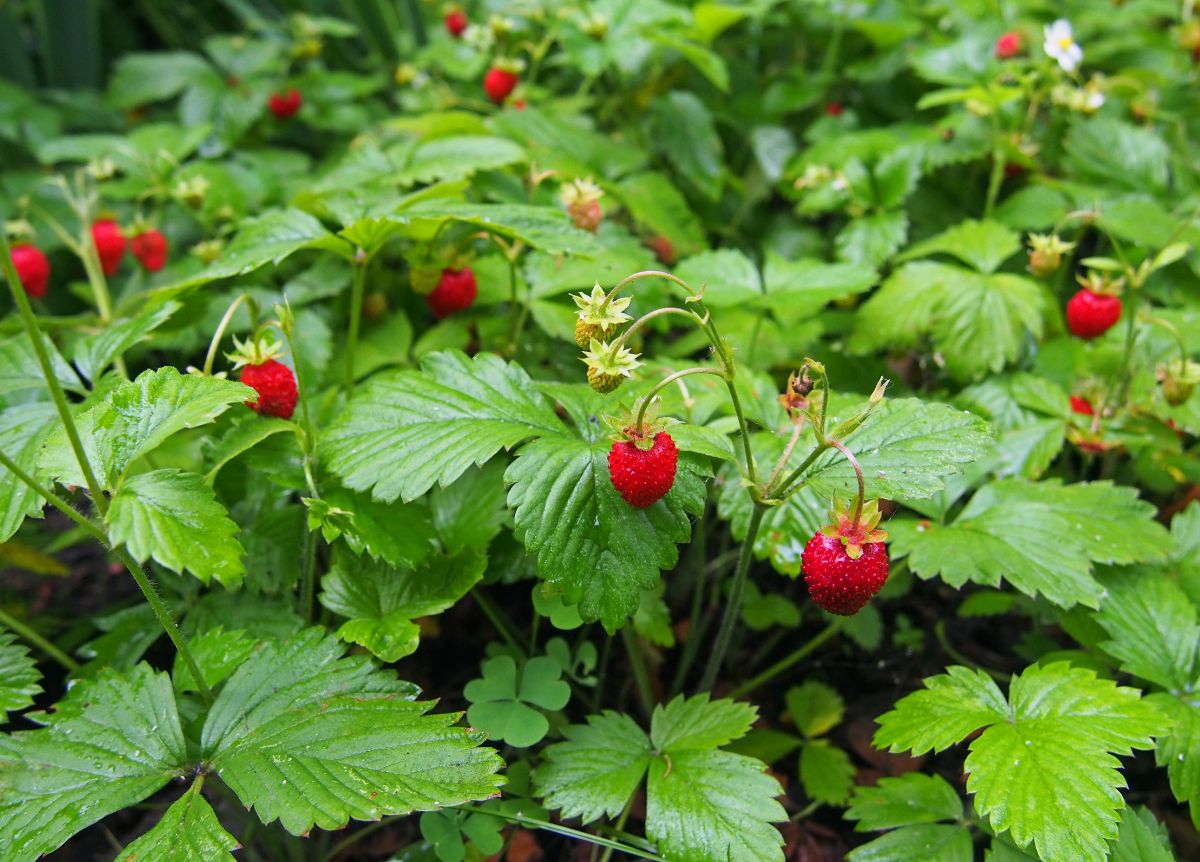
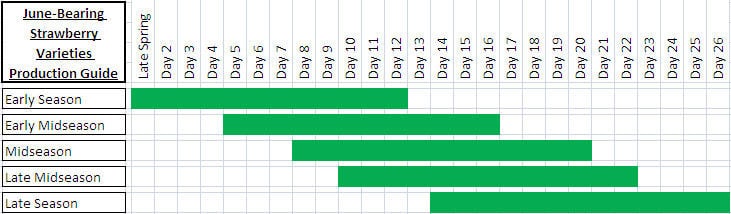
Any list of strawberry varieties will probably contain more June-bearing strawberry varieties than any other. June bearers are tremendously popular and common. They typically produce the largest strawberries, and do so over a period of two to three weeks, on average. Most June bearing strawberry varieties produce a harvest around the month of June, hence the name. However, strawberry varieties are further classified into Early Season, Midseason, and Late Season. By selecting strawberry plant varieties that produce during different parts of the season, you can prolong your harvest and enjoy fresh strawberries for an extended period of time. June bearing strawberries are most often of the Garden Strawberry variety (Fragaria x ananassa). June bearing strawberries are often planted using the matted row system.
For reference, each of the June bearing strawberry types generally sets fruit for a total of 10 to 14 days. Early Season strawberry varieties usually begin fruiting in late spring. Early Midseason strawberry varieties begin fruiting about 5 days after Early Season varieties. Midseason strawberry varieties begin producing approximately 8 days after Early Season varieties. Late Midseason strawberry varieties begin fruiting about 10 days after Early Season varieties, and Late Season strawberry varieties begin their berry production about 14 days after the Early Season varieties.
Everbearing strawberry varieties:
Everbearing strawberries aren’t really “everbearing.” They generally produce two harvests per year: one in the spring and another in the late summer or fall. Under ideal conditions, it is possible for some everbearing varieties to produce three berry harvests. Most everbearing strawberry types are also Fragaria x ananassa hybrids, but some are of the species Fragaria vesca. In general, everbearing varieties put out less runners than the June bearing varieties, as most of the plant’s productive energy is directed toward producing multiple strawberry harvests. Everbearing strawberries are often planted using the hill system or in locations where space is limited. If you want to learn more about growing everbearing strawberries, take a look at our guide on how to grow everbearing strawberries.
Day-neutral strawberry varieties:
Day neutral strawberry plants are unique. Unlike June bearing varieties, day neutral strawberries will produce a good yield in the first year they are planted. They flower and set strawberries whenever the temperature is between 35 and 85 degrees. They will still be producing fruit in October during milder years. The drawback to day neutral strawberry plants is that they produce smaller strawberries than do the June bearing and everbearing strawberry varieties. Their fruit is usually small to medium in size, rarely exceeding one inch. Day neutral strawberry varieties are often planted using the hill system or in locations where space is limited.
Recommended Strawberry Varieties for Each State (or Province/Territory)
There are hundreds of different strawberry cultivars. Each one performs differently depending on the climate and conditions in which it is grown. To maximize strawberry production, it is important to choose a variety that is well-suited to your growing region. If you don’t already know which specific strawberry cultivars are a good choice for your state, you can find out by viewing the Recommended Strawberry Varieties by State (U.S.A.) or by viewing the Recommended Strawberry Varieties by Province or Territory (Canada).
Interactive List of Strawberry Varieties / Cultivars
The following table is interactive. Click the column title at the top to rearrange and sort the entries according to the contents of that column. New varieties will be added on an on-going basis as they are discovered or brought to our attention.
List of Strawberry Varieties / Cultivars
Variety Species Season Developer Release Pedigree Notes
Ac Valley Sunset Fragaria × ananassa Late Season Andrew Jamieson in Kentville, Nova Scotia Plant shows good vigor with no apparent foliage disease concerns.
Ac Wendy
Fragaria × ananassa Early Season Kentville Research Station in Nova Scotia An Evangeline cross Moderately resistant to powdery mildew and red stele, but susceptible to verticillium wilt. Frost damage potential, very early flowering.
Alaska Pioneer Fragaria × ananassa USDA, Cheyenne 1968 Not available commercially
Alba Fragaria × ananassa Early Season New Fruits s.a.s., Italy 2002 Resistant to most common root diseases, tolerant to mildew (Oidium fragariae) and Xanthomonas fragariae, susceptible to Colletotrichum acutatum.
Albion Fragaria × ananassa Day-Neutral Univ. of California 2006 Diamante × Cal94.16-1
Resistant to verticillium wilt, Phytophthora crown rot, and relatively resistant to anthracnose crown rot.
Alexandria Fragaria vesca Everbearing George W. Park Seed Co, USA 1964 Runnerless, must be seed-propagated.
Alibritton Fragaria × ananassa USDA, Beltsville 1951 Not available commercially
Alice Fragaria × ananassa Midseason East Malling Research, UK 1993
Alinta
Fragaria × ananassa Day-Neutral
Allstar Fragaria × ananassa Midseason USDA / Univ. of Maryland 1981 US 4419 × MDVS 3184 This widely adapted variety has performed consistently well from the East to central Midwest. It is highly resistant to red stele, with intermediate resistance to Verticillium wilt. Very popular in Michigan.
Alpine Strawberry Fragaria vesca Everbearing Native to Northern Hemisphere Also known as the woodland strawberry, fraises des bois, wild strawberry, European strawberry. The Fragaria alpina species is now considered the same as Fragaria vesca.
Amelia Fragaria × ananassa Late Season East Malling Research, UK 1998 Includes Pandora, Marmolada, Kent, and Providence Splitting below the calyx has been noted in some trials. Moderate resistance to powdery mildew (Sphaerotheca macularis) and crown rot (Phytophthora cactorum).
Anitabis Fragaria × ananassa Very Early Season Magnani & Molari, Italy Tolerant to most common root diseases and grows well in non-sterilized soil. Moderately tolerant to mildew (Oidium fragariae) and has a low susceptibility to Colletotrichum acutatum.
Annapolis Fragaria × ananassa Early Season AAFC (Agriculture and Agri-Food Canada) 1984 (Micmac × Raritan) × Earliglow A vigorous and winter-hardy variety, Annapolis has resistance to red stele.
Annelie Fragaria × vescana Swedish breeding program at Balsgård 1977 A mutant parent plant was created to allow a non-sterile hybrid to be created between two species that would normally not cross.
Apollo Fragaria × ananassa USDA, Beltsville 1970
Arapahoe Fragaria × ananassa Everbearing USDA, Cheyenne 1954 Extremely hardy variety even into Canada. Not available commercially.
Aromel Fragaria × ananassa
Asia Fragaria × ananassa Early Midseason New Friuts s.a.s., Italy 2005 Tolerant to most common root diseases, susceptible to mildew (Oidium fragariae) and Colletotrichum acutatum. Frost resistant.
Atlas Fragaria × ananassa USDA, Beltsville 1970
Avalon Fragaria × ananassa Early Season Rutgers University Good flavor and berry firmness. Large, vigorous plants.
Baron Solemacher Fragaria vesca Everbearing F. C. Heinemann, Germany 1935 Runnerless, must be seed-propagated.
Beach Strawberry Fragaria chiloensis This strawberry species goes by several names: beach strawberry, Chilean strawberry, coastal strawberry.
Bellmar Fragaria × ananassa USDA, Glenn Dale 1932 Not available commercially
Benicia Fragaria × ananassa Short-day June-bearing University of California, Strawberry Improvement Program 2010 See profile of this strawberry variety by clicking its name in the far left column.
Benton Fragaria × ananassa USDA, Corvallis 1975
Bish Fragaria × ananassa Jim Ballington of North Carolina State University 2002 This cultivar was developed for use in plasticulture systems and has good disease resistance. It is especially well suited to the upper Piedmont and Mountain regions of North Carolina.
Blakemore Fragaria × ananassa USDA, Glenn Dale, MD 1930 Tart berries best used for jams and jellies. Produces lots of runners.
Blanc Amélioré Fragaria vesca Everbearing Developed in Great Britain White strawberries. Doubtful that clone in existance today is identical to the historical variety. Sometimes has enormous berries of the Fressant type.
Bogota Fragaria × ananassa
Bolero Fragaria × ananassa Everbearing East Malling Research, UK 1996 Includes Redgauntlet, Wiltguard, Gorella, Cardinal, and Selva Moderately resistant to powdery mildew. Some resistance to crown rot (Phytophthora cactorum) and wilt (Verticillium dahliae).
Bountiful Fragaria × ananassa USDA, Corvallis 1993
Brightmore Fragaria × ananassa USDA, Corvallis 1942 Not available commercially
Brunswick Fragaria × ananassa Early Midseason USDA / Kentville Research Center, Kentville, Nova Scotia, Canada 1999 Cavendish × 'Honeoye' Resistant to red stele. Susceptible to Phytophthora crown rot. Likely sensitive to Sinbar. Good for home gardens. Good for northern locations.
Cabot Fragaria × ananassa Midseason AAFC (Agriculture and Agri-Food Canada) 1998 ('Elsanta' × K79-5) × (ArKing × K7-40) Known for its huge berries, excellent flavor, winter hardiness and disease resistance. Best suited for northern locations and home gardens. Susceptible to Botrytis and crown rot.
Calypso Fragaria × ananassa Everbearing East Malling Research, UK 1991 Rapella × Selva One of the everbearing strawberry varieties that produces significant runners. Moderately resistant to wilt (Verticillium dahliae). It is susceptible to powdery mildew (Sphaerotheca macularis).
Cambridge Favourite Fragaria × ananassa
Canoga Fragaria × ananassa Late Midseason Cornell Small Fruits Breeding Program NY1123 (‘Senga Sengana’ x ‘Midland’) x Holiday (1979) Good for plasticulture.
Capron Fragaria moschata Quintinye (the gardener to Louis XIV) 1672 Also known as Le Chapiron, Chapiton, Capiton.
Cardinal Fragaria × ananassa Midseason AAES (Arkansas Agricultural Experiment Station) Good for Pick-Your-Own operations. Most common commercial strawberry cultivar in Oklahoma.
Cassandra Fragaria × ananassa Midseason East Malling Research, UK 1998 Includes Rosie, Eros, Rapella, and Selva Good runner production. Moderately resistant to powdery mildew (Podosphaera aphanis) but susceptible to wilt (Verticillium dahliae) and crown rot (Phytophthora cactorum).
Cavendish Fragaria × ananassa Midseason AAFC (Agriculture and Agri-Food Canada) 1990 Glooscap × Annapolis Highly resistant to red stele and has some resistance to Verticillium wilt.
Chandler Fragaria × ananassa Midseason Well-suited for southern planting. A Californian variety that is adaptable to the eastern U.S. Susceptible to anthracnose disease.
Cheyenne 2 Fragaria × ananassa USDA, Cheyenne 1942 Not available commercially
Cheyenne 3 Fragaria × ananassa USDA, Cheyenne 1942 Not available commercially
Chilean Strawberry Fragaria chiloensis This strawberry species goes by several names: beach strawberry, Chilean strawberry, coastal strawberry.
Christine Fragaria × ananassa Dr. Derek Jennings 2002 Highly resistant to Verticillium wilt (Verticillium dahliae) and powdery mildew (Podosphaera aphanis). Susceptible to crown rot (Phythophthora cactorum).
Clancy Fragaria × ananassa Late Midseason Dr. Courtney Weber of the Cornell Breeding Program in Geneva, NY (Cornell / NYSAES) 2003 MDUS4774 × MDUS5199 Plants fruit late, resistant to red stele.
Coastal Strawberry
Fragaria chiloensis This strawberry species goes by several names: beach strawberry, Chilean strawberry, coastal strawberry.
Daroyal Fragaria × ananassa Darbonne-Inotalis breeding program in France. Plants have strong rooting capacity.
Darrow Fragaria × ananassa USDA, Beltsville 1974 Not available commercially
Darselect Fragaria × ananassa Early Midseason Darbonne, France 1998 Parker × 'Elsanta' Widely adapted variety for plasticulture or matted-row production. Very sesceptible to leaf scorch and powdery mildew. Signed non-propagation agreement may be required before shipment due to patent laws.
Daybreak Fragaria × ananassa USDA, Beltsville 1939 Not available commercially
Delia Fragaria × ananassa Early Midseason East Malling Research, UK 2007 'Honeoye' × ITA 80-51-1 Delia does not have strong resistance to any of the common strawberry diseases. A spray program with soil sterilization may be needed.
Delite Fragaria × ananassa USDA, Carbondale 1974
Delmarvel Fragaria × ananassa USDA, Beltsville 1994
Dixieland Fragaria × ananassa USDA, Beltsville 1953 Not available commercially
Dorsett Fragaria × ananassa USDA, Glenn Dale 1933
Earlibelle Fragaria × ananassa USDA, Beltsville 1964
Earlidawn Fragaria × ananassa USDA, Beltsville 1956 Not available commercially
Earliglow Fragaria × ananassa Early Season USDA, Beltsville 1975 (Fairland × Midland) × (Redglow × Surecrop) A good variety for beginners. Good resistance to red stele and intermediate resistance to Verticillium wilt.
Early Cheyenne 1 Fragaria × ananassa USDA, Cheyenne 1942 Not available commercially
Early Midway Fragaria × ananassa USDA, Beltsville 1964 Not available commercially
Eleanor Roosevelt Fragaria × ananassa USDA, Beltsville 1939 Not available commercially
Elegance Fragaria × ananassa Late Season East Malling Research, UK 2009 EM834 × EM1033 Moderately resistant to crown rot (Phytophthora cactorum) and Verticillium wilt (Verticillium dahliae). Susceptible to powdery mildew (Sphaerotheca macularis).
Elsanta Fragaria × ananassa Midseason Plant Research International B.V. 1975 'Gorella' x 'Holiday'
Elvira Fragaria × ananassa
Emily Fragaria × ananassa Early Season East Malling Research, UK 1995 'Honeoye' × Gea Resistant to powdery mildew (Sphaerotheca macularis) although susceptible to wilt (Verticillium dahliae).
Eros Fragaria × ananassa Midseason East Malling Research, U.K. 1985 Allstar × 'Elsanta' Performs well in plasticulture and in the matted-row system. Resistant to red stele, and tolerant of leaf diseases.
European Strawberry Fragaria vesca Everbearing Native to Northern Hemisphere Also known as the woodland strawberry, fraises des bois, wild strawberry, alpine strawberry.
Evangeline Fragaria × ananassa Early Season AAFC (Agriculture and Agri-Food Canada) 1975 (Honeoye × Veestar) × NYUS119 Tolerant to leaf diseases. Susceptible to red stele.
Everest Fragaria × ananassa
Evie 2 Fragaria × ananassa Day-Neutral Edward Vinson Ltd. (U.K.) 2006 Everglade × J92D12 Less sensitive to warm summer temperatures. Produces one of the highest yeilds of the day-neutral strawberry varieties.
Fairfax Fragaria × ananassa USDA, Glenn Dale 1933 Not available commercially
Fairland Fragaria × ananassa USDA, Beltsville 1947 Not available commercially
Fairmore Fragaria × ananassa USDA, Beltsville 1939 Not available commercially
Fairpeake Fragaria × ananassa USDA, Beltsville 1944 Not available commercially
Fenella Fragaria × ananassa Late Season East Malling Research, UK 2009 EM931 × EM972 Good resistance to Verticillium wilt (Verticillium dahliae) and crown rot (Phytophthora cactorum). Susceptible to powdery mildew (Sphaerotheca macularis)
Flamenco
Fragaria × ananassa Everbearing East Malling Research, UK 2002 Evita × EMR77 (EMR77 involves Selva, Tioga, Gorella, and Gento) Susceptible to powdery mildew (Sphaerotheca macularis).
Flavorfest Fragaria × ananassa Midseason USDA, Beltsville 2012 B759 x B786 Click on link at beginning of row for details.
Florence Fragaria × ananassa Late Midseason East Malling Research, UK 1997 [Tioga x ('Redgauntlet' × (Wiltguard × Gorella))] × (Providence × self) Moderately resistant to powdery mildew and other fungal leaf diseases. The variety has also shown tolerance to vine weevil (Otiorhynchus sulcatas) and has good resistance to wilt (Verticillium dahliae) and crown rot (Phytophthora cactorum).
Florika Fragaria × vescana German breeding program 1989 ('Sparkle' × F. vesca 'Semperflorens') × 'Klettererdebeere H.' A mutant parent plant was created to allow a non-sterile hybrid to be created between two species that would normally not cross.
Fort Laramie Fragaria × ananassa Everbearing USDA, Cheyenne 1973
Fragaria daltoniana Fragaria daltoniana Native to the Himalayas Fragaria daltoniana berries are of poor flavor. There is no commercial value for this species.
Fragaria glauca Fragaria glauca Native to North America Fragaria glauca is also referred to as a subspecies of Fragaria virginiana. These wild-type strawberry plants are found in the wild in Alaska and other northern locations.
Fragaria iinumae Fragaria iinumae Native to Japan
Fragaria moupinensis Fragaria moupinensis Native to China
Fragaria nilgerrensis Fragaria nilgerrensis Native to southern and southeast Asia Fragaria nilgerrensis berries are of poor flavor. There is no commercial value for this species.
Fragaria nipponica Fragaria nipponica Native to the western side of the Japanese island of Honshū
Fragaria nipponica yakusimensis Fragaria nipponica yakusimensis Native to the Japanese island of Yakushima Cultivated in Japan for its fruit.
Fragaria nubicola Fragaria nubicola Native to the Himalayas Fragaria nubicola is of no commercial value.
Fragaria orientalis Fragaria orientalis Native to eastern Asia and eastern Siberia
Fragaria viridis Fragaria viridis Native to Europe and central Asia Very small berries.
Fragaria yezoensis Fragaria yezoensis Native to the eastern side of the Japanese island of Hokkaidō, the Kuril Islands, and Sakhalin in Russia Fragaria yezoensis is of no economic value.
Fraises des Bois Fragaria vesca Everbearing Native to Northern Hemisphere Also known as the woodland strawberry, alpine strawberry, wild strawberry, European strawberry
Frel (Pink Panda) Fragaria × Comarum Fragaria × Comarum hybrid involving Fragaria chiloensis Pink flowers; few fruit.
Fruitful Summer Fragaria × ananassa
Galletta Fragaria × ananassa Early Season Jim Ballington at North Carolina State University 2006 One of the strawberry varieties well-suited to both home and commercial growers. It is especially well suited to the upper Piedmont and Mountain regions of North Carolina.
Gartenfreude Fragaria vesca Everbearing Developed in Germany Produces large strawberries, sometimes of the Fressant type.
Gemma Fragaria × ananassa Midseason New Fruits s.a.s., Italy Resistant to the most common diseases.
Glooscap Fragaria × ananassa Early Midseason AAFC (Agriculture and Agri-Food Canada) 1983 Mic Mac × Bounty Susceptible to red stele. June yellows has been observed. Tolerant to Sinbar.
Golden Alexandria Fragaria vesca Everbearing Runnerless, must be seed-propagated.
Governor Simcoe Fragaria × ananassa Late Midseason HRIO 1985 Guardian × Holiday Susceptible to powdery mildew and leaf blight.
Guardian Fragaria × ananassa USDA, Beltsville 1969
Hapil Fragaria × ananassa Developed in Belgium 1977 Gorella × Souvenir de Charles Machiroux
Hecker Fragaria × ananassa Early Season Honeyoye × (Vibrant × Holiday) Purchase plant here.
Hokowase Fragaria × ananassa Early Season Developed in Japan Old Japanese cultivar
Honeoye Fragaria × ananassa Early Midseason Cornell / NYSAES 1979 Vibrant × Holiday One of the top strawberry varieties for over 20 years. Vigorous plants with no soil-disease resistance.
Hood Fragaria × ananassa USDA, Corvallis 1965
Idea Fragaria × ananassa Very Late Season The Italian breeding program in Cesena, Italy Has red stele resistance and anthracnose tolerance.
Illa Martin Fragaria vesca Everbearing Developed in Germany Produces white strawberries with red "seeds" (achenes).
Irresistable Fragaria × ananassa East Malling Research, UK 2001 Includes strawberry varieties Rosie, Eros, Rapella, and Selva Moderately resistant to crown rot (Phytophthora cactorum) but susceptible to wilt (Verticillium dahliae) and powdery mildew (Podosphaera aphanis).
Itasca Fragaria × ananassa Early Midseason USDA / Univ. of Minnesota 2005 Allstar × Seneca Resistant to leaf diseases and red stele. May have an unpleasant aftertaste.
Iturup Strawberry Fragaria iturupensis Native to Iturup of the Kuril Islands, Japan Has relatively large berries for a wild-type species.
Jewel Fragaria × ananassa Late Midseason Cornell / NYSAES 1985 ('Senga Sengana' × NYE58) × Holiday Plants have moderate winter hardiness. Care must be taken at renovation to maintain a good plant stand. Sensitive to Sinbar. Susceptible to leaf spot, red stele, powdery mildew, black root rot, and Verticillium.
Joan Fragaria × ananassa USDA, Glenn Dale 1933
Judibell Fragaria × ananassa Very Late Season East Malling Research, UK 2005 Includes Pandora and Elsanta as grandparents Good resistance to wilt (Verticillium dahliae) and crown rot (Phytophthora cactorum). Partial resistance to powdery mildew (Sphaerotheca macularis) and black spot (Colletotrichum acutatum).
Kalinda Fragaria × ananassa Department of Primary Industries - Knoxfield, Victoria, Australia 1997 92-050-76 x Lowanna (1997) Plants have a moderate chilling requirement. No particular susceptibility to pests. Strong resistance to powdery mildew.
Kent Fragaria × ananassa Midseason AAFC (Agriculture and Agri-Food Canada) 1981 ('Redgauntlet' × Tioga) × Raritan Produces multi-crowned plants with few runners in hot conditions. Very susceptible to leaf spot, leaf scorch, angular leaf spot, Botrytis, Sinbar, and anthracnose fruit rot.
Kiewa Fragaria × ananassa Department of Primary Industries - Knoxfield, Victoria, Australia Tallara x Chandler No particular susceptibility to pests, leaf, or fruit diseases.
Lambada Fragaria × ananassa Plant Research International B.V. 1982 (Sivetta x Holiday) x (Karina x Primella) Good resistance to Verticillium Wilt, Crown Rot and Grey Mold. Slightly prone to Mildew and Alternaria Leaf Spot and somewhat susceptible to Red Core.
L'Amour Fragaria × ananassa Midseason Cornell / NYSAES (NY State Experiment Station) 2003 (MDUS5252 × Etna) × Cavendish Long, round conic shape with a fancy calyx makes them very attractive. Susceptible to angular leaf spot.
Lateglow Fragaria × ananassa Late Season USDA, Beltsville 1976 Tamella × MdUS 3184
Latestar Fragaria × ananassa USDA, Beltsville 1995
L'Authentique Orléans Fragaria × ananassa Late Season McGill University and AAFC, St. Jean-sur-Richelieu, Qué L'Acadie x Joliette
Lester Fragaria × ananassa Early Season USDA, Beltsville 1984
Linn Fragaria × ananassa USDA, Corvallis 1976
Lipstick Fragaria × Comarum (Fragaria x ananassa) x Comarum palustre [hybrid involving Fragaria chiloensis] Grown for ornamental reasons.
Little Scarlet Fragaria virginiana C.J. Wilkin Brought to Britain from America by C.J. Wilkin.
Loran Fragaria × ananassa
Lowanna Fragaria × ananassa Department of Primary Industries - Knoxfield, Victoria, Australia Selva x 89-064-1
Lucy Fragaria × ananassa Late Midseason East Malling Research, UK 2009 Includes Honeoye, Selva, and Rapella Some resistance to crown rot (Phytophthora cactorum). Moderately susceptible to both verticillium wilt (Verticillium dahliae) and powdery mildew (Podosphaera aphanis).
Mae Fragaria × ananassa Early Midseason East Malling Research, UK 2003 Rosie × Marmolada No strong resistance to any of the common strawberry diseases. Consider a spray program and soil sterilization.
Malling Opal Fragaria × ananassa Everbearing East Malling Research, UK 2001 Includes Evita, Selva, Elsanta, Providence, and Etna
Malling Pearl Fragaria × ananassa Everbearing East Malling Research, UK 2001 Includes Evita, Selva, Elsanta, Providence, and Etna
Malwina Fragaria × ananassa Peter and Joseph Stoppel, Germany Tolerant to verticillium wilt.
Mara Des Bois Fragaria × ananassa Developed by a French breeding program Small to medium fruits contain the highest flavor and aroma of all strawberry varieties.
Massey Fragaria × ananassa USDA, Beltsville 1940
Matis Fragaria × ananassa Midseason Jacques Marionnet GFA, France 2003 Mara Des Bois x Marrionnet hybrid Can produce over 1kg of strawberries per plant.
Maytime Fragaria × ananassa USDA, Beltsville 1941 Not available commercially
Mesabi Fragaria × ananassa Midseason University of Minnesota-USDA Cooperative Breeding program Highly resistant to red stele with good resistance to leaf diseases. A good choice for northern locations, especially in the northern Midwest. Suited for organic growing.
Midland Fragaria × ananassa USDA, Beltsville 1944
Midway Fragaria × ananassa USDA, Beltsville 1959
Millewa Fragaria × ananassa Department of Primary Industries - Knoxfield, Victoria, Australia 1992 Chandler x Adina No particular susceptibility to pests. Strong resistance to powdery mildew. Plants have a moderate chilling requirement, which must be met for satisfactory plant growth.
Mira Fragaria × ananassa Midseason AAFC (Agriculture and Agri-Food Canada) 1996 Scott × 'Honeoye' Flavor may be tart. Berry texture becomes mealy under hot conditions.
Mohawk Fragaria × ananassa Early Season USDA, Beltsville, and HRIO, Ontario 1994 MDUS 4587 × Earliglow
Mojave Fragaria × ananassa Short-day June-bearing University of California, Strawberry Improvement Program 2010 See profile of this strawberry variety by clicking its name in the far left column.
Mollala Fragaria × ananassa USDA, Corvallis 1961 Not available commercially
Monophylla Fragaria vesca Everbearing Duchesne 1885 Also known as the Strawberry of Versailles. This variety is considered an oddity and has one large leaflet instead of the normal three.
Multiplex Fragaria vesca Everbearing This variety is considered an oddity. It is double-flowered, but sets less and smaller fruit.
Muricata Fragaria vesca Everbearing Also known as the Plymouth strawberry. Flowers are composed of numerous small, leafy bracts, and the fruit are similarly spiky.
Musk Strawberry Fragaria moschata Native to Europe Also known as the Hautbois Strawberry or Hautboy Strawberry.
Narcissa Fragaria × ananassa USDA, Glenn Dale 1933 Not available commercially
Northeaster Fragaria × ananassa Early Season USDA, Beltsville 1994 High disease resistance.
Northeastern Fragaria × ananassa Early Season USDA 1994 Mdus 4380 × Holiday Resistant to the 5 eastern races of red stele, susceptible to powdery mildew.
Northstar Fragaria × ananassaFragaria × ananassa USDA, Beltsville 1939 Not available commercially
Ogallala Fragaria × ananassa Everbearing USDA, Cheyenne 1956 Extremely hardy variety, even into Canada.
Ovation Fragaria × ananassa Late Season USDA, Beltsville, MD breeding program Resistant to five strains of red stele and shows good tolerance to foliage diseases. Especially suited for plasticulture.
Ozark Beauty Fragaria × ananassa Everbearing J.B. Winn, Arkansas 1955 Red Rich x Twentieth Century Probably the best everbearing strawberry variety for Arkansas. Mother plants produce runners and fruit well, but runner plants usually will not produce any strawberries during their first year, unlike most others.
Pandora Fragaria × ananassa Late Season East Malling Research, UK 1988 (Von Humboldt × Redstar) × 'Merton Dawn' Moderately resistant to wilt (Verticillium dahliae), crown rot (Phytophthora cactorum), blackspot Colletotrichum acutatum, and powdery mildew (Sphaerotheca macularis). Susceptible to red core (Phytophthora fragariae), angular leaf spot (Xanthomonas fragariae), and (Diplocarpon earliana).
Pavana Fragaria × ananassa Late Season Plant Research International B.V.
Pegasus Fragaria × ananassa East Malling Research, UK 1996 Redgauntlet x Gorella
Pelican Fragaria × ananassa Late Midseason UDSA, Beltsville, Poplarville 1996
Pink Panda ('Frel') Fragaria × Comarum Fragaria × Comarum hybrid involving Fragaria chiloensis Pink flowers, few fruit.
Pocahontas Fragaria × Comarum USDA, Beltsville 1953 Fragaria × Comarum hybrid involving Fragaria chiloensis Not available commercially
Prelude Fragaria × Comarum USDA, Beltsville 1980 Fragaria × Comarum hybrid involving Fragaria chiloensis Not available commercially
Primetime Fragaria × ananassa USDA, Beltsville 1995
Profumata di Tortona Fragaria moschata A musk strawberry
Quarantaine de Prin Fragaria vesca Everbearing Developed in France Almost extinct. May be identical to the variety ‘Erigée de Poitou’.
Quinault Fragaria × ananassa Everbearing Will produce strawberries on unrooted runners.
R14 Fragaria × ananassa Very Late Season University of Guelph, Simcoe, Ontario 2007 Sister to Serenity, with better fruit quality but lower yields.
Rabunda Fragaria × ananassa
Radiance Fragaria × ananassa USDA, Cheyenne 1954 Not available commercially
Rebecka Fragaria × ananassa Swedish breeding program at Balsgård 1998 ('Fern' × F. vesca 4×) × F. × ananassa F861502 A mutant parent plant was created to allow a non-sterile hybrid to be created between two species that would normally not cross.
Record Fragaria × ananassa Very Late Season Dr. Walther Faedi, at the Instituto Sperimentale per la Fruitticoltura, Forli, Italy An 'Idea' hybrid A very vigorous plant with no apparent foliage issues.
Redchief Fragaria × ananassa Early Midseason USDA, Beltsville 1968 NC 1768 × Surecrop
Redcrest Fragaria × ananassa USDA, Corvallis 1990
Redgauntlet Fragaria × ananassa
Redgem Fragaria × ananassa USDA, Corvallis 1993
Redglow Fragaria × ananassa USDA, Beltsville 1956 Not available commercially
Redheart Fragaria × ananassa USDA, Glenn Dale 1932 Not available commercially
Redstar Fragaria × ananassa USDA, Beltsville 1940 Not available commercially
Red Ruby ('Samba') Fragaria × Comarum Fragaria × Comarum hybrid involving Fragaria chiloensis Red flowers, few fruit.
Rhapsody Fragaria × ananassa
Rosanne Fragaria × ananassa USDA, Beltsville 1980 Not available commercially
Rosie Fragaria × ananassa Early Midseason East Malling Research, UK 1999 Honeoye x Forli
Roxana Fragaria × ananassa Late Season New Fruits s.a.s., Italy 2001 Very resistant to most common root diseases, tolerant to powdery mildew (Oidium fragariae) and Xanthomonas fragariae, quite susceptible to Colletotrichum acutatum.
Royal Sovereign Fragaria × ananassa
Rügen Fragaria vesca Everbearing Emil Spangenberg from Morsleben 1920 Runnerless, must be seed-propagated. Originated from Castle Putbus in Germany.
Sable Fragaria × ananassa Early Season AAFC, Kentville N.S. 1998 Veestar × Cavendish Good winter hardiness. Resistant to red stele. Susceptible to angular leaf spot and Botrytis.
Saint Pierre Fragaria × ananassa Midseason AAFC (Agriculture and Agri-Food Canada) 2001 Chandler × Jewel
Sallybright Fragaria × ananassa Midseason East Malling Research, UK 2007 Includes Alice, Selva, and Eros
Samba (Red Ruby) Fragaria × Comarum Fragaria × Comarum hybrid involving Fragaria chiloensis Red flowers, few fruit.
Sapphire Fragaria × ananassa Midseason University of Guelph, Simcoe, Ontario 2002 319A92 × V7737-2 Low yield. Susceptible to Botrytis, otherwise, disease tolerance unknown.
Sara Fragaria × vescana Swedish breeding program at Balsgård 1988 'Annelie' × [('Sparkle' × F. vesca 4×) open pollinated] A mutant parent plant was created to allow a non-sterile hybrid to be created between two species that would normally not cross.
Sasha Fragaria × ananassa East Malling Research, UK 1999 EM881 x Eros Susceptible to wilt (Verticillium dahliae) and powdery mildew (Podosphaera aphanis).
Scott Fragaria × ananassa USDA, Beltsville 1979
Seascape Fragaria × ananassa Day-Neutral University of California 1991 Peak production in August and early September. Highly successful for north eastern growers for summer and fall production.
Selva Fragaria × ananassa Day-Neutral One of the strawberry varieties most widely planted in California and Florida. Produces very large strawberries.
Seneca Fragaria × ananassa Midseason Cornell University small fruits breeding program in Geneva, N.Y. 1991 NY1261 × Holiday Performs well in the matted row system, excels in plasticulture.
Senga Sengana Fragaria × ananassa
Sentinel Fragaria × ananassa USDA, Beltsville 1980 Not available commercially
Serenity Fragaria × ananassa Late Season University of Guelph, Simcoe, Ontario 2003 137A84 x Chandler Susceptible to anthracnose fruit rot.
Siletz Fragaria × ananassa USDA, Corvallis 1955 Not available commercially
Sioux Fragaria × ananassa USDA, Cheyenne 1948
Sonata Fragaria × ananassa Midseason Fresh Forward, Wageningen, The Netherlands (Selected by Bert Meulenbroek) 1998 Able to stand very hot spells and periods of heavy rain.
Sophie Fragaria × ananassa Late Season East Malling Research, UK 1997 (Hapil x Streamliner) x Kent
Southland Fragaria × ananassa USDA, Glenn Dale 1932 Not available commercially
Spadeka Fragaria × vescana German breeding program 1977 A mutant parent plant was created to allow a non-sterile hybrid to be created between two species that would normally not cross.
Sparkle Fragaria × ananassa Late Season 1949 Fairfax x Aberdeon One of the heirloom strawberry varieties. Excellent choice for home gardeners and pick-your-own operations in northern climates.
St. Pierre Fragaria × ananassa Very Late Season AAFC, St. Jean-sur-Richelieu, Qué 2002 Chandler x Jewel Susceptible to anthracnose fruit rot and powdery mildew.
Starbright Fragaria × ananassa USDA, Beltsville 1940 Not available commercially
Stelemaster Fragaria × ananassa USDA, Beltsville 1954 Not available commercially
Sumner Fragaria × ananassa USDA, Beltsville 1980 Not available commercially
Surecrop Fragaria × ananassa USDA, Beltsville 1956 Fairland × Mdus 1972
Suwanee Fragaria × ananassa USDA, Beltsville 1945 Not available commercially
Sweet Charlie Fragaria × ananassa Early Season University of Florida, Gulf Coast Research and Education Center FL 80-456 x Pajaro Resistant to crown rot, most fruit rot, two-spotted spider mites, powdery mildew. Susceptible to leaf blight.
Symphony Fragaria × ananassa
Syria Fragaria × ananassa Midseason New Fruits s.a.s., Italy Tolerant to the most common diseases.
Tallara Fragaria × ananassa Department of Primary Industries - Knoxfield, Victoria, Australia 1988 Parker x Pajaro
Temple Fragaria × ananassa USDA, Beltsville 1943 Not available commercially
Titan Fragaria × ananassa USDA, Beltsville 1971
Totem Fragaria × ananassa
Tribute Fragaria × ananassa Day-Neutral USDA, Beltsville 1981 EB18 × MdUS4258
Tristar Fragaria × ananassa Day-Neutral USDA, Beltsville 1981 EB18 × MdUS4258
US 70 Fragaria × ananassa USDA, Beltsville, Poplarville 1992 Not available commercially
US 159 Fragaria × ananassa USDA, Beltsville, Poplarville 1992 Not available commercially
US 292 Fragaria × ananassa USDA, Beltsville, Poplarville 1992 Not available commercially
US 438 Fragaria × ananassa USDA, Beltsville, Poplarville 1992 Not available commercially
V151 Fragaria × ananassa Early Season University of Guelph, Simcoe, Ontario 2007 (FL82-1452 x Selkirk) x (Chandler x 137A84) Very susceptible to anthracnose fruit infections, green petal disease. Flavor occasionally bland.
Vale Fragaria × ananassa USDA, Corvallis 1966 Not available commercially
Valley Sunset Fragaria × ananassa Very Late Season AAFC, Kentville, Nova Scotia 2006 Great-grandparents include Pandora, Scotland, Micmac, Allstar, Cavendish and Bogota. Somewhat seedy.
Variegata Fragaria × ananassa
Veestar Fragaria × ananassa Early Season HRIO Vineland, Ontario 1967 Valentine × Sparkle Susceptible to red stele. Tolerant to Sinbar. Excellent for jam.
Viktoriana Fragaria × ananassa Late Midseason East Malling Research, UK 1998 Includes Eros, Providence, Linn, Selva, and Rapella Good resistance to crown rot (Phytophthora cactorum) and wilt (Verticillium dahliae). Moderately resistant to powdery mildew (Podosphaera aphanis).
Virginia Strawberry Fragaria virginiana Native to North America Often called "wild strawberry."
Weisse Solemacher Fragaria vesca Everbearing F. C. Heinemann, Germany Runnerless, must be seed-propagated. One of the strawberry varieties that produces white strawberries.
Wendy Fragaria × ananassa Early Season AAFC, Kentville, N.S. 2006 (Sable × K91-2) × Evangeline Moderately resistant to powdery mildew. Susceptible to verticillium wilt. Plants do poorly in stressful conditions.
White Carolina Fragaria × ananassa Pineberry Highly susceptible to leaf scorch
White D Fragaria × ananassa Pineberry
White Pine Fragaria × ananassa Pineberry Selected by Dutch breeder Hans de Jongh from source stock discovered in France 2009 Likely descended from early cross between North and South American strawberries
Wild Strawberry Fragaria vesca Everbearing Native to Northern Hemisphere Also known as the woodland strawberry, fraises des bois, European strawberry, alpine strawberry.
Winona Fragaria × ananassa Late Season USDA, Beltsville / University of Minnesota Breeding Program 1996 Plants are vigorous, resistant to red stele, and have shown tolerance to black root-rot disease. A good choice for difficult growing conditions, northern climates.
Woodland Strawberry Fragaria vesca Everbearing Native to Northern Hemisphere Also known as the alpine strawberry, fraises des bois, wild strawberry, European strawberry.
Yamaska Fragaria × ananassa AAFC
Fragaria × ananassa Late Season AAFC (Agriculture and Agri-Food Canada) 2001 Pandora × 'Bogota'
Strawberry Varieties: Conclusion
If you have a notable (good or bad) experience with any particular strawberry variety, please let us know. Again, as new strawberry varieties are introduced, we will update this table to reflect recent developments. Additionally, links will be added below when new related articles are posted. So, check back often!
More:
Fairfax Strawberry Plants
Fairfax strawberry plants are back! You can now buy Fairfax strawberry plants for the first time in decades. This legendary strawberry variety is back as of fall 2015!
Novelty Strawberries
Looking for something to spice up your strawberry patch? Try something different this year with one of these novelty strawberries. Novelty strawberry plants, for the win!
Recommended Strawberry Varieties for Canada
Find the right strawberry varieties for your province or territory from this comprehensive list of all the recommended strawberry varieties for Canada. Get started growing strawberries today!
Strawberry Plants with Yellow Flowers
Do strawberry plants have yellow flowers? If you’ve found strawberries with yellow flowers…you haven’t. Strawberry plants with yellow flowers are the false strawberry weed. Details are here.
Flavorfest Strawberry Variety
Released on December 5th, 2012, the newest release from the USDA’s strawberry breeding program is the promising Flavorfest variety. The Flavorfest strawberry variety shows much potential; details on how to order Flavorfest strawberry plants here.
Zone 9 Strawberries
Zone 9 strawberries are discussed here. Strawberries in zone nine have unique challenges. So, get the skinny on which varieties are recommended for hotter regions here.
Popular Strawberry Varieties
The top 10 most popular strawberry varieties in the USA. Looking for a winner? Pick one of the most popular varieties of strawberry plants for success!
White Strawberries
Learn everything about the types of white strawberries here, including where to buy them. White strawberry varieties are more diverse than you would imagine, and they have some benefits too!
Short-day June-bearing Strawberry Plants
Aren’t the days of June some of the longest of the year? What then are short-day june-bearing strawberry plants? Short-day june-bearers are the only popular short-day strawberries. Find more information here.
Short-day Strawberry Plant Varieties
Information about short-day strawberry plants. Find material on short-day strawberry plants and short-day strawberry varieties here.
Recommended Strawberry Varieties by State
Recommended strawberry varieties by state. Find which strawberry plant variety you should plant in each of the United States. Then check the for sale page for suppliers.
Pineberry Pineberries
A pineberry is a white strawberry with red seeds. Pineberries are known for having a “pineapple strawberry” taste. Find a supplier of pineberry plants here. Learn about this unique berry here!
Profile of Fragaria iinumae Strawberry Plants
Fragaria iinumae Strawberry Plants are not famous. This strawberry species is native to Japan. Here is a profile of F. iinumae strawberry plants and strawberries.
Profile of Sweet Charlie Strawberry Plants
Sweet Charlie strawberry plant & Sweet Charlie strawberries are profiled here. Get details of the Sweet Charlie strawberry cultivar & where to buy Sweet Charlie strawberry plants here.
Profile of Ozark Beauty Strawberry Plants
Ozark Beauty strawberry plant & Ozark Beauty strawberries are profiled here. Get details of the Ozark Beauty strawberry cultivar & where to buy Ozark Beauty strawberry plants here.
Profile of Chandler Strawberry Plants
Chandler strawberry plant & Chandler strawberries are profiled here. Get details of the Chandler strawberry cultivar & where to buy Chandler strawberry plants here.
Profile of Benicia Strawberry Plants & Mojave Strawberry Plants
Benicia strawberry plants & Mojave strawberry plants are newly-released cultivars profiled here. Find where to buy Benicia strawberries & Mojave strawberries here.
How a New Variety of Strawberry Plants Is Developed
Ever wonder how a new variety of strawberry plants is developed? Find out here. Learn how to develop a new variety of strawberry plant. New strawberries, yummy!
Profile of Blakemore Strawberry Plants
Blakemore strawberry plant & Blakemore strawberries information. Get details of the Blakemore strawberry cultivar & where to buy Blakemore strawberry plants here.
Profile of Cardinal Strawberry Plants
Cardinal strawberry plant & Cardinal strawberries information. Get details of the Cardinal strawberry cultivar and where to buy Cardinal strawberry plants here.
Mountain Strawberry, Mountain Strawberries
Mountain Strawberries are a unique fruit-bearing plant. If you want to know where to buy Mountain Strawberry plants or just learn about this strawberry variety, click the link.
Clinton Flaman says
Hello, I live in Red Deer, Alberta.
I would like to build a “strawberry curtain” for our living room upstairs to replace actual curtains. The window faces the east. I would like to have Everbearing style of strawberries that will climb to a height of 7-8 feet. Two questions – (1) Which variety is best suited for this? (2) Do you foresee any problems or difficulties with this idea?
Mary Ward says
I’m not sure how this would work. Everbearing strawberries produce few if any runners.
Toby says
Hi, Vibrant is an interesting variety you may want to list. How do i get in contact about having my strawberry nursery listed on your site?
Matt says
Just wanted to say that this site is incredible. I should have left a review a few years ago, when I scoured the internet for comprehensive info and didn’t get a lot in once place. I picked sever varieties of strawberries so I could have them for different uses (fresh, jams, etc) and in different seasons. Please…don’t ever take this site down!!
Mary Ward says
Thanks so much, Matt! Rest assured we plan to keep it going!!
Jamal Mitta says
Hi
I’m located in a sub-tropical region, more specifically in Morocco. What would be the best variety (ies) for an Aeroponic Vertical farm.
Cordially,
JM
Kevin Garrett says
What is the best taste strawberry variety for chocolate dipped strawberries for Valentines Day? What about rest of the year?
What is the best looking strawberry variety for chocolate dipped strawberries for Valentines Day? What about rest of the year?
What is the advantage of long stemmed strawberries?
How do you specify variety and size when purchasing commercially?
Robert says
Hello,
The season factor has really got me in a twist because where i am there are no spring,summer, autumn and winter seasons. Here i deal with rain seasons and sunlight is always almost 12 hrs a day..I am in the equator. Which variety/varieties best suit my climate?
Thanks
Robert
Rebecca Walford says
Mr Strawberry,
Please could you help? I have a friend who has asked me if I have ever come across the old variety of strawberry Hen-L? It was as far as he knows grown in the east of England by the farmers markets which often supplied the markets in London in approximately the 50’s/60’s.
I wonder if it has now disappeared but has been bred into a more modern variety?
Thank you
Ron Hiller says
Hello. I’m trying to find a particular variety of strawberry plant seeds to purchase on behalf of a friend in eastern Europe. Here is the name of the variety she has given me: Rasalu strawberries “Fairy Zbor”
Have you ever heard of such a variety? If yes, do you know where I could purchase the seeds?
Thank you!
William Hodel says
Mr. Strawberry,
I have heard they have many very delicious varieties of Strawberrries in Japan. I was recommended Ookimi, Toukun, Benihoppe/Red Cheeks by a japanese relative. There are many more too, I understand. Is there anyway to order some of these varieties in the USA. Thank You
John says
I don’t know these varieties of Japanese strawberries, but I have tested other varieties such as Tochiotome, Akihime and Sachinoka. For me in hydroponics, Akihime is the most resistant to diseases and its fruit is very sweet.
JOANNIE DECKER says
I am having a pretty severe problem with Lygus bugs on my strawberries. I think its lygus bugs. All the deformed pictures looks exactly like my plants. The plants themselves look very healthy. This is there 3rd year. And they have blossoms all over them. Everbearing plants. Will my plants recover next year? How about all the runners that have been planted? I hate to think I have to get all new plants.
I posted this before but I don’t see it on your page.
Do you email answers to our questions? I am new to your page, please help.
Joannie
Ratanshi Dabhi says
Please give me detail of stroberry farming in gujarat
Village – dhrangadhra
Which type verietie is preferable in gujarat
Our area temperature is october 35 c
To feb 34 c
Soil ph 6.5
Water TDS 450
Mulching is available
Green house is not available
Please give me right suggestions…
Nur says
I buy one variety
1. Delician F1
i search a lot about this variety but not found any detail note on it , Do you know any source …..any help will be greatly appreciated. I want to know what type of this variety
Thanks in advance
Jerwin says
Hi I’m living in Guyana and would like to plant Strawberry’s we don’t have 4 seasons only sun and rain, what are the Chances of it being successful?
Ghani kham says
I buy the two varieties from our local research center, they told me theirs name
1. MARK and
2. CAMENOREIL
i search a lot about these two varieties but not found any detail note on it , Do you know any source …..any help will be greatly appreciated.
Thanks in advance.
GM
Nadia Bostan says
Camino Real as other short-day strawberry cultivars produces fruit over an extended period when treated appropriately in arid, Subtropical climates. The production pattern for “Camino Real is similar to that of the ‘Camarosa cultivar U.S. Plant Pat. No. 8,708), although it is somewhat later to initiate fruiting with most cultural treatments. “Camino Real will be of special interest for winter plantings where the ‘Camarosa cultivar has been Successful, and in Summer plantings where the Pajaro cultivar (U.S. Plant Pat. No. 4,538) and the “Chandler cultivar (U.S. Plant Pat. No. 5,262) have been successful.
John says
I need to buy DOUGLAS variety strawberry plants or seeds,do you know any source?
Any help will be greatly appreciated.
Thanks in advance.
John.
Mr. Strawberry says
John,
Unfortunately, I don’t know of any online retailers that are still selling Douglas plants. The ones that are available can be found here. You may want to check with your local Ag Extension agent to see if there are any sold locally. Good luck!
Chitvan says
I have two strawberry plants not sure about variety. It is producing fruits now in November in india while temperature is about 30’C in day and 23′ at night.But my Problem is that it is not Producing Any Runners. Why and what should i do?
Mr. Strawberry says
Chitvan,
I would just give them some time. Typically, the runners will be produced after the end of the strawberry production. Good luck!
Kailash says
Hi runners are produced after fruiting stops.Most probably u have Chandler or Camarosa vrty
Ash says
Hi,
I’m in India in southern most part. the temperature is around 25 to 30 degree celcius. What variety of strawberry suits here. I would like to cultivate them using hydroponics and aquaponics. can u name varieties that are evergrowing !!
Mr. Strawberry says
Ash,
I would recommend contacting a local expert who can help you with your set-up and variety selection. Two of the most popular day-neutral varieties used in hydroponic systems in the USA are Tribute and Tristar. Good luck!
Kailash says
camarosa will do better.
Eric Boot says
Plougastel is a small village, close to Brest in the far west of France. Fraise de Plougastel is a brand name. The varieties they grow are mainly Gariguette in early spring and Mara des Bois in summertime. Both varieties are propagated by runners, not by seed.
Edward Stroble says
I am looking for seeds to grow Fraises de plougastel strawberrys my son was in France last summer and said these were the best strawberries he had ever tasted
Mr. Strawberry says
Edward Stroble,
Unfortunately, I do not know of any U.S.-based retailers who sell either seeds or plants of that variety. You may want to see if the seeds can be shipped to the U.S. from France, if they will grow true from seed. Good luck!
zhang says
hi, in your variety introduction why not we fould like albion/ monterey /san andreas varieties? i am in china and these varieties are very popular here.
thanks,
Mr. Strawberry says
zhang,
Thanks for the comment. There are several varieties that aren’t in the list. I’ll attempt to update it when I get some time to do so. Good luck!
Ali says
Hi,
I’m interested in Strawberry varieties which most suitable for growing in midle east Yemen
We have been growing them throughout the whole year but the yield is always sqishy
At first day after plucking they are perfect but one day later they soften out
so i was thinking if other varities can maintain tougher yield
the temp. these days is less than 30 f or 0 c
thanks for your feedback
Mr. Strawberry says
Ali,
The strawberry breeding programs in the United States have spent many years trying to prevent that squishiness you are referencing without sacrificing the quality of the berries. And, in large part, they have succeeded. The major cultivars grown in the USA are much more resistant to bruising and were bred so that they could stand up to shipping across the country (or to other countries) as well. The major issue you would have, however, is getting those varieties into Yemen. There are a lot of restrictions on living plants exiting the USA and entering through customs of a receiving nation. I’d recommend starting by contacting your customs office to see what is required, or if receiving living strawberry plants is even allowed. If it is, the next step would be to contact some of the suppliers of the firmer varieties here (or from a different country) to see what would be involved with having them ship to you. Good luck!
Ajith says
Hallo, I would ask what variety you think is appropriate for a warm climate.
We would like to start growing strawberries in Sri lanka (South Asia) daytime temperatures throughout the year 17c and 23c.How can i take growing plants from USA.
Thank you.
Mr. Strawberry says
Ajith,
Unfortunately, strawberry plants don’t typically do well in continually hot and humid climates. They are temperate by nature. As to getting strawberry plants from the USA, you would need to check with your national customs officials to see if it is permissible. Most of the time, live plant shipments are difficult to get through customs. Good luck!
George says
Hallo, I would ask what variety you think is appropriate for a warm climate.
We would like to start growing strawberries in Uganda (Africa) daytime temperatures throughout the year 78F and 61F night
Thanks, Jiří Šupík (George), Czech republik
Mr. Strawberry says
George,
You might want to try Chandler or Surecrop, if you can obtain the plants. Good luck!
Paul says
I am looking to assist strawberry growers in the Highlands of Papua New Guinea (PNG). The only varieties currently available are old and produce very small fruit which quickly turns to soft mush (not helped by the very difficult road conditions). There are excellent market opportunities here in PNG which we are already in contact with.
Altitude is 1800-2,200 metres (5,900-7,200 ft) and temperatures throughout the year are in the range of 12-26C (54-79F). Day length is consistent throughout the year at 11.5 hrs per day.
Any suggestions for suitable varieties?
Mr. Strawberry says
Paul,
Most strawberries will do reasonably well in that temperature range. Local pathogens may affect them, but starting with any of the well-established and disease resistant varieties would be a good idea. The most difficult problem you may face is getting them shipped there. The varieties that grow true from seed will have smaller berries and will be less commercially viable. Starting with plants is likely your best bet. Depending on your customs officials and policies, you might be able to order them from Australia or Japan more easily than the U.S. Good luck!
James Williams says
Do you know of any successful hydroponic strawberry farms I can contact for information?
Mr. Strawberry says
James Williams,
You can contact any of the farms on the Pick Your Own page. Check the Florida farms as several of those are hydroponic. Good luck!
Shawn says
Hey Mr. Strawberry
I’m trying to figure out which varieties of berry were likely grown in northwest Washington (Whatcom County) in the mid/late 1970’s. As you likely can guess, I have memories from my childhood of strawberries that taste like strawberries while, most of what I can get today seem to be grown for shelf life rather than that intense flavor I recall. While I recognize that part of my memory is likely the sensitivity of my own taste buds when I was a child, I’m also convinced part of it is the berries.
Thanks in advance for any input you can provide and for all the work on this great site – It’s quite a resource!!
Mr. Strawberry says
Shawn,
Shelf-life, yield, and disease resistance are all important to the commercial strawberry industry (as well as taste!). But, there has been a constant release of new varieties over the years. To find the information you seek, the best option would be to call the local agricultural extension agent in your area and ask if they have old records from which the information could be gleaned. And, thanks for the kind words! Good luck!
Larry Mount says
I am a comercial fresh market grower in Whatcom county (Ferndale) I think the variety you are remebering is probably the Shuksan.They have that great strawberry smell and taste while being red all the way thru the berry.The main drawback is they have about 10 minutes shelf life and after over 40 yrs of propagation they have became harder to grow.(less desease resistant than newer varieties.)
David Castillo says
Mr. Strawberry
I’m interested in marketing Mexican grown strawberries for the Canadian market, specifically Ontario. The strawberries that are offered in Mexico are “Festival” wonder if you think this variety will last the 5-6 day transition + 5-6 days in the self? thanks in advance.
Mr. Strawberry says
David Castillo,
10-12 days is likely too long for any strawberry to reliably maintain its consumer appeal. You’d likely have the decay process already well underway by the time the berries made it to the shelves making consumers not likely to purchase or eat them. Good luck!
Kaleigh says
I was wanting to grow some alpine strawberries.. I was interested in Baron solemacher and also Attila both are fragaria vesca.. I was wondering if I grow both are they gonna cross? If I understand correctly they are self fertile so I would assume not but I can’t find anything about crossing between vesca.. I want them to not cross so I can replant with seeds.. I know about the crossing of the Chilean variety but I assumed it is because it is not self fertile… Thanks for any help..
Mr. Strawberry says
Kaleigh,
As both are Fragaria vesca, a cross-pollinated seed would still grow a F. vesca plant. Spreading the plants out can minimize the possibility of cross-pollination, however, if you are sure you’d like to keep the varietal purity intact. Good luck!
OL Wee says
Hello to all the strawberry lover. Can I plant the strawbery from seeds at Zone 11?
Thanks
Mr. Strawberry says
OL Wee,
Yes, you can plant them and may even have a few germinate. However, Zone 11 is NOT conducive to growing strawberry plants. The heat will probably be a problem, and the humidity in most Zone 11 areas also tends to allow infections to damage your plants. If you try, however, good luck!
Wayne Jenkins says
Dear Mr. Strawberry,
Once again, the nurseries I’ve used in the past have quit selling Northeaster strawberries and I can’t find them anywhere. Please advise if you know of a grower that still sells them. Do you know why they’ve fallen out of favor? I may be left with no choice but to propagate them from my old rows.
Thanks so much,
Wayne
Mr. Strawberry says
Wayne Jenkins,
I’m not sure why they have fallen out of favor, but I believe you can still get them from USA Seed Store. Good luck!
Louise says
Can I get white strawberry plants or seeds in Australia?
Mr. Strawberry says
Louise,
These are all of the suppliers for strawberry seeds and strawberry plants of which I am aware. Many of the white alpine varieties could probably be shipped to you in seed form, if your customs allows it. Good luck!
José Álvaro Assis Lopes says
I live in Portugal (near Lisbon) and I intend to start a commercial plant using hydroponics in greenhouses (NFT or substrate) will you be so kind to suggest me the best strawberry varieties to use (everbearing).
Regards
José
Mr. Strawberry says
José Álvaro Assis Lopes,
Many hydroponic growers prefer the day-neutral varieties over the everbearing typed due to continuity of production. I’d look into day-neutrals; Tribute and Tristar are two popular ones. Good luck!
carole says
What type off strawberrys grow well in Barbados
Mr. Strawberry says
carole,
Unfortunately, tropical areas aren’t usually the best for growing strawberries. However, the trade winds that moderate the temperature in Barbados from December through June may make it possible to grow strawberry plants successfully there. If you can get them, I’d try the Chandler variety, which is a June-bearing variety. You’ll need to pay special attention to watering them since it is often dry there during the growing season. Good luck!
Nick says
Hi is their away of finding out what type of strawberries I have growing in my garden, as they are from the previous owner
Mr. Strawberry says
Nick,
Unfortunately, there is no practical way of determining that. I’m sorry!