|
|
0016 : Strawberry Plants Library
This is an entry in the Strawberry Plants Library here at Strawberry Plants .org. Continue reading for summarized information. The entire resource may be accessed or downloaded by clicking the link at the bottom of this post.
Continue reading Michigan Strawberry Plants
I have received several requests from people looking for pineberry seeds for sale. Over the last year or two, many people have become interested in the “new” strawberry hybrid that has white accessory flesh and bright red seeds. The introduction of these pineberries into the commercial retail store chain Waitrose in the United Kingdom (albeit on a limited basis) caused a surge of interest.
The unique selling point for pineberries is their unusual flavor. They have a flavor that is a fusion of traditional strawberry flavor with pineapple overtones. Hence, the pineapple + strawberry = pineberry. The pineberry has been billed as a new strawberry variety. In fact, that is not quite accurate. While new to the commercial markets, it is actually quite old. But, as this post deals with why it is so hard to find pineberry seeds for sale, please refer to the longer post that deals with the history and confusion surrounding this cultivar here: Pineberry Pineberries.
Continue reading Pineberry Seeds for Sale
0011 : Strawberry Variety Use in North America
This is an entry in the Strawberry Plants Library here at Strawberry Plants .org. Continue reading for summarized information. The entire resource may be accessed or downloaded by clicking the link at the bottom of this post.
Continue reading Strawberry Plants Library 0011
Check out this old red-seeded white strawberry that is making a comeback! The story behind its introduction into the commercial markets is discussed as is the confusion over its release, challenges facing the pineberry, and much more.
If you would like to grow pineberry strawberry plants in your own garden, you can find out [...]
Most people who enjoy eating strawberries that they buy at the grocery store never have any inkling that a multitude of decisions determined the size, shape, texture, and flavor of the strawberries they buy and consume. But, in fact, strawberries are constantly undergoing selective breeding programs to try to breed a bigger, better, more consumer-friendly fruit.
For strawberry lovers everywhere, this is a great thing. Each new strawberry cultivar that is developed as an improvement over an older variety brings more desirable traits to the strawberry market. Everyone understands the benefits of having bigger, sweeter, and more durable strawberries. One trait that is often overlooked by the home gardener (but is very important to the commercial growers within the strawberry farming industry), is the ability to initiate crops and harvests when less favorable seasonal conditions exist.
So, many of the strawberries in the store come from a group of plants called short-day strawberry plants. Exactly what are short day strawberry plants, and why do they matter?
Continue reading Short-day Strawberry Plants
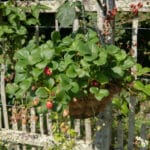
If you have landed on Strawberry Plants .org looking for guidance regarding planting or growing strawberries, you are in the right place. Many people come here looking for advice on which specific strawberry variety they should plant in their respective states. Well, as one might expect, there are a lot of different climates and growing conditions out there. Each of the United States has its own unique general soil composition, rainfall, and weather patterns.
Consequently, any given strawberry plant variety is likely to do better in one specific region than other regions. While some cultivars are able to adapt to many environments, others have been bred to be highly productive in a relatively narrow climate range.
This guide is a state-by-state list of strawberry varieties that do well in each state. Once you find your state and a prospective variety for your own garden, you can check the Strawberry Varieties page for more information or go to the Buy Strawberry Plants page to order them directly from an online nursery. If you have a specific nursery from which you would like to order, see if they offer your chosen variety by looking them up in the Strawberry Plants for Sale directory. Without further ado, here are the recommended strawberry varieties for each state:

Continue reading Recommended Strawberry Varieties by State
What is a Pineberry?
The word “pineberry” is a fusion of the words “pineapple” and “strawberry” and refers to a relatively new pale pink or pale orange to white strawberry cultivar that is adorned with red achenes (see the Strawberry Seeds page for more information). Like the modern Garden Strawberry (Fragaria x ananassa), the pineberry is a hybrid of the wild South American strawberry Fragaria chiloensis, which grows wild in some parts of Chile, and the North American strawberry Fragaria virginiana. The pineberry fruit is the result of cross-breeding, not genetic engineering as has been claimed by some. There are actually multiple different types of white strawberries.
In fact, the specific strawberry variety whose genetics contribute to the striking appearance of the pineberry was “rescued” by a group of Dutch farmers. They discovered the source material in France. They did not find and rescue the pineberry from extinction in the wilds of Chile, as some have claimed. After six years of plant selection and cultivation, the plant vigor and quality of the pineberry plants was improved, and the decision to begin growing them for commercial production was made.
The fruit produced by pineberry plants is very aromatic and has flavor that most say is reminiscent of pineapple while retaining the texture and feel of a strawberry. The pineberry, or pineapple strawberry, is more of a novelty at present. They are produced on a very small scale in Europe and Belize and are not very profitable due to the small size of the pineberries (large pineberries are less than an inch [2.54 cm] big) and the low yield of pineberry plants.
Continue reading Pineberry & Pineberries
Fragaria iinumae is a species of strawberry plants that have garnered some curiosity recently. I’m not quite sure why the sudden interest, but it may be helpful for some to have a summary profile of this species of strawberry plants. So, for the curious among us, here goes!
Fragaria iinumae Strawberry Plants: Summary
Unlike the modern Garden Strawberry (Fragaria x ananassa) which, if propagated by seed, do not produce second generation plants whose traits are true to the parents, Fragaria iinumae is a strawberry plant species whose offspring will remain true to the parent plants’ characteristics. The bigger problem is that those characteristics are not very desirable.
Continue reading Fragaria iinumae Strawberry Plants

Sweet Charlie Strawberry Plants: Introduction
This page is a profile summary of the strawberry cultivar ‘Sweet Charlie’ (Fragaria x ananassa). It will provide details on Sweet Charlie strawberry plants and Sweet Charlie strawberries so that an informed decision can be made regarding its suitability for varying growing locations and uses. Sweet Charlie strawberry suppliers are also listed.
Where to Grow Sweet Charlie Strawberries
Sweet Charlie strawberry plants are the most popular commercial strawberry variety grown in Florida. They are uniquely suited for use as a short-day cultivar. They are also often grown commercially in North Carolina and California. Sweet Charlie isn’t limited to these famous strawberry states, however. They will generally do well in most of the southern states. USDA hardiness zones 5, 6, 7, and 8 generally provide adequate conditions for productive growth. See the map below for states where Sweet Charlie strawberry plants should thrive. Also, for more details on growing Sweet Charlie plants, see the Growing Strawberries page. Continue reading Sweet Charlie Strawberry Plants

Ozark Beauty Strawberry Plants: Introduction
This page is a profile summary of the strawberry cultivar ‘Ozark Beauty’ (Fragaria x ananassa). At the end of the page is a directory of suppliers from which you can buy Ozark Beauty strawberry plants. Hopefully, you will find the details here that you need in order to make an informed decision regarding whether or not Ozark Beauty strawberry plants are right for you and your growing conditions and needs.
Where to Grow Ozark Beauty Strawberries
Ozark Beauty strawberry plants were developed in Arkansas and have proven to be one of the most popular and adaptable of the everbearing strawberry varieties. They generally grow extremely well in zones 4 through 8, and can even perform in zones 3 and 9. They are particularly well-suited for more northern climates and the higher elevations in the south. With appropriate care, Ozark Beauty strawberries can survive winter temperatures to -30 degrees.
Ozark Beauty strawberry plants have become one of the best-selling of all commercially sold everbearing strawberries in large part to its overall robustness and adaptability. For more specifics on the cultivation of Ozark Beauty strawberry plants, see the Growing Strawberries page. Continue reading Ozark Beauty Strawberry Plants

Chandler Strawberry Plants: Introduction
This page is a profile summary of the strawberry cultivar ‘Chandler’ (Fragaria x ananassa). It will provide details on Chandler strawberry plants and Chandler strawberries so that an informed decision can be made regarding its suitability for varying uses and growing locations. Chandler strawberry suppliers are also listed below if you are looking to buy chandler strawberry plants.
Where to Grow Chandler Strawberries
Chandler strawberry plants were originally developed in California and have proven to produce exceptional yields in the coastal states as well. The variety is a favorite of commercial strawberry growers in southern California, especially for winter production. Additionally, Chandler strawberries grow well in zone 5 through zone 8 and are well-adapted to the southern states. Overall, however, California strawberry farmers will see the highest yields on the west coast, and strawberry growers in the Carolinas usually see the highest yields on the east coast. The Chandler strawberry variety also does well in home gardens. For more specifics on the cultivation of Chandler strawberry plants, see the Growing Strawberries page. Continue reading Chandler Strawberry Plants
Benicia Strawberry Plants & Mojave Strawberry Plants: Introduction
This page is a profile summary of the new strawberry cultivars ‘Benicia’ and ‘Mojave’ (Fragaria x ananassa). It will provide details on Benicia strawberry plants as well as Mojave strawberry plants and the strawberries each produces so that an informed decision can be made regarding its suitability for varying growing locations and uses. Benicia strawberry suppliers and Mojave strawberry suppliers are also listed.
Why Benicia Strawberries and Mojave Strawberries Were Developed
As agricultural practices improve and more acreage is planted with strawberry plants each year, the consumers of strawberries have had the good fortune of seeing the fruits they love become more affordable. However, with the increasing yields and competition (from Mexico and other regions) dropping prices, the profits realized by the strawberry industry in southern California have also declined. As money seems to be the entity that makes the world go ‘round, there is a constant push to develop new cultivars of strawberry plants that improve upon the beneficial traits of the older strawberry plants while eliminating or minimizing the negative traits. Continue reading Benicia Strawberry Plants & Mojave Strawberry Plants
INTRODUCTION TO THE STRAWBERRY VARIETIES PAGE
If you have decided to plant strawberries and need help sorting through the myriad of strawberry varieties to pick the right one for you, you’ve come to the right spot! Ever since the Garden Strawberry began to dominate the commercial strawberry industry (see the history section on the Strawberry Plant page for more details), a concerted effort to breed a better strawberry has occurred. Organizations in North America, Europe, and Australia have led the charge. As a result, new and improved strawberry varieties are developed and released almost yearly.
So, which strawberry variety is right for you, your needs, your location? Of course, it depends on several factors. This page is designed to help you consider all your options and pick one or more strawberry varieties that will perform well for you. If you have already settled on a variety, compare prices for your chosen cultivar at the Buy Strawberry Plants page. You can also find a directory of plant suppliers at our Strawberry Plants for Sale page. Or, you can find strawberry seed suppliers at our Strawberry Seeds page. Whichever strawberry varieties you select, be sure to reference the Growing Strawberries page for help maximizing your strawberry yield! Continue reading Strawberry Varieties
Have you ever wondered how a new variety of strawberry plants is developed? The big, luscious strawberries that we all know and love haven’t always existed. In fact, they are a relatively new phenomenon. The original wild-type strawberry species produced (and still produce) tasty strawberries. But, those strawberry plants cranked out tiny (relatively speaking) fruits. When the first Garden Strawberry was successfully bred (see the Strawberry Plant page for more of the development history of today’s strawberry plants), the path was paved for the creation of the strawberry cultivars we grow today.
While the most successful breeding programs are funded by the state, individuals or non-governmental groups can endeavor to breed better strawberry plants as well. This post describes some of the thoughts and targets that should guide any strawberry plant breeding program. Continue reading How a New Variety of Strawberry Plants is Developed
Blakemore Strawberry Plants: Introduction
This page is a profile summary of the strawberry cultivar ‘Blakemore’ (Fragaria x ananassa). It will provide details on Blakemore strawberry plants and Blakemore strawberries so that an informed decision can be made regarding its suitability for varying growing locations and uses. Blakemore strawberry suppliers are also listed.
Where to Grow Blakemore Strawberries
Blakemore strawberries were once very popular across much of the United States. At one time, Blakemore strawberry plants were even the most common strawberry cultivar grown in the state of North Carolina. Since its heyday, newer strawberry varieties have been developed that exceed most of Blakemore’s positive traits while avoiding its negative traits. Consequently, few commercial suppliers exist and few nurseries still maintain Blakemore strawberry plants for sale. At their peak, Blakemore strawberry plants were grown optimally in Zone 3, Zone 4, Zone 5, Zone 6, Zone 7, and Zone 8, and they can survive winter temperatures as low as -35 degrees F, with proper care. For more specifics on the cultivation of Blakemore strawberry plants, see the Growing Strawberries page. Continue reading Blakemore Strawberry Plants
|
|