





A common complaint of new strawberry growers is that their strawberry plants aren’t producing strawberries. They have planted them, provided them tender loving care, and waited expectantly for them to return the “love” by setting a harvest of nice, plump, juicy strawberries.
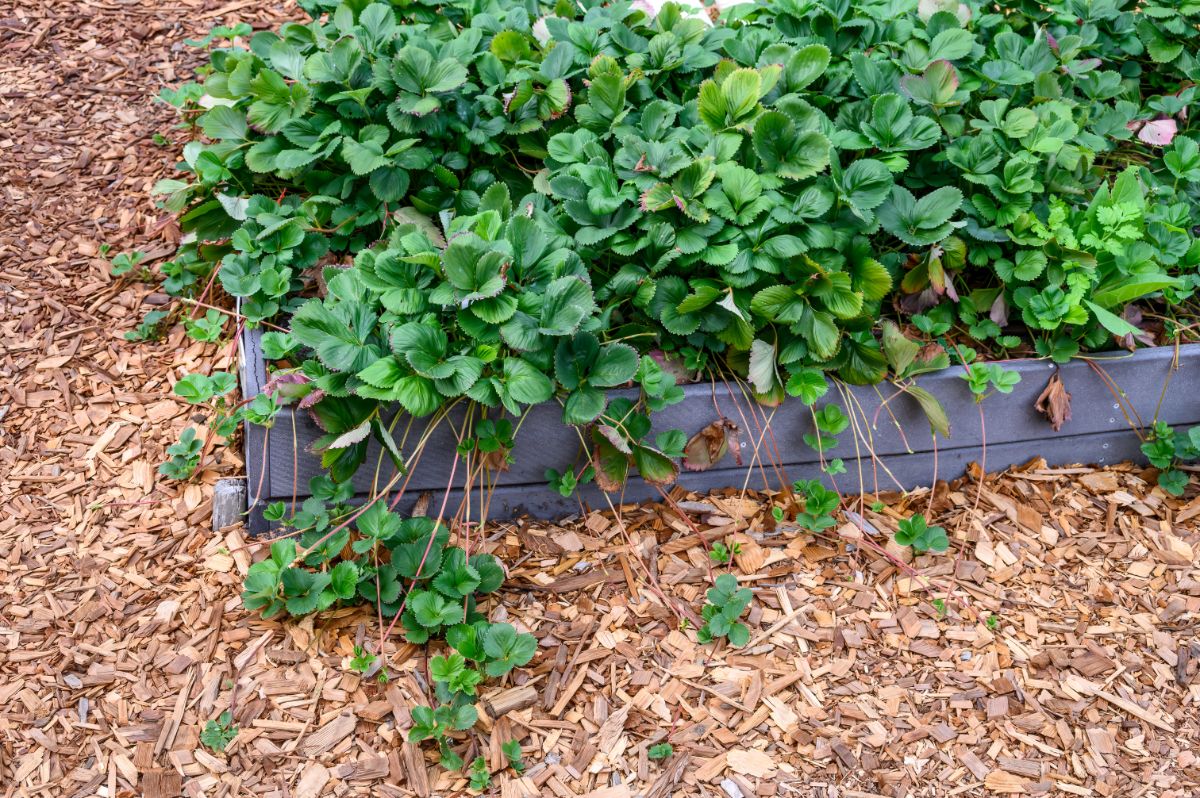
And then no strawberries come. You may have lots of leafy greens and too many strawberry runners shooting out to count, but the strawberries themselves are sadly absent.
Here are the top 10 reasons your strawberry plants aren’t producing strawberries. It is likely that your situation will fall into one of these:
Jump to:
- 10 Reasons Strawberry Plants Don’t Produce Strawberries
- 1. Strawberry plants are too young
- 2. Your strawberry plants have diseases or parasites or both
- 3. Your strawberries are thirsty (or drowning)
- 4. Your strawberries aren’t getting pollinated
- 5. Your strawberry plants are starving
- 6. Your strawberry plants are high on NPK
- 7. Your climate is wrong for strawberries
- 8. Your strawberry plant variety is wrong for your climate
- 9. Your strawberry plants don’t like their home
- 10. You’ve been duped, lied to, or are misinformed
10 Reasons Strawberry Plants Don’t Produce Strawberries
1. Strawberry plants are too young
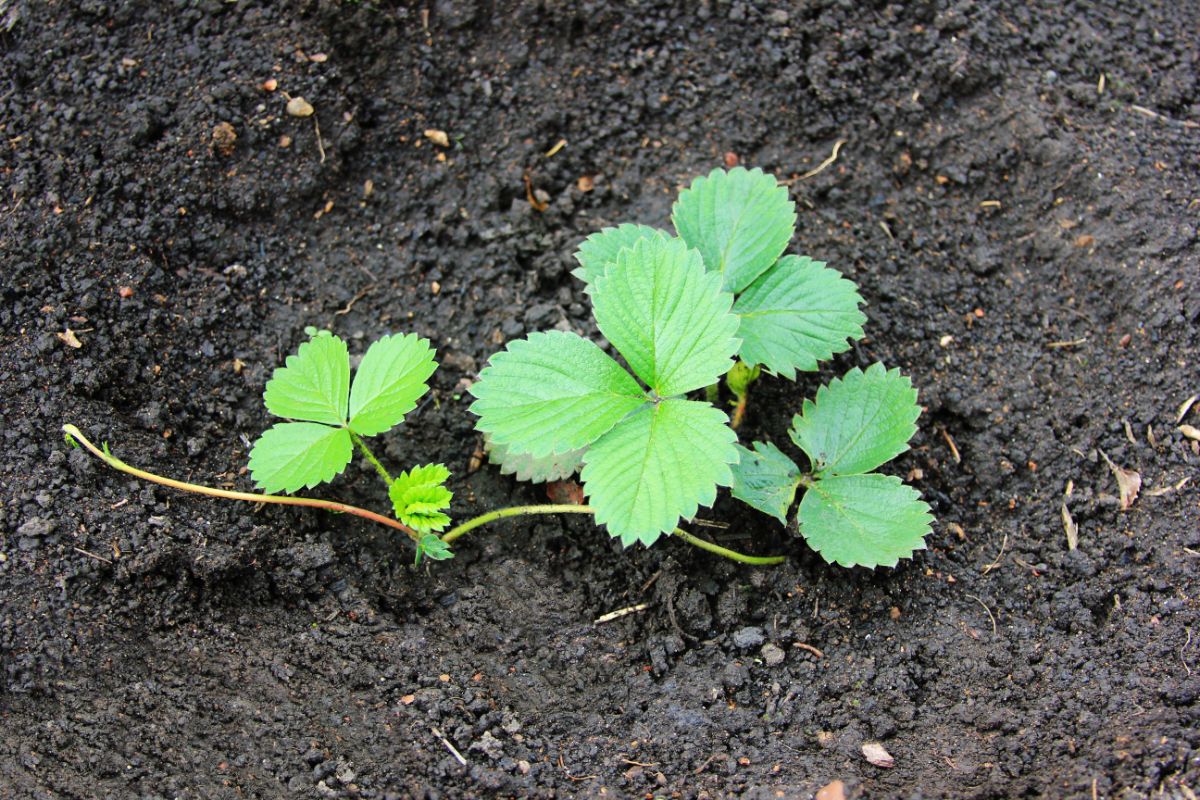
June-bearing strawberry plants will often produce few or no strawberries in the first year they are planted. This is, in fact good for the long-term health of your plants and strawberry bed. The energy that goes into a strawberry is not insignificant for a young strawberry plant. Since strawberries are perennials that will produce a crop year after year, the best use of developmental energy is in establishing a strong, healthy root system and flower buds within the crown. The better root system will exponentially increase the nutrient uptake for the second year. And, those roots will be needed as the flower buds will turn into flowers that will turn into strawberries in year two. This is why it is important to pinch off strawberry flowers in year one as described on the Growing Strawberries page. Doing this in year one allows development of more buds and better roots. This makes the plant healthy. The healthy plant will then set a much larger harvest than it otherwise would without them.
2. Your strawberry plants have diseases or parasites or both
There are a host of strawberry pests and pathogens that literally suck the life out of strawberries. In fact, you can view the most common ones on the Strawberry Plant page. If your strawberries have an infection or infestation, they may simply be too sick to produce strawberries.
3. Your strawberries are thirsty (or drowning)
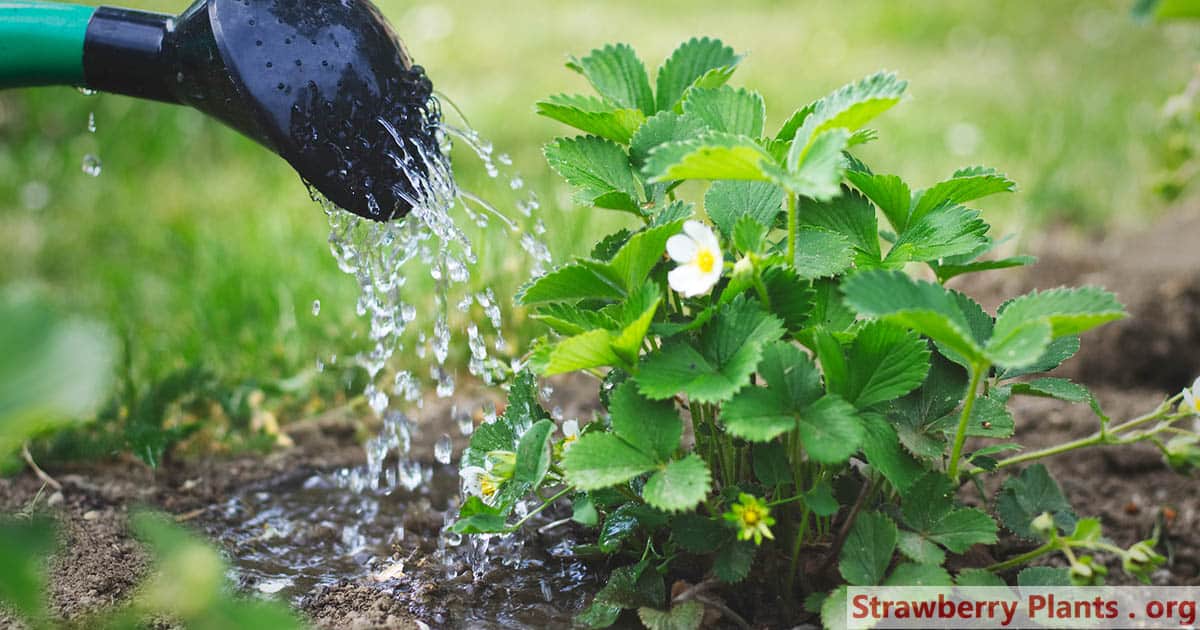
Strawberries can be finicky when it comes to their water requirements. They have relatively shallow root systems. This causes them to absorb the vast majority of their water from the top several inches of soil. This is also the soil that dries out most quickly when the temperatures rise. Since strawberry plants require a significant and steady amount of water (see the Growing Strawberries page, linked above) to produce best, constant drying out of the top layers of soil can cause the plants to go into “survival mode.” They don’t produce many or good quality strawberries in dry dirt (if they survive). Additionally, too much watering will halt plant growth and strawberry production. In fact, the strawberry crowns will rot, and the plants will die if they remain in standing water for too long. It is important to plant your strawberry plants in well-drained soil to prevent standing water from submerging any part of the strawberry plant.
4. Your strawberries aren’t getting pollinated
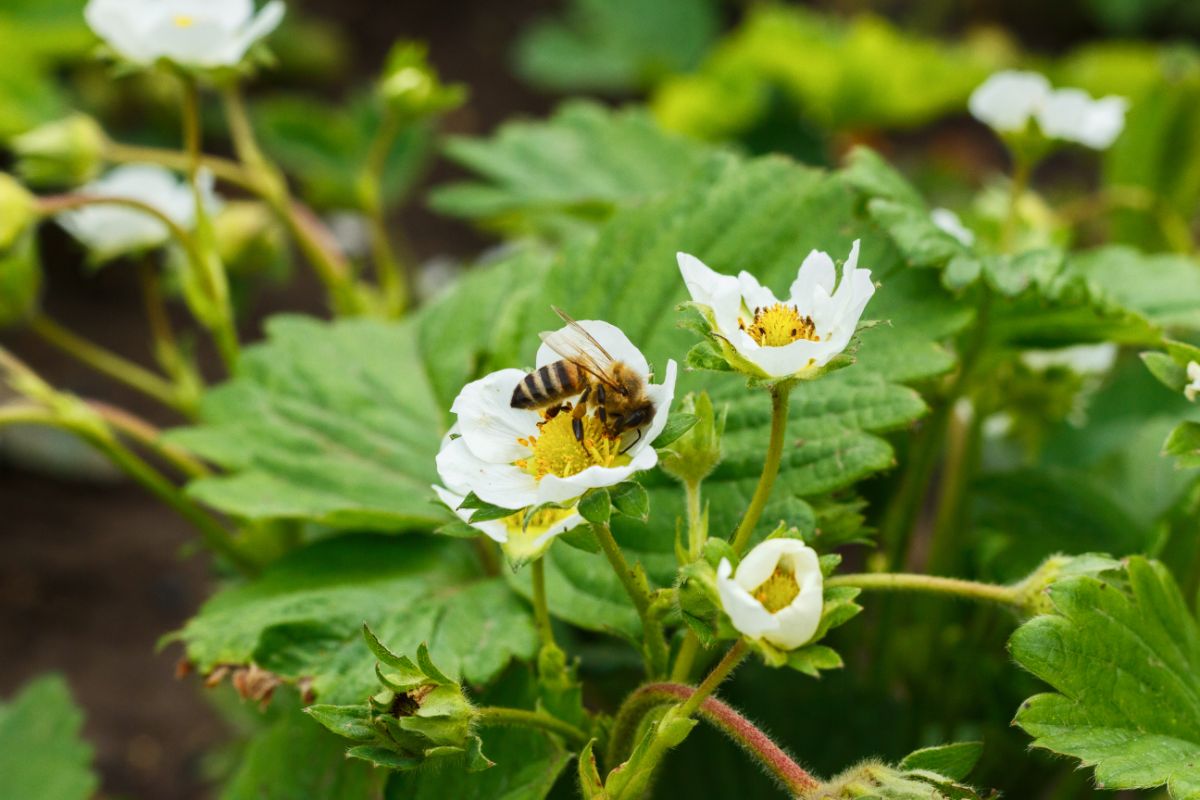
Most of the common varieties of strawberry plants have hermaphroditic flowers, meaning they have both “male” and “female” parts. However, the flowers typically act as either male or female, not both. This means that pollen from one flower has to make to to another flower in order for the strawberry to form. So, if a strawberry plant is kept indoors in a window or outdoors on a screened in porch (or anywhere else where the pollinating insects won’t be successfully drawn to your plant, you likely won’t have any strawberries.
5. Your strawberry plants are starving
Strawberry plants are amazing. They can manage to eke out their existence in some of the harshest places on earth. In fact, one of my own crazy strawberry runners once rooted itself in the shelf of a cheap, pressboard bookshelf. It had nothing to eat other than wood chips and whatever glue they use to stick those things together. To my amazement, it survived and grew well. It actually was only a inch or so smaller than the other runner plants put out from the same mother plant. But, when the other plants fruited, this one did nothing. In fact, it didn’t even produce a flower. All that to say: your strawberry plants need the right nutrients. Without the appropriate organic components, the plant may still grow, but it won’t provide you with any strawberries.
6. Your strawberry plants are high on NPK
Giving your strawberries too much food can also hurt strawberry production. The Nitrogen-Phosphorous-Potassium (NPK) fertilizers are generally formulated for specific growing purposes. Using fertilizers that are of the wrong concentrations for strawberry plants, or even using way to much of an appropriate fertilizer can decrease strawberry production. Often, the fertilizers cause excessive vegetative growth at the expense of strawberry production. After all, why should the strawberry plant worry about propagating itself via strawberry seeds if it has so many nutrients tickling its roots that it can’t even think straight?
7. Your climate is wrong for strawberries

Most strawberries grown at the equator are grown at high elevations where it is cooler. I don’t think it is possible for them to grow on Antarctica without serious human interventions. While a few populated places on earth are completely unsuitable for any type of strawberry growth, strawberries will grow just about everywhere else. If, however, the preferred combination of warmth and coolness is not attained, many varieties will not produce strawberries. Most strawberry cultivars do best when the days are warm to hot (but not scorching) and the nights are cool to slightly warm. This combination of warm days and cool nights will almost always result in the maximal strawberry production for almost any strawberry variety. If you live somewhere where it is too hot, the plants may still grow, but the strawberries may be sparse or absent.
8. Your strawberry plant variety is wrong for your climate
Strawberry breeding programs around the world are constantly trying to increase local yields by developing more suitable strawberry plants for specific regions. This goal is often attained. However, in creating specialized strawberry cultivars, some of the overall adaptability of these plants is bred out or lost. When that happens, the new cultivars are sometimes successful only in specific climactic regions. Buying a strawberry developed for Michigan strawberry growers, for example, may not grow well in southern Florida. When the plants don’t thrive, they often don’t fruit.
9. Your strawberry plants don’t like their home
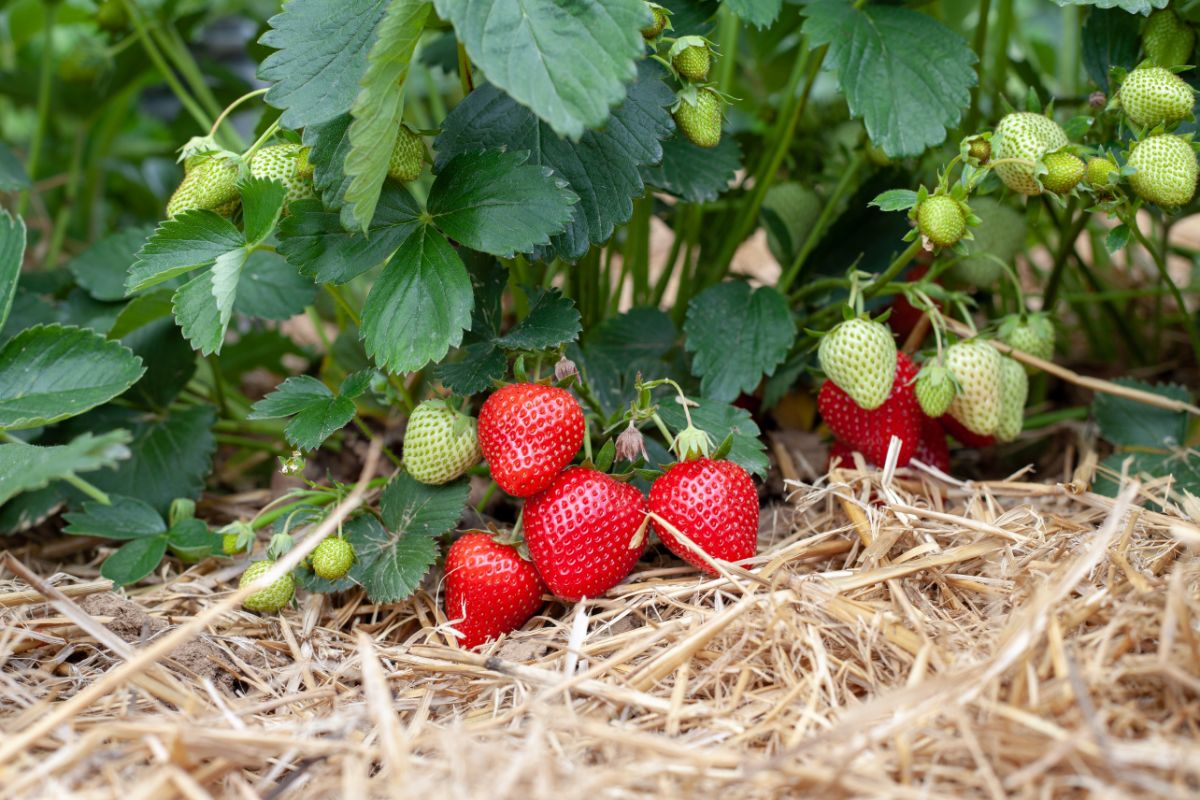
Strawberry plants will grow well in containers. If they are properly cared for, that is. Container strawberries often do not have sufficient soil. Their soil will dry out much more quickly than in-ground strawberry plants. Their roots can get too hot. If planted in nutrient deficient or poor strawberry-quality soil, the plants won’t be happy. Regardless of whether a strawberry plant is planted in an inhospitable pot or inhospitable plot, the lack of a suitable home that results in any of the conditions above will diminish or eliminate berry production. Unhappy plants don’t readily produce strawberries.
10. You’ve been duped, lied to, or are misinformed
Occasionally, nurseries that sell strawberry plants get their facts mixed up. If they sell a June-bearing strawberry variety to a customer wanting an everbearing variety so that they can have a decent crop toward the end of the season, the buyer will be frustrated when no strawberries come forth. Be sure to check the characteristics of the cultivar you want to plant to make sure it is what you think it is and that it will perform well in your climate. A great place to start is the Strawberry Varieties page.
So, if there are no strawberries on strawberry plants you have planted, or strawberry plants producing runners but no strawberries, evaluate each of the 10 reasons above and see if they apply to your situation. If they do, remedying the problem will likely result in reaping a harvest!

Lisa Spooner says
I have a large strawberry patch (40 sq feet) that all grew from a single strawberry runner I dropped off of my second story porch while pruning. Several years later, without any intervention with from me: runners on runners on runners have created a dense patch. The plants seem healthy and produce a lot of flowers each spring then continue to make some some during the summer months. However none of these flowers have ever turned into a berry. Some of the patch is under the porch therefore in full shade but some of it is out in the sun. I hadn’t been fertilizing them at all so I tried that this year. I also keep native bees so pollinating is not an issue. I know that several plants from a single variety can produce fruit but do plants that are all genetically identical have trouble producing fruit?
Mary Ward says
I wonder if they were cross pollinated and/or reverted back to something in one of the parent plants and if that is why they flower, but don’t fruit. They should be able to pollinate while producing so many flowers, but a second variety might help.
Deb D says
I have a dense strawberry patch that produced a ton of strawberries in July time frame last year. I live in NW Montana. This year, there are hardly any strawberries. Would the soil they are in be worn out?
Mary Ward says
That is a possibility or the plants might be getting too old and it is time to replace the patch. We expect to get only 3 to 5 years tops out of a pathc, but 5 is really pushing it and would require excellent fertilization and care.
Elizabeth M says
Hi
My man wanted to pick one plant to buy, and when he showed me his choice I got very nervous as it was a six pack of strawberries.
Went online and knew why I was nervous. My head is spinning from all the info and I am the one who will be growing them. They are Albion which is ok as we live in an apt. I feel like a failure before I even start. My questions: Do I remove the flowers and runners for the first year ? Will I even see fruit the first year, especially if I remove the flowers ? Where do I overwinter the plants in an apt ? We do have one room where no heat is turned on. Do I even water the plant while dormant ? Does it need any light ? Sorry for so many questions I just don’t want to fail him or myself. Thank you kindly. Please help !!
Jon tha viking says
Hi I planted wild strawberries in my garden several years ago. The soil is shallow and rich in peat and compost and I haven’t added any soil or compost in years. The plants have plenty of vegetative growth and lots of runners, they produce many flowers but don’t produce any fruit despite the presence of 2-4 other varieties of domesticated strawberries that produce nice amounts of reasonable sized to huge fruits provided I get them befor the slugs do. Anyone got any advice.
Sue says
Wild strawberries do not like to be replanted. If purchased in a pot, Do not remove. cut out the base, then dig a hole deep enough to take the pot. Plant whole pot in soil and water well. Do not feed. The roots will spread in the soil . Remove any runners in the first year, and in year 2 you should get some flowers and small strawberries.
Jay says
Hey Jon, I’m having the same issue with some wild strawberries I planted. Did you ever get strawberries?
Frauzie says
I have 3 containers of strawberries. They are several years old. I recently learned that they are acid loving plants so I covered the soil with pine needles. They have the same soil composition and I do not give them nitrogen. One of the containers is frowning tall, beautiful foliage, but no flower stalks. The other two are producing sweet berries. Can you tell me why the one pot is not producing flowering stalks therefore no fruit blossoms or fruit?
Pat in Cambria says
I’m in a new home in Coastal California. The raised bed appeared empty in March but is now filled with beautiful strawberry plants…but no blossoms yet and it’s mid-June. I fertilized a couple weeks ago…lots of runners and leaves…no flowers. Thoughts??
RachM says
Hi!
I planted alpine strawberries several years ago and they produced the first year and second somewhat but since then I have been getting nothing. They spread like crazy and look very healthy; not too vigorous but also no yellowing leaves. My soil is not overly fertilized and they have been getting adequate watering. I had one rogue one that went into a stone pathway that has been producing a lot! But none of the other plants have any strawberries! I saw lots of flowers this year and so was hopeful, but nothing produced. I’m not sure if I should rip them all out, seems like a shame. Please help! Thanks!!!
NGl says
Hi,
How many leaves does the plant usually form before the first flower buds appear? There is conflicting info in the net.. Many thanks!
HolyDiver says
My strawberry plants are enormous. They measure 30 inches tall. They look incredibly healthy, yellow blooms and i can see little tiny beginnings of strawberries, hundreds of the,…..But it’s been like this for close to a month. They act like they are stunted. Which, since 2012, all my garden, tomatoes, peppers, etc, take AT LEAST twice as long to produce……..Anyone have strawberries this tall and will it still produce strawberries sometime this year….they are everbearing….
Deb S says
If they have yellow blooms, they are mock strawberry. All strawberry plants have white (or white to pinkish) blooms.
“Potentilla indica, known commonly as mock strawberry, Indian-strawberry, or snakeberry in North America, is a flowering plant in the family Rosaceae. It has ternate foliage and an aggregate accessory fruit, similar to true strawberries of the genus Fragaria. Unlike the white or slightly pink flowers of true strawberries, Potentilla indica has yellow flowers, as do many other Potentilla species. It is native to eastern and southern Asia, but has naturalized in many regions worldwide.” Wikipedia
Bill fido says
Hi why do all my strawberries come together I get lots of fruit for about 2 weeks
I have planted early / mid / and late varietys also for the last 3 years I have source from different nursery people and they still all come in June and then Finnish for the year.
All I want to do is get strawberries all season long .
Many thanks billy
Sue says
You have June strawberries. They will will fruit only in June.
Chris says
make sure your space them out in rows seem to get more strawberries from suckers spaced out and replanted then just a big clump of plants i guess its easier for insects to pollinate the flowers that way
Lorraine says
Please advise …. best position and how to plant a strawberry raised ‘garden’?
I have several plants, which are all producing many runners, no fruit, as they are in 4 large pots.
I live in Italy, the area around me has little shade, but it can get very windy, and very hot. Should I make a partial shade for them? What is best to cover and protect them with when the snow arrives?
What is the best way to keep snails at bay?
Many thanks ?
Mr. Strawberry says
Lorraine,
Start here! Good luck!
troy says
Are they getting pollinated? Too much consistent wind, may keep pollinators away. I would keep cutting off the runners, as it takes a lot of energy for the plant to produce them. For snails, place a small bowl onto the soil and fill with beer, snails will go in to drink and not be able to get out.
lee broadstock says
Hi there
I have been trying to grow strawberries for a few months now from plants, no seeds. I have placed them in a homemade planter inside my greenhouse, and at first did get a few strawberries. But now all i am getting is lots of greeny leaves and runners. I have tried to minimise the amount of new runners by removing them to help the production of strawberries. Do you suggest i move the planter outside of the green house or do they tend to grow better inside ?
Mr. Strawberry says
lee broadstock,
Your plants were likely June-bearing plants. That type of plant produces berries for a few weeks and then stops until next year. The overall harvest with June-bearing plants is typically greater than either day-neutral or everbearing plants, but it can be frustrating getting all of your strawberries at one time. If you care for the plants appropriately, you should get a better harvest next spring. Good luck!
Juli says
Can you please recommend a fertilizer for strawberry plants?
What do you think about using fish emulsion?
How often should a fertilizer be applied?
And does the age of the strawberry plant matter with the type of fertilizer you use?
Thank You!
Mr. Strawberry says
Juli,
Start here! Good luck!
Virginia Hayes says
I purchased plants 2 years ago. They were for the zone where I live. For two years the plants are nice but no berries. I had the soil tested. No problem.
Any ideas?
Mr. Strawberry says
Virginia Hayes,
Temperature fluctuations and irregular watering can also affect the production rate. If the plants were planted from seed, they can take longer to produce berries. However, at this point, you should be having a harvest! I would recommend reading through this material to see if everything is as it should be. Good luck!
bipasha chakrabarti says
Everything in my strawberry plant is good. It yielded strawberries in 1st year but pests ate the fruit. After then,no flowers or buds grew except for runners. What should I do?
Mr. Strawberry says
bipasha chakrabarti,
If you lost the fruit to insects, you might want to try frequent applications of food-grade diatomaceous earth. If you lost them to bigger pests, you might need to use bird netting. It is normal for June-bearing strawberries to only produce one major crop per year. If that is what you have (most common), just wait until next spring. If you want, you can transplant the runners to multiply your plants. Good luck!
Kwanda says
Hi
I just started to pick my strawberry, but I notice that there is a decrease in yield and the foliar growth with runners. with my experience I think I over fertilized with Nitrogen. I just want to confirm that if I use phosphorus fertilizer can lock up nitrogen?
Mr. Strawberry says
Kwanda,
I’m not sure exactly what you are asking. Most commercial fertilizers have a 3-number rating, 10-10-10, for example. The numbers represent the amount of Nitrogen-Phosphorus-Potassium (or N-P-K / NPK) in the fertilizer. I don’t think adding a high-phosphorus additive to a soil already saturated with nitrogen will significantly lock up (bind?) the nitrogen. Good luck!
Michael says
Hi Mr. Strawberry. What nutrients are needed to induce flowers? What i need to do to have a larger fruit. Thanks in advance 🙂
Mr. Strawberry says
Michael,
To get flowers, the plants need to have optimal conditions the fall before the spring that you want to harvest strawberries. Strawberry flowers begin as perennating buds in the crown of the strawberry plant the autumn before they are harvested. So, if you have very stressed strawberry plants in September, October, and November, they may not form many or any flower buds. And, if they aren’t formed in the fall, they won’t flower the following spring. For big strawberries, make sure they get full sun, appropriate water, and plenty of nutrients from a sandy loam soil with high organic matter. Good luck!
Christopher Pascual says
hi,
can i plant strawberry in January and expect fruits after 3 months, say april? i am from the philippines. what variety i can plant that bears fruit all year round?
thanks
Mr. Strawberry says
Christopher Pascual,
I am not familiar with your particular climate, so I can’t say for sure. However, you will need more time than three months before your plants will fruit unless they are already well-established in pots. Day-neutral varieties like Tribute and Tristar can be induced to fruit all year round with the right application of light and controlled temperatures. Good luck!
Bernadette says
Hi!
I’m from just outside of Sydney Australia and have been growing strawberries for a while in a fashion. But this season I’ve come across something I’ve never seen before. My strawberries while they are still green are sprouting growth from their seeds. It looks quite odd and I am wondering what the cause might be and if there is anything I can do?
Mr. Strawberry says
Bernadette,
It is called vivipary. Good luck!
nushin says
It would be great if you tell me How i can get a lot of runners? My strawbeeries planted hydroponic.which supplement should i use to get more runners. Thanks
Mr. Strawberry says
nushin,
Sometimes runners are slower to bolt in hydroponically-grown strawberries. However, most varieties will still produce them, you just have to wait a bit longer, usually. You can try increasing the NPK content in your system slightly as excess nitrogen, in particular, can sometimes get the plants to put out runners. Good luck!
Wanda Nuttall says
dear Mr Strawberry .
I planted some strawberries earlier this year and its way past time for them to grow and I still don’t have any flowers on them.they should of bloomed by now what should i do to getsome berries
Mr. Strawberry says
Wanda Nuttall,
Strawberry flowers for any given year come from the perennating buds that are formed within the crown of the strawberry plant the year before during the fall season. If your plants aren’t producing any flowers, then the buds probably didn’t form last fall. That is common with mail-order plants as they are sometimes grown using propagation methods that haven’t allowed sufficient time to pass for the buds to form. So, the best thing to do is to take care of your plants well this summer and make sure that they have everything they need this fall. If you do that, your plants should form a lot of buds which will then turn into a big harvest for you next spring. Good luck!
Lexie Manke says
I bought “hula berry’s” and plain strawberries from Home Depot. I planted them in a big container that drains well and they are all doing quite well. They have big dark green leaves and are producing runners everywhere- but no fruit is producing. If I should hold out to next year to expect fruit, how should I store the plants during the winter? I live in a cold climate with ample snow fall in the winter months.
Mr. Strawberry says
Lexie Manke,
You can store them in an unheated garage near an inner house wall. You should get a full harvest next year. Go ahead and trim the runners as soon as they form, however, unless you are planning on rooting them. Good luck!
Stephanie Waibel says
Mr. Strawberry
Planted 10 plants from menards in a cast iron tub. Farm soil, peer, chicken manure, sand…growing deep green and vibrant. Tons of leaves, runners. Initially we were getting several beauties bright red every couple days now they are just getting white & some are shriveling up. But everything else is thriving. Help!
Mr. Strawberry says
Stephanie Waibel,
You may have a pest infestation that is either feeding on the berries themselves or the stems. You may want to try sprinkling a liberal amount of diatomaceous earth around them and see if that helps. Good luck!
Jennifer Ratliff says
Hi!
I bought some “hula berry’s” from Home Depot on a whim. They are a type of strawberry, I believe. I planted them in a big container that drains well and they are doing quite well. They have beautiful leaves and are producing runners like crazy- which I have been pinching off in hopes that it would begin producing berries. It has not. Should I move the plants to a strawberry pot or leave them in the traditional pot that they are in?
Thanks
Jennifer
Mr. Strawberry says
Jennifer Ratliff,
If they are growing well, I’d leave them be. The flowers and strawberries come from perennating buds that are produced in the crown the previous fall. So, since it sounds like your plants are healthy and thriving, I’d let them stay where they are right now. You should have a bumper crop next spring! Good luck!
Scott says
Hello
Have 4 varieties of June bearing strawberries. Planted them as plugs last fall. Plants are lush. Saw a few strawberries early this month. No more and no more flowers. Are they done for the year? If so, why such poor production.
Mr. Strawberry says
Scott,
More than likely, they are done producing. You may get a smattering of berries here and there, but the main fruiting crop is likely done at this point. If your plants entered dormancy prior to being able to establish themselves, they likely had to spend most of the spring getting well-rooted. Also, since spring flowers and strawberries come from the perrenating buds that are formed during the previous autumn, the stress of transplanting may have caused your plants to not produce as many of the buds within the crown last fall (and consequently fewer strawberries this spring). Also, if you have too much nitrogen in your soil, your strawberry plants may be happy with their vegetative growth and produce few strawberries (this probably isn’t the cause in your case). Regardless, if you keep your plants healthy this summer and fall and winter, I’d expect you to have a bumper crop next spring! Good luck!
norika says
hi mr strawberry i have a strawberry plant which we bought from somewhere i don’t know which type is it but the first year produced some sour strawberries but this year there is no blooms we went for a trip last year and no one looked after it and it was dry when we came back and today it’s getting new leaves but the old leaves are like they are falling to the ground should i buy plant food or is it to late will it get blooms next year or is it never going to bear any more strawberries please help me mr strawberry i want some sweet juicy strawberries i live in manipur inside manipur i live in imphal the climate of imphal is 29 degrees is it too cold or too hot for my loving strawberry plant and it doesn’t get any runners i want some runners please help anybody
Mr. Strawberry says
norika,
First, most of your questions will be answered by reading this. Second, if you water and care for you plants, they will likely recover from the recent stress to give you both strawberries and runners. Good luck!
Andrew hyde says
My strawberry plants are growing really well with lots of flowers outside in my garden bed. But the flowers don’t turn into strawberries. They just get little black dots on them and die? Why could this be. The little insides of the flowers look like a green strawberry is starting to develop and then where the little dots are that I think would eventually become the seeds on the outside of the strawberry the little dots turn black and the flower eventually dies. Can you help me with what could be wrong. I live in Melbourne Australia and the same plants had strawberries last year but now that the plants are bigger, greener and Luther, with more flowers, I would have expected even more strawberries this year. Thankyou. Many kind regardz
Andrew hyde
Tai says
Hi Andrew,
It is most likely that your strawberries aren’t getting pollinated at all, perhaps you can introduce some varieties of flowers nearby to attract bees or lady bugs that also stop by your strawberries to pollinate the flowers. If you have time however, then you can simply pollinate each flower by hand. Use a tiny paint brush to dab at the stamen and then rub the pollen over the recepticle, aka the middle part of the flower. That way the berries will form as though it’s been pollinated naturally 🙂 hope this helps. I’ve been doing it by hand since I can remember, you just can’t rely on insects too much.
Leah says
I live in Denver and have been trying to grow strawberries for two years now. The first two years they grew really tall and lots of little flowers but then didn’t produce any strawberries at all. We had a lot of 97 degree weather and I’m wondering if the hot weather affected the production of the strawberries. I really don’t want to replace all the plants if I don’t have to!
Mr. Strawberry says
Leah,
It is possible that the heat affected strawberry production. But, you might also have a pathogen or pest problem. I’d re-read the potential causes on this page and then look to try to identify any pests before replacing your plants. Good luck!
Tspring says
Got seascape bare root in November and put in 2part hydro. System. Doing great. Lush foliage and just got my first flower.on February 1. With spring coming would it be productive to move them to an outdoor hydroponic system. Thanks love your advice. Tom
Mr. Strawberry says
Tspring,
If you harden the plants off slowly, you could save money on the grow lights by letting them grow in natural light. But, a lot of hydroponic systems aren’t as outdoor-tolerate as the strawberries themselves are. You can get fungal growth problems and other issues by keeping a hydroponic system outside, especially if it isn’t designed for outdoor use. Either way, though, good luck!
Greg says
So if you must pollinate, Growing strawberries indoors won’t work correct.
Mr. Strawberry says
Greg,
You can grow strawberries indoors. You can hand pollinate. See this information for more details. Good luck!
Nitish Chauhan says
Dear
I am running a strawberry plants nursery and I have not access to new mother plants here I have old mother plants and would like to know that that runners produce from mother plants can be used to produce new runners and does it effect the quality of the fruit if I keep on repeating the process for many year without changing the mother plants.any other way to produce good runners?
Mr. Strawberry says
Nitish Chauhan,
Mother plants will lose their vitality starting in year 4 or 5. It is better to allow the genetically identical daughter plants become the new mother plants instead of using the same mother plants year after year. Good luck!
Etta says
its now the end of June. I have a rubbermaid container which I melted holes in for drainage. I’ve had strawberries in it for a few years, and including this year, I have gotten one or two weak little berries. I am going to try to give it some plant food….but is it too late in the season or is it still ok? I have a great compost pile, with rich soil and lots of worms. I put that in, but it didnt help.
Mr. Strawberry says
Etta,
If your rubbermaid container is not big enough, the roots will likely be too warm, and the plants will produce fewer, smaller berries like you described. You can fertilize and see if that helps, however. Good luck!
Melody says
Hello Mr. Strawberry,
I have beautiful June bearing strawberry plants that have been grown in our area for 75 years (I got starts from the family.) They produced beautiful, huge berries in abundance the second and third year. Now they are much smaller and not many of them. They are grown in a circular garden. Should I dig out the plants that are not bearing in the middle and replace them with new plants every three years? Or how do I get back to the beautiful berries I had when they were first started? Thanks for your help!
Mr. Strawberry says
Melody,
Strawberry plants typically do lose vitality after their third or fourth year. If that is it, then the plants should be replaced. They might be over-crowded as well. You may want to review this post on transplanting also. Good luck!
Tracy says
Hello,
This is a second-year crop of strawberries. Last spring, I had small berries and some plants produced large, uniform fruit in the fall.
This spring, I did have a harvest, but now they have abruptly stopped producing. I had a very strange and prolific growth of mushrooms in the strawberry bed (and I mean a lot of mushrooms — half a garbage bag full of mushrooms that grew in clumps). I wondered what caused all of the fungal growth and if it could now be affecting the plants. They look green and healthy, but I think there is something odd going on in my soil.
Mr. Strawberry says
Tracy,
Most strawberry varieties don’t produce constantly throughout the year. They produce one main harvest and stop (if they are June-bearing plants) or two main harvests (one early and one late) if they are everbearing varieties. If the mushrooms haven’t killed your strawberries by now, they aren’t likely to affect them, so you shouldn’t have to fret about those. It sounds like your plants are doing well! Good luck!
Shanti Tanna says
Can you chop off healthy large
strawberry leaves when fruits are growing?
Mr. Strawberry says
Shanti Tanna,
The plants can still live and thrive if you remove a few leaves, but it is best to leave all healthy leaves attached and growing. Good luck!
Dora says
We had lots of blossoms but developing very few berries. The plants were thinned last year leaving narrow row of newer plants.
Dora
nadia says
If i want to grow strawberry for more than one year.. and in case its aerial part does not survive for next year due to harsh environmental condition.. so, in next season can i grow strawberry solely from underground part????
Mr. Strawberry says
nadia,
Yes! The strawberry crowns will put forth new vegetation and flowers/strawberries each year. Just be sure to protect the crowns during the winter months. It is normal for the leaves to die back during the winter. Good luck!
Jeni Rubenach says
Jim G, I don’t know where you are , but here in Tasmania (Australia) we have a well known gardening guru by the name of Peter Cundell.
Somebody asked him exactly the same question on his radio show last week, and his reply was quite vehemently that the runners are the same age as the original plant – if you propagate runners from a four year old plant, your new plants will also be, in essence & characteristic, four year old plants.
As many of the problems with strawberries relate to their age – they’re only good for around 3 – 4 years & would be better to be replaced after that time – those age related problems will carry over to any plants produced by their runners.
I can honestly say I’ve never know him to be wrong about anything in the 40 years I’ve been heeding his advice, so I would tend to believe him on this point.
Mr. Strawberry says
Jeni Rubenach,
Thanks for the information!
Grace says
It sounds like there is a mix-up.
I did read yesterday that when one DIVIDES the crown of the plant, that each division is still the same age as the original plant – which makes sense, because it IS one part of the original plant.
My understanding is that a runner starts a new plant. So regardless of the age of the original plant, the new plant from a runner starts at year 1. The proof is in the pudding, so to speak. People have been regenerating their strawberry beds all this time, by planting the new runners, and taking out the older mother plants. It seem to me this wouldn’t be successful if the runners were the same age as the original plant.
Grace says
Another thought…
This raised the question for me…”Then why bother to divide a strawberry crown that’s older?”
I wonder if it is a way to increase the number of new plants, as each division grows and produces more runners?
Mary Ward says
Yes, dividing the runners does give you new plants. It also reduces the demands on the “mother” plant.
Jim G says
Are plants grown from runners considered the same age as the mother plant or is the age clock reset?
Mr. Strawberry says
Jim G,
The clock is reset. If a 4-year mother plant puts out a runner plant, the runner plant is a 1-year plant once it roots. Good luck!
michelle a says
I have 4 strawberry sweetheart plants. 2 of them don’t produce fruits or flowers. The other 2 of thsm have fruits but they have not even grown to half the size in the last 3 weeks. I have put liquid fertilizer for the plants when I potted them but there is still no change. What can I do to get the most of these plants?!
Mr. Strawberry says
michelle a,
check them carefully for a pest infestation, and also review this information. Good luck!
Joyce says
My strawberries were smaller than usual, the tips weren’t pointy like they’re supposed to be, and there were lots more seeds than normal. What’s they’re problem; and is there anything I can do about it?
Mr. Strawberry says
Joyce,
I’d recommend reviewing this information. It should get you pointed in the right direction! Good luck!
Jim says
We built a raised bed specifically for a strawberry bed. We planted this spring. Everything appeared to be going very well until now. Plants appear healthy with vigorous growth lots greenery . Lots of runners. We had plenty of flowers and fruit started growing but all fruit falls off plant before colouring or in most cases big enough for eating. Plants still flowering and growing fruit? I have been removing runners. I have checked plants for any signs of pests but cannot find any. Any ideas or suggestions please
Mr. Strawberry says
Jim,
I’d recommend going through each category on the Growing Strawberries reference page. If everything is and has been followed there, your issues will likely clear up. Good luck!
Milton says
Mr. Strawberry, we are in 2500 Mts elevation,
ARE THE STRAWBERRY PLANTS THROW NUMEROUS RUNNERS(STOLEN) DURING STRAWBERRY PRODUCTION? THIS IS PROBLEM WITH VARIETY OR FERTIGATION OR CLIMATIC FACTOR?
Mr. Strawberry says
Milton,
To prevent excessive runner formation, most commercial farmers plant strawberry plugs in the fall, then till under the plants after the harvest in the spring.
Cindy W. says
I have a new raised garden box that was just planted about 6-7 weeks ago. It is a 2 level box and I have strawberries planted in both of the lower end boxes. There are 3 plants in each box. They are growing very well, sending off a lot of runners, getting buds and even getting some fruit. My question is can the runners hang down the side of the planter and still produce? I don’t want them to grow upwards and into the garden section of the box.
Mr. Strawberry says
Cindy W.,
The runners that hand down the sides can sometimes produce a few strawberries, but they are drawing all of their nutrients through the mother plant when they do that. That puts a strain on the mother plant. For best results, root the runners. Once they are rooted, they can be severed from the mother plant and planted anywhere. Good luck!
Madison says
Hi I have strawberry plants but they are doing everything normal but a couple of days before they are ripe they go brown. They are not toughing anything and I put down slug pellets. They don’t touch off them so it can’t be that . Please help
Madison
Hope Strawberry says
A storm came through and blew over my green house even though it was well anchored. My strawberries were thrown everywhere. I replanted all the ones that were salvageable and they are now growing quite well. Unfortunately, I’m not getting blossoms any more. Is there anything I can do to get my blossoms to come back?
Mr. Strawberry says
Hope Strawberry,
Unfortunately, probably not. Most strawberry plants are June-bearers (the ones that produce the biggest strawberries). They only set blooms and fruit once per year for a couple of weeks, approximately. You will likely need to wait until next year. Sorry!
Arianne says
Hi,
We have just put in new plants in this year, and the plants appear to be quite healthy, and are producing a few fruits. We have one long row, and at one end, the fruit is as would be expected, but at the other, it is quite small and sort of hard on the ends (not green – more of a yellow colour), although ripening up elsewhere well. They taste good, but are hard on the ends. Any ideas? I can’t seem to find descriptions of this nature of problem under any of your help topics.
Thanks!
Louise says
Hi we have a plot of strawberries i “inherited” when i took over a garden, so i have no idea what type they are.
The started well and formed good looking fruit. We kept birds off them with netting. But the 50% of the fruit fell off the plant “voluntarily” some even before ripening. Any idea what could have caused this? It’s a big mushy strawberry-y mess up there!
thanks
Zoe says
Hiya! I have 9 day neutral strawberry plants growing in my back garden. They have been producing lovely big flowers and nice big strawberries the past few weeks and I’ve been picking off the ripe ones daily. I still have lots of big green strawberries growing. But, around the crown are more strawberries flowers coming up but the buds are rotting/dying before they become a strawberry? why is this? all my strawberries are growing below leaf level aswell which doesn’t look right to me.. A few have been mutant looking too. Please help!!! also, what’s the best way to water them with a hose? thank you!
Mr. Strawberry says
Zoe,
It sounds like you might benefit from the information on the Deformed Strawberries page. Hopefully that will get you pointed in the right direction. Good luck!
Samantha says
We have an issue and I’m not sure what to do. We have a strawberry plant that is 3 years old. it lives in a big Rubbermaid container that has a crack on the bottom. This allows for drainage which is why I picked it. It gets morning to mid afternoon sun, but not much evening sun. It gets watered twice a day on extremely hot and dry days and once in the evening on not so hot days. We always feel the soil before deciding how much water it needs and I always allow the water to soak into the soil before adding more so we don’t flood it.
Problem is we’re getting teeny tiny fruit, it flowers fine and bees visit the plant. However my daughter (7yo) who has be lovingly taking care of this plant is frustrated because she wants bigger strawberries to eat. Unfortunately I don’t know what variety it is. It has white flowers, darker green leaves and produces a bright red fruit.
Mr. Strawberry says
Samantha,
It very well could be that the plant is one of the many Alpine varieties. They produce naturally small fruit. Plants that are 3 years of age also tend to start declining in the size of fruit they produce. It could be nothing more than that. Without knowing more about the variety you have, it is hard to give accurate advice! I’m sorry, and good luck!
Cathy says
hi – hope I am posting this in the right spot – so many posts and threads I am not sure… here are my
questions though –
I have a client ( I am a pro gardener)
with a strawberry planting that issue 3 years old. she is no longer getting fruit.
The problem with fixing this is she doesn’t know what variety she has. Does that make it pointless to try the things you suggest for improving harvest? (composting, mulching, fertilizing, thinning) I would like to at least try thinning. It’s a small dense patch in a raised bed – no rows. How many runners/baby plants do I remove…and how do I tell the MOTHER plant from the others??
thanks for any input you can offer
Cathy
Mr. Strawberry says
Cathy,
If the plants haven’t been thinning in 3 years, that would be a great place to start. Strawberry plants also start to lose their vigor and vitality after about three years. So, if the planting is an old one, try starting a new one with healthy runner plants in a new location. That might be the root cause of the lack of production: old plants. The crowns on the older plants will be bigger, usually. Good luck!
mai says
I need help I’m a first time gardener and I wanted to get some strawberries growing and yeah that seem to start growing but the.strawberry seem to die.off so I moved them to a bigger pot hoping maybe that are not happy in the other pot…could that be the prob. By the way I live in phx AZ don’t know if that matters…
Straw Berry says
mai,
Arizona isn’t the best location for strawberries, but it can be done. I’d recommend reviewing the information in the main guide for growing strawberries. Good luck!
kaka says
Any one help me please 🙁
my strawberry plants grow very well, have a lot of leaves and new leaves and product the fruits very well but they not product any runner i grow it in a pot and the weather in my country is in tropic
Straw Berry says
kaka,
Unfortunately, strawberries are temperate by nature. They simply don’t do very well in tropical environments. That may be the source of your problem. Good luck!
Jayne Wilkins says
I am living in mount. of Lesotho Southern Africa, about 7000ft. elevation. It freezes in winter with some snow but cool rainy summers. I don’t know what variety I bought in South Africa. I planted in very large container with lots of compost, mulch, mix of sand and soil. My plants have been growing for 4 months and look great with lots of runners. Many of runners fall over the side of container. Should I cut those off since they can’t root? I got very few strawb. this year but this is the first year. How should I care for them during winter?
Thanks for your help.
Straw Berry says
Jayne Wilkins,
Congratulations on your plants! If they can’t root, you should snip the runners. They will just drain productive energy away from the productive mother plant otherwise. As for help growing and overwintering them, see the Growing Strawberries reference page. Be sure to scan the linked articles at the bottom, especially for the details about overwintering. Good luck!
Katherine Dunlap says
I have a raised bed of strawberries (in Montana). This was their 3rd season. 1st season, I pinched off all the flowers to let the roots get strong – didn’t bear that year. 2nd year the bore beautifully! 3rd year (this year) not ONE bloom! Plants look great – no diseases I can see. What happened????
Mr. Strawberry says
Katherine Dunlap,
More than likely, either one or more of the reasons listed above have contributed to your lack of strawberries. However, the list isn’t exhaustive. You might want to contact an extension agent in your area to come evaluate your strawberry bed first-hand. Good luck!
Charles Kinch says
The additional thought I had is that in establishing new beds, I significantly augmented the soil with up to 30% organics of compost, peat moss and well rotted horse manure, along with sand and mulch for aiding drainage. I have not been using any additional fertilizer, but have I made the soil just too rich, as in your point 6 above, too high NPK? Would I be better moving to new beds that are not so rich? The base soil here is very poor with lots of stones, clay, shale, etc., so I do need some augmentation.
Mr. Strawberry says
Charles Kinch,
If you haven’t added additional fertilizer, the soil composition is probably good. You might want to just give the new beds some time. Sometimes it takes longer than usual for the new transplants to establish themselves. Next year you could have a bumper crop! Good luck!
Charles Kinch says
I started seriously growing strawberries about 10 years ago with a dozen everbearing plants on an island on the west coast of Canada. With excellent production and seeing lots of self propagation via runners, I expanded the beds, also moving and starting new beds every 3-4 years, using both dividing clusters of crowns and rooting runners. I continued to see good production for several years, but it has dropped off significantly in the last couple. Only a few pints out of over 400 plants in June, but now in late July tons of healthy green leaves, lots of runners, zero flowers and fruits. I attributed it to poor weather (long cool wet springs, hot dry summers), and birds getting a lot of early fruit before I could get netting in place. None of your 10 reasons above seem to apply. Notes in other comment replies and elsewhere (Renovating beds) indicate that the plants are likely simply too old. Are they now a waste of space, water and weeding effort, needing to be plowed under and restarted from scratch? The unanswered question to me is if new plants from a nursery are generally propagated runners from existing multi-year plants, why are they productive and the ones I propagate from runners on my plants aren’t?
Mr. Strawberry says
Charles Kinch,
If you are transplanting new runners into new beds, they should be as vigorous as any you’d get of the same variety from a nursery. You may have an infestation or infection of some sort that is causing decreased production, or, as you mentioned, it could be a climate problem of some sort. If you figure it out, be sure to let me know! Good luck!
Walter Jones says
Plants are growing with 6 to 8 inch upward vine with 6 to 8 flowers but nerries are of poor quality ???????
Mr. Strawberry says
Walter Jones,
I’d start by following the guidelines on the Growing Strawberries reference page. Following each step should allow you to reap a bountiful harvest! Good luck!
Pamela Gagliano says
OK so this is the 2nd year I’ve had my strawberry garden. They get beautiful green leaves, lots of flowers that turn to strawberries but the strawberries turn brown and die before they get big enough. It’s mid June so I’m patiently waiting. New Jersey has been getting quite a bit of rain so maybe the berries are drowning? BTW they are in a large patch fenced in. And yes I do have a lot of runners? Should I trim them down? Please help! I could have enough strawberries to freeze through the winter if they all grew! Thank you in advance 🙂
julie says
I have a straw patch about 10′ long and 4′ wide….half of the straw plants are flowering, with berries. But, the other half is only leaves, getting bigger and bigger and runners running like crazy…… I don’t understand THAT at all??? I originally had 3 plants, 6 years ago,
Mr. Strawberry says
julie,
Strawberry plants will lose their productivity as they age. They usually trend down in vitality and production after their 3rd year. So, if you have plants that are 6 years old, it is likely that they are the non-productive ones. Or, if you haven’t been thinning the plants occasionally, they may not be getting enough nutrients to produce well after competing for resources with the younger, more vigorous plants. Good luck!
Chuck Mcallinter says
I just planted about 30 everbearing plants that were in their second year. I had them in peat pots and all were very healthy. Once I planted them in my prepared bed I noticed almost a third of them are looking weak i.e. Their leaves began to lay down as opposed to standing up strong. About three have actually died. The soil is real good for drainage and is certainly well amended. I put a few grains of time release fertilizer under each plant and water with water from the lake. Any ideas?
Mr. Strawberry says
Chuck Mcallinter,
It sounds like they are wilting. This might be of help to you: Wilting Strawberries. Good luck!
Chandraboth says
I am from cambodia, a tropical country, I grow my strawberry in the Aquaponic method and some of the strawberry plant are grown using the hydroponic method which its root are always in contact with a running water all the time. They look quite ok as I can tell from the freshness of the leave. However, I’m still wondering will I get a strawberry fruit or not.
Mr. Strawberry says
Chandraboth,
The warmth of your climate can make it difficult to produce much fruit. The plants might do ok, but with very warm weather, they may produce a lot of vegetative plant mass without many (if any) strawberries. Either way, it sounds like you have your plants growing well. Good luck!
Mandy B says
Hi, I have 15 runners from the same plant which I grew last summer. 4-5 of the runners started producing fruits right after developing their own roots while they were still so tiny. But the rest of them don’t seem to bloom at all. I don’t think that my problem falls in any of the fact you mentioned above as about 30% of my runners are producing fruit. What is the reason that the remaining 70% are not? They are all under the very same conditions.Thanks.
Mr. Strawberry says
Mandy B,
It is best that the new plants do not produce flowers/strawberries immediately after they root. Very likely, if you give them time, the other 70% will begin to bloom and fruit also. However, unless they are day-neutral or everbearing varieties, it is best to snip the blooms until spring of the following year. Good luck!
REBA RAINES says
I HAVE PLENTY OF RUNNERS AND LOTS OF LITTLE GREEN STRAWBERRIES, BUT THEY FALL OFF BEFORE GETTING RIPE. WHY?
Brino hosey says
Hi. I am brino in uganda africa(very close to the equator) with plenty of rain and sunshine as well. I am planning of growing strawberries but not yet sure if i will get any results since i havent seen any other planter around here. I am therefore asking for any guidance before i go out on this task. Thnx
Mr. Strawberry says
Brino hosey,
Unfortunately, strawberries are temperate and won’t do well near the equator unless grown at high altitude. Sorry!
Lynn Marsh says
Thanks. That is so helpful. Last year was a coolish and wettish summer and I go so many strawberries I decided to plant lots of runners and have a really big area in them- on the grounds that you can never have too many strawberries whereas courgettes and beans…We are having a really hot summer and I have watered pretty regularly but not daily, Very few berries. Does the bird netting being too tight have any effect on pollination?
Mr. Strawberry says
Lynn Marsh,
No, the bird netting shouldn’t affect pollination unless it is so tight and resting so heavily on the plants as to compress and damage them. Otherwise, the netting should not affect the strawberry plants. Good luck!
Berandette Manuel says
I’ve been planting strawberry in hydroponics system using NFT system. I want to ask why other plants already have runners but they don’t have flowers? And some have flowers but didn’t produce runners? Thanks Badette
Mr. Strawberry says
Bernadette,
It may be as simple as which varieties you planted. If you planted June-bearers, they may be going straight to runners. Also, if your nutrient balance is out of whack, some varieties will produce excessive vegetation without flowers. If your plants are first-year plants, it is best to remove the flowers anyway. See the information on the Strawberry Flowers page and the Growing Strawberries reference page for more information. Good luck!
Michael says
We are thinking of encouraging and supporting a local grower to try to commercially raise strawberries here in Grenada, West Indies. The soil is as rick and full of humus as we have seen. First, do you think that the climate is suitable? Second, what variety might you recommend? And lastly, since the climate here is about 80 – 90 degrees Fahrenheit year round are there any special steps that need to be taken to help insure a decent crop? Thank you in advance for any help you might offer. Michael
Mr. Strawberry says
Michael,
The climate may very well pose a problem for successful commercial cultivation there in Grenada. Strawberry plants prefer more temperate weather, particularly cool nights. To get a decent crop, you will probably do best growing the strawberries in climate controlled greenhouses. I would try a test run with some of the Zone 9 strawberry varieties to see how they perform prior to investing heavily in a strawberry operation there. Good luck, and let me know how things go!
Jorge Aranda says
What about the opposite problem — I got a few strawberries in my new plant (planted this Spring), but so far apparently no runners?
Mr. Strawberry says
Jorge,
It could be that the environmental conditions after the initial berry production became difficult for the strawberry plants to tolerate. If conditions become severe, the plants become stressed. When plants are stressed, they will often cease or dramatically slow their productive efforts (whether towards fruit production or runner production). Another possibility, though less likely, is that you purchased a variety that doesn’t produce any runners. A few of those are out there, but most commercially purchased strawberry plants should produce runners if conditions are at lease moderately favorable.