




Strawberries are a delightful treat for thousands of home gardeners every year. The sweet rush of flavor that comes after sampling the distinctive aromatic profile makes for a truly rewarding experience early in the growing season. Strawberries are one of the first fruits to be harvested in virtually every temperate region of the world, and the life cycle of the strawberry plant is uniquely suited to bearing an early crop.
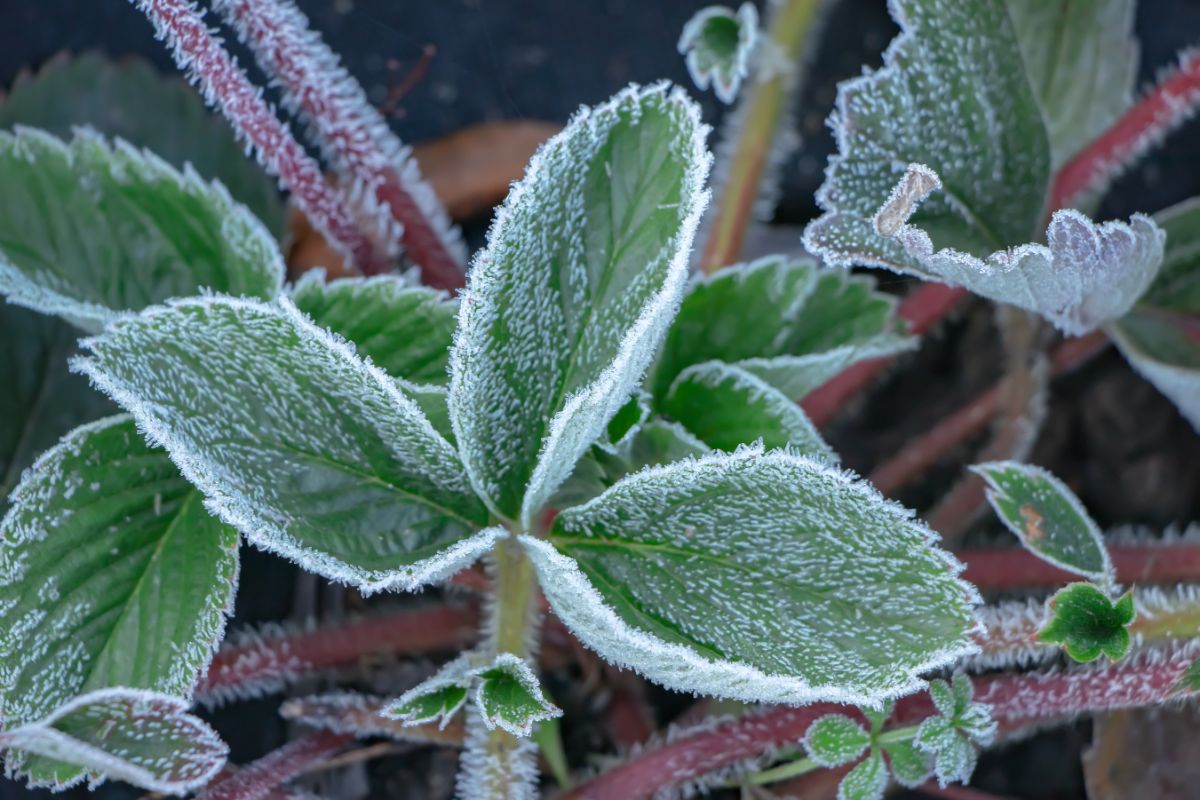
Usually before spring even arrives, the strawberry plants are coaxed from their long winter’s slumber by rising temperatures and burst forth from dormancy in a fevered rush of vegetative production on their journey to setting a nice harvest of berries for the gardener who lavished care on them. But, in most areas, winter poses a real threat to the life of the little forbs.
This post will help you successfully overwinter strawberries so that YOU can enjoy that first burst of juicy strawberry fruits each and every spring.
Jump to:
- The Annual Life Cycle of a Strawberry Plant
- Renovating Your Strawberry Plants
- How to Overwinter Strawberry Plants in the Ground
- How to Protect the Flower Buds From Winter Cold
- How Do You Get Containerized Strawberry Plants Through the Winter?
- Choosing the Shelter for Your Strawberry Plants
- Watering Overwintered Strawberries
- Benefits of Overwintering Strawberries
- How to Overwinter Hydroponic Strawberry Plants
- Answer to: Overwintering Hydroponic Strawberry Plants?
- What If You Only Have to Deal With Occasional Outbreaks of Cold Weather?
- What Can You Do If Your Strawberry has Frosted?
- What About Cold Weather Growing for Strawberry Plants in Towers?
- But What If I Want Fresh Strawberries All Winter Long?
- Overwintering Strawberries: Conclusion
The Annual Life Cycle of a Strawberry Plant
In the wild, strawberry plants are perennials. They set flower buds in the fall. Then the plant needs a long period of minimal activity to use photosynthesis in lower temperatures and less intense light to build up sugars in its stems and stolons to power a burst of fruiting the next year.
In strawberry plants, dormancy doesn’t mean total inactivity. It just means that the plant is redirecting its energy to built up buds for fruiting and stolons that will reach across the ground to form daughter plants.
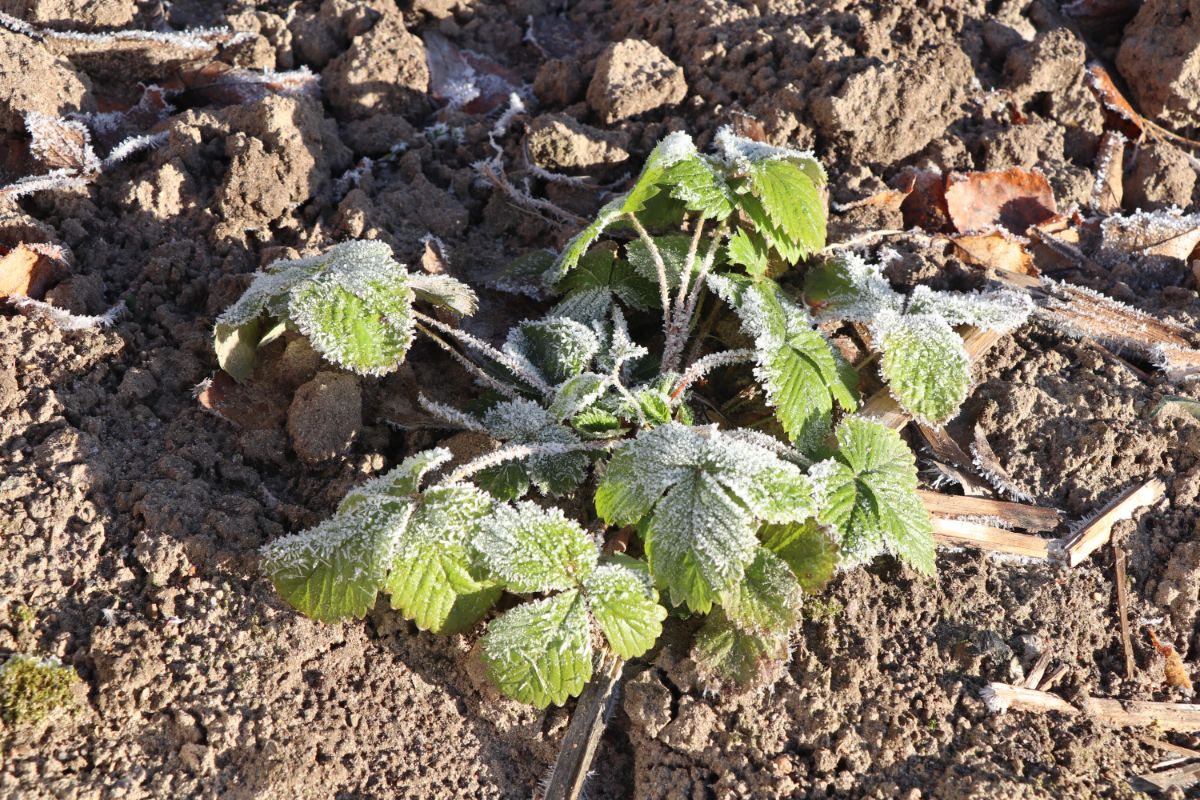
If a strawberry never gets the cooler and darker weather it needs to recharge and rejuvenate, it will continue to try to flower and set fruit. But it will get weaker and weaker with fewer and fewer strawberries, while the crown and roots become more and more susceptible to disease.
Many strawberry growers are fine with pulling up strawberries at the end of the growing season and planting again the next spring. But it’s a lot of work to pull up old plants, sterilize the soil or containers the plants grew in, make sure that the dead strawberry plants aren’t harboring insects or disease, and then put out new plants the next year.
There is also the added cost of new plants. But some varieties of strawberry plants are so productive that it makes sense to keep them going through the winter.
What are some good guidelines for choosing which strawberries to keep through the winter and which varieties to pull out and replant next year?
If the strawberry is day-neutral, it isn’t sensitive to the length of day, at least with regard to trying to set more and more strawberries. Day-neutral varieties like Albion, Jewel, Fort Laramie and Tristar may yield strawberries for months on end, but they only get weaker if you try to keep them through the winter for production next year.
If the strawberry bears most of its fruit in the early summer, then it is a good candidate for overwintering. These “June bearing” strawberries (depending on your climate, the peak bearing season may be as early as March or as late as July) only need winter care to rev up production all over again next year. Strawberry varieties of this type include Allstar, Chandler, Earliglow, Honeoye, and Surecrop.
We can’t list all the early-summer bearing varieties here. But chances are they were identified as such when you bought them. You can check with the grower or the nursery to be sure.
Winter care for strawberries begins in late summer.
Renovating Your Strawberry Plants
Late summer or early fall are times for “renovating” your strawberry plants. When you see that your strawberry plants aren’t producing new fruit, it’s time to prepare them for their pre-winter renovation.
The process of renovating your strawberry plant involves cutting it back to just 2 inches (5 cm) high and carrying away the trimmings. This interrupts any disease processes and deprives insects of a winter home.
If you have a small strawberry patch, or you grow your strawberries in containers, you can do the trimming with hedge clippers. If you have a large, flat field, you can use a lawn mower, but you need to make sure the blade is elevated so you leave the crown intact and you don’t take all of the foliage off the plant.
Make sure any plant debris is carried off to the compost pile. Then give your strawberry plants some late-season fertilizer.
Conventional growers can put out one pound of 10-10-10 fertilizer for every 25 plants. Scatter fertilizer pellets over the ground, rake them in gently, and water your plants (preferably with a drip, not with a sprinkler, to prevent a new round of fungal diseases).
If you are growing your strawberry plants organically, this is the time to give them aged compost and foliar mineral sprays.
Either way, fertilize in the late summer or early fall, at least a month before your expected first frost. You don’t want to stimulate tender new growth that would only get nipped by frost. You want the vines and flower buds to have a chance to mature before really cold weather sets in.
Winter care for in-ground strawberry plants
A few light frosts will just send your strawberry plants into dormancy. There is no need to race out to your garden to cover up strawberry plants for frost protection if they have already stopped blooming and bearing strawberries. (If they are still blooming, of course, a thermal blanket — not a sheet of plastic — offers adequate frost protection.)
Winter temperatures much below 15 degrees Fahrenheit (about -10 Celsius), however, will kill the flower buds that the plant needs for next year’s production. It is important to protect the flower buds from winter cold.
How to Overwinter Strawberry Plants in the Ground
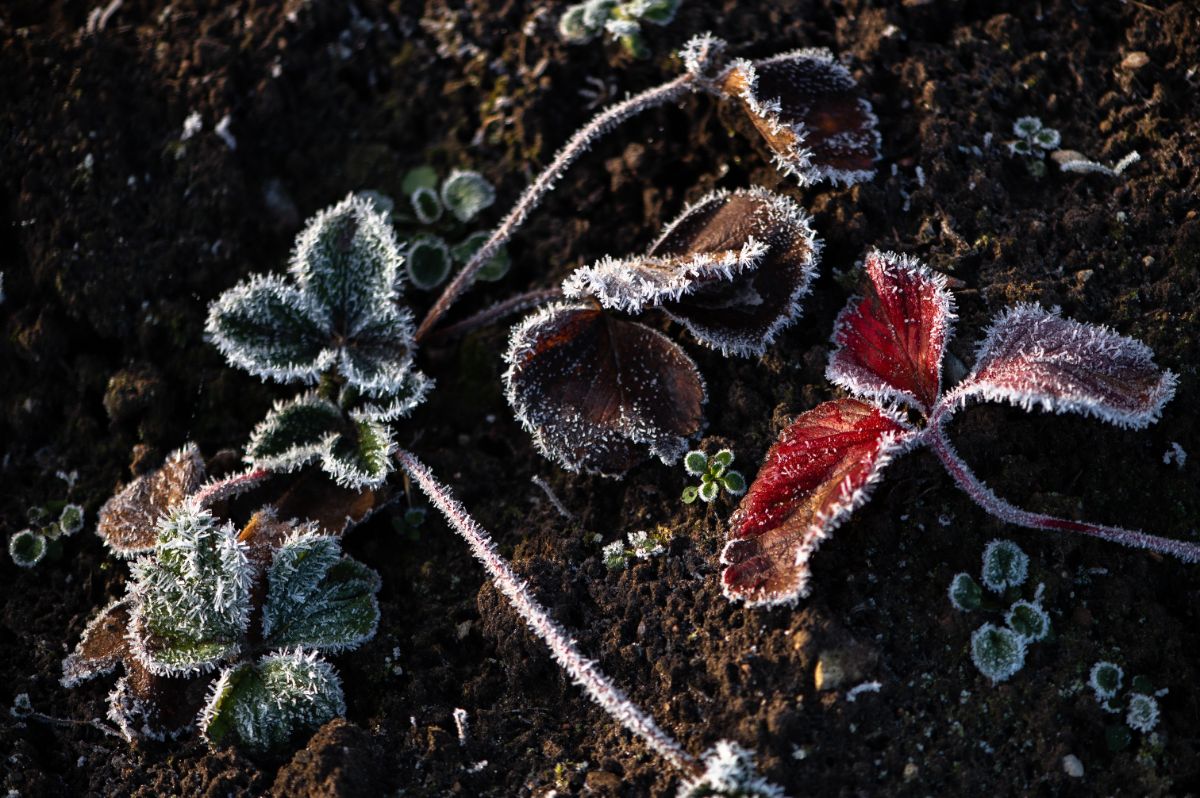
Strawberries are relatively small plants, but they have a big productive capability. Due to their small size and easy adaptability, they make great ground plants and container plants. How to overwinter strawberries in containers will be discussed in the next section. Here the basics of overwintering strawberry plants in the ground will be briefly discussed. Extensive details on caring for strawberry plants can be found on the comprehensive Growing Strawberries reference page.
Overwintering strawberries in the ground is relatively simple. Strawberries are cold hardy, for the most part, and will survive mildly freezing temperatures without much problems. So, in areas with mild winters, little to no care may be required. However, in more northern (or southern for the Southern Hemisphere) regions, extra care will be required. That care takes the form of mulching.
Strawberry plants must have protection when the temperature drops into the low twenties. Once that temperature has been reached (usually in December), the plants should be in their dormant stage. At that point, it is time to overwinter them by mulching. For most regions, a mulch of straw or pine needles two or three inches thick is sufficient, but in colder regions more insulating mulch should be added. Again, more specifics about in-ground overwintering strawberries is available on the reference page mentioned above and on this page: How to Mulch Strawberry Plants for the Winter.
How to Protect the Flower Buds From Winter Cold
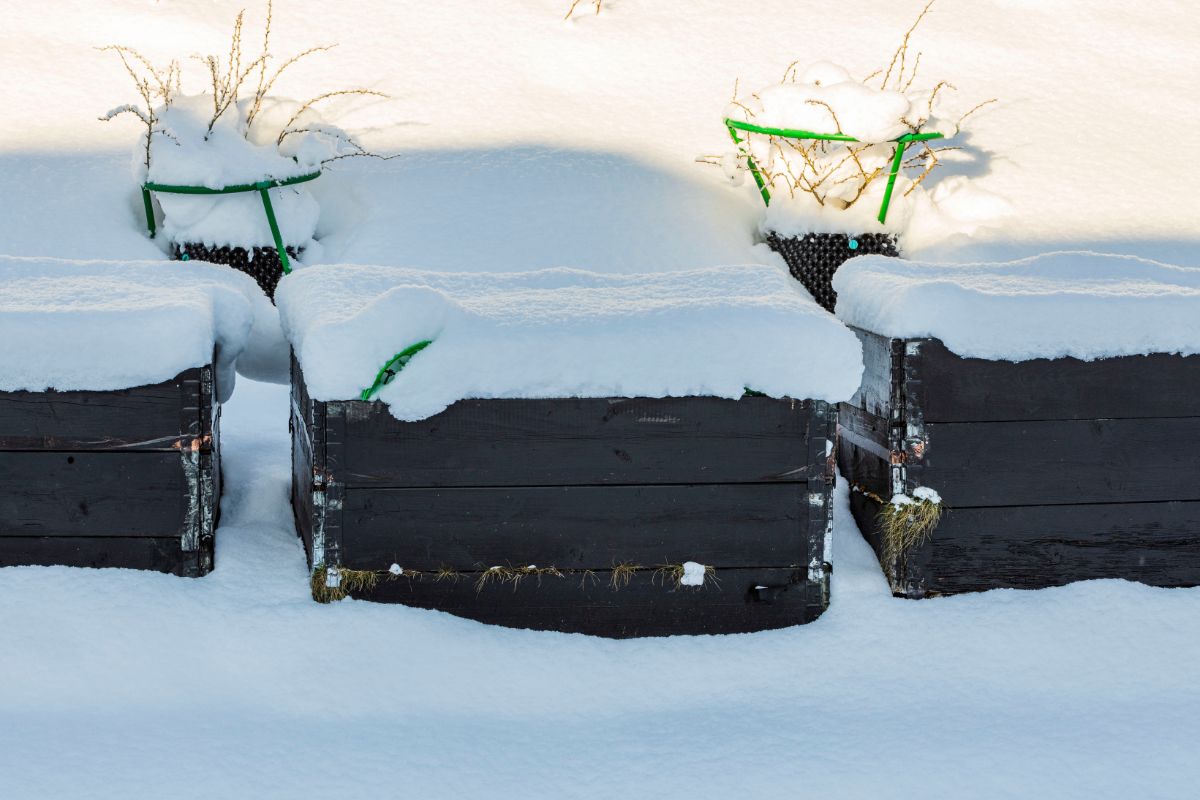
An important principle of cold protection is that still air is an insulator. The secret to keeping strawberries warm in the winter is thick covering or a light mulch that traps warm air inside it. Even better, this mulch would have lots of surfaces that can catch drops of moisture that release heat as they freeze.
Pine needles make a great mulch. They are easy to rake away from your strawberry plants when the weather warms up in the spring, and they keep the soil slightly acidic as they decay.
Clean, weed-free wheat, oat, or soybean straw is also a good choice. Or if you had a corn patch, chopped up corn stalks make a great choice.
Covering your plants with plastic will increase the overall temperature underneath, so long as the edges are sealed. The heat of the ground helps maintain the temperature, since the underground freezes less quickly than top soil, the air or water.
Cardboard is sturdy and may be suitable if you have a small strawberry patch or pot to cover. It will block wind and increase the temperature underneath.
It is important to let your strawberry plants harden off with a few light frosts before you add protective mulch. You don’t want lots of active growth going on underneath the mulch that could produce tender shoots that could be damaged by sudden, severe cold.
Winter care for strawberries in containers
Winter can be prime time for growing strawberry plants. You can transplant year-old plants into containers in the early fall, placing the container in a sunny but protected enclosure. The plant can set flower buds and grow roots to grow like gangbusters next spring.
How Do You Get Containerized Strawberry Plants Through the Winter?
The principle to remember for winter care of strawberry plants in containers is that shoots are hardy, but roots are delicate. Most growing containers for strawberry plants don’t provide a lot of insulation. Cold drafts can circulate around the containers. The soil or planting medium inside the container can become as cold as the ambient air surrounding it.
If a shoot dies, the plant can replace it. But if the roots die, the plant dies, too.
The key to overwintering is controlling the temperature so that the plant is cold and alive, but not actively growing.
Slow exposure to lower and lower temperatures gives the strawberry plant to make its own “antifreeze”. The stems and the roots accumulate sugars in the plant sap that keep it from freezing through.
Constantly freezing and thawing keeps the plant producing new growth that dies with the next freeze, depleting its energy so it will be weaker next spring.
Get containers ready for overwintering
Successful overwintering requires good timing. Strawberry plants should be in their pots for several weeks before they are exposed to cold. In most of the colder-winter areas of North America, this means that year-old plants need to be in pots in their winter shelter in October so they will be ready for cold coming as soon as November. The stronger the root system, the stronger the plant.
Any dead stems or leaves should be removed to prevent botrytis infections.
The strawberry plants need to be thoroughly watered when they are put in their pots and at least one more time before they are put to bed for the winter. Watering is critical because soil moisture is a source of heat. Not only does dry soil freeze much more quickly than damp soil, water releases heat as it changes from liquid water to ice.
Don’t forget rodent control. Strawberry plants make a tasty winter snack for any mice or rats that may choose to spend the winter inside your plant shelter. But what kinds of shelters do strawberry plants need?
Choosing the Shelter for Your Strawberry Plants
Thermal blankets are a great choice for maintaining strawberry plants outdoors during the coldest winter months when temperatures are constantly below freezing. Common thermoblanket materials include polyethylene foam laminated with white UV-resistant polyethylene film (for instance, The Winter Blanket), flexible polypropylene foam (Microfoam), and closed cell polyethylene foam (Guilbond). There are also fleece plant blankets that keep plants warm even in severe cold. Blankets should be oriented north-south so they are not lifted by strong northerly winds. The edges should be weighted down. When thermal blankets are removed in the early spring, they should be stored indoors so they will last another two or three years. In locations where temperatures fall below -10 degrees Fahrenheit (about -25 degrees Celsius), plants should be covered with two layers of blankets.
For even more thermal protection, cover plants with a layer of plastic, a layer of straw, and another layer of plastic. First, build an inexpensive frame of wood or mesh wire to cover the area where the strawberry plant containers have been placed. The cover the frame and the plants with a sheet of inexpensive clear plastic. Cover the first layer of plastic with 4 to 6 inches (10 to 15 cm) of dry straw, and then cover the straw with another layer of white plastic. This protects your strawberry plants against both extreme cold and thawing.
Yet another way to keep strawberry plants at a constant temperature below freezing is inside an unheated quonset polyhouse. Strawberry plants in their containers are placed on a flat, dry, well-drained surface. A quonset hut frame is built from PVC pipe. At temperatures you are likely to encounter in the fall, PVC pipe is flexible so it can be bent into hoops and attached to a frame built around the plants.
The quonset frame is covered with one or two layers of polyethylene. If you use two layers of polyethylene, leave some air space between them for extra insulation. Once outdoor temperatures fall below 25 to 30 degrees Fahrenheit (-4 to -1 degrees Celsius), the plants inside the frame can be covered with a thermal blanket to prevent further freezing and to protect next year’s fruiting buds. This kind of protection is adequate down to about – 5 degrees Fahrenheit (-20 degrees Celsius). It’s important to remove the thermal blanket from the plants during warmups to keep moisture from accumulating on the plants.
During periods of warmer weather, use a soil thermometer to check the temperature of the pots. If soil temperature is consistently above 40 degrees Fahrenheit (5 degrees Celsius), remove the thermal blanket. On the other hand, if the soil temperature falls to 15 degrees Fahrenheit (about -10 degrees Celsius), then you will need to place a heater inside the hut.
Let your strawberry plants warm up gradually in the spring
As long as there is still a risk of cold weather, you don’t want your strawberry plants putting on heavy new growth. Make sure they start growing slowly in early spring by gradually removing cover in February and March, leaving them some cold protection in early April before returning them to growing season conditions in May. As plants are putting on new foliage, check them frequently for fungal infections and treat as needed.
Watering Overwintered Strawberries
Just as with storing bare-root strawberry plants, your overwintered strawberries still have to have appropriate water. Totally dry soil means dead plants. Too much moisture can also be fatal. During the cold temperatures and while the plant is dormant, only minimal water is needed.
For outdoor, in-ground, and mulched overwintering strawberry plants, the natural precipitation should appropriately maintain sufficient soil moisture. For the container plants, however, water will have to be provided. The easiest way to provide appropriate water is to collect snow from outside and throw a handful or two on top of the soil. The slightly warmer temperatures in the garage should slowly melt the snow allowing a more natural seepage into the container soil. Doing this periodically (about once a month) should sufficiently moisten the soil and allow the plants to thrive again come spring.
Benefits of Overwintering Strawberries

There are numerous benefits to be had by overwintering strawberries. Here are some of them:
Overwintering Strawberry Plants Is Natural
Strawberry plants have a dormant phase for a reason. It increases their life span! Strawberry plants can be kept inside at warmer temperatures all year round, but this essentially causes the plants to never “sleep” and drastically reduces the overall life span of the plant.
Overwintering Strawberries Maximizes Production
Strawberry plants are perennial by nature. Letting them go dormant during the winter as nature would have it allows for maximal production from each plant. Since strawberry flowers should be pinched during year one for spring plantings, the second, third, fourth, and even sometimes fifth years are where production really comes on strong. Protecting dormant plants during the winter yields much more production following.
Overwinter Strawberries to Save Money
If you overwinter strawberry plants successfully, you don’t have to buy them again the following year. And, since they’ll live longer, you don’t have to replenish them as often either. Plus, since overwintered strawberry plants are more productive than plants that are never allowed to go dormant, you get to eat more of your own strawberries; and that means you’ll be saving money by not buying strawberries at the grocery store or farmers market.
It Is Fun to Overwinter Strawberry Plants
And, lastly, it is just plain fun to overwinter strawberries! They don’t suffer cold injury, and it brings a true green thumb at least a modicum of satisfaction knowing that his plants are kindly looked after. So, save yourself the work of replanting new plants each year and overwinter strawberries henceforth.
How to Overwinter Hydroponic Strawberry Plants
Bradford Nick asked:
I have my strawberries outdoors in hydroponics. Summer has ended and we’ve had several killing frosts, but the seascape strawberries are still growing and flowering. My plan is to keep the strawberries in their hydroponic net pots, and to overwinter these pots with the roots hanging out, in a box of sand in the garage. I have a lot of runners I never trimmed. My question is, next year, will I get better production from the mother plants, or from the runners? Will unrooted runners survive 5 months in cold sand?
Answer to: Overwintering Hydroponic Strawberry Plants?
Bradford Nick,
Let me start off with a few quick comments before answering your question, as other readers may benefit from the information. So, strawberry plants are much more cold-tolerant than many other popular garden plants. Once a good frost hits, most tomatoes, melons, and just about everything else is going to bite the dust. Strawberries, however, are more resilient. While any flowers in full bloom will likely end up damaged or dead, a few mild nights aren’t enough to make the plants go dormant, much less kill them (as you’ve experienced!). Even frosts don’t put the kibosh on the hardy little fellows. Once the temperatures drop down into the low twenties or upper teens, depending on the varieties you have planted, they will go dormant. It isn’t until they go dormant (i.e. look dead). That they should be moved into your planned overwintering hydroponic strawberry plants area. So, fret not. Your plants will go dormant at some point as the temperatures decline. When they do, you can then overwinter them.
As far as production goes, you should get better production from the older plants for about two years. The root systems are larger, and the plants more capable of producing fruit. After two years, however, the older plants will likely start to decline in vigor. While healthy plants can continue to produce well up to age 4, they often begin to decline before then. So, to be on the safe side, you should switch out plants no later than year 3 for younger specimens.
Overwintering hydroponic strawberry plants is more difficult than overwintering traditionally-grown plants due to their exposure. Water isn’t a good insulator and will freeze solid in cold temperatures. Your plan of overwintering hydroponic strawberry plants in sand can work. If you keep the strawberries in their hydroponic net pots and overwinter these pots with the roots hanging out, you can successfully keep them alive in a box of sand in the garage. You do, however, need to make sure that the roots are completely covered in the sand, and that the sand doesn’t dry out. As long as the sand remains damp and your temperature doesn’t reach arctic cold levels in your garage, they should make it. Also, make sure you use sterile sand when you are overwintering hydroponic strawberry plants. Otherwise, you can have all sorts of pathogens in it that may transfer to and kill your plants during their stay in the Hotel Silica.
What If You Only Have to Deal With Occasional Outbreaks of Cold Weather?
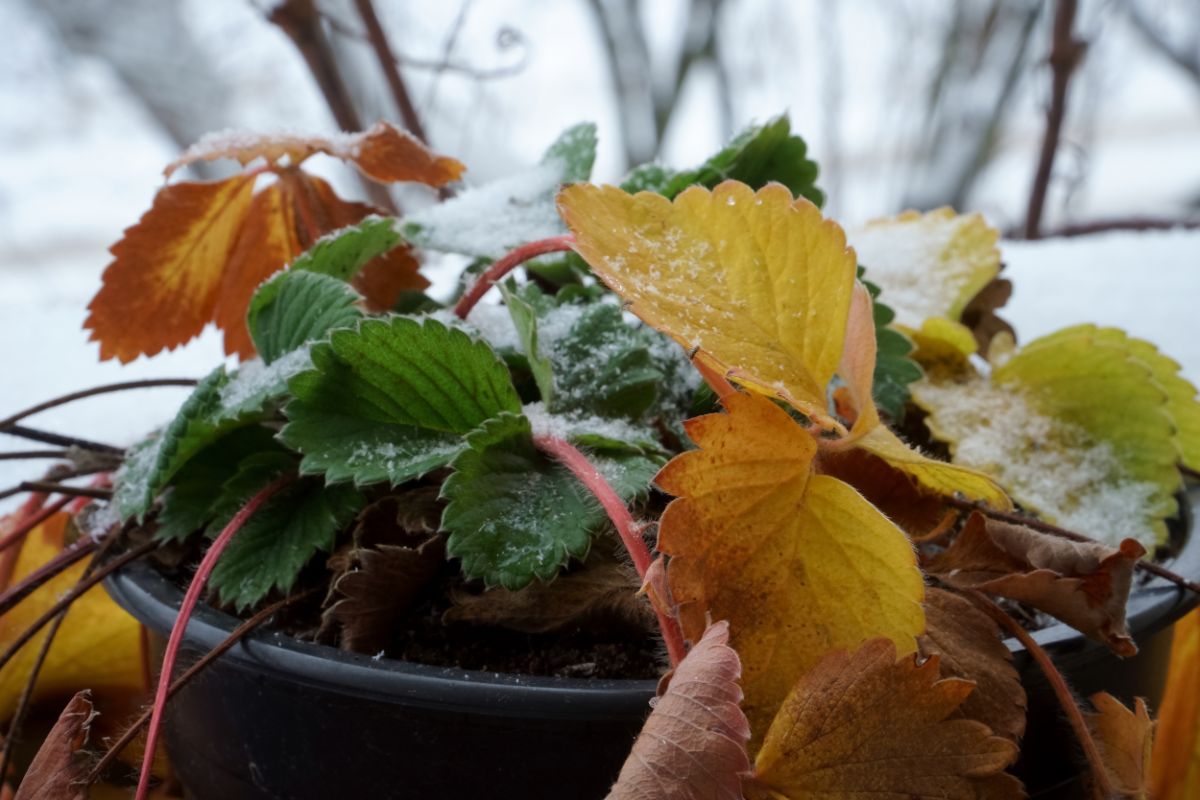
If really cold weather isn’t common at your location, you may want to maintain your strawberry plants in containers that are constantly thawed rather than constantly frozen. Heated greenhouse with roll-up sides give you the ability to keep plants from freezing all winter, but also to keep them from growing too quickly by opening the sides of the greenhouse when temperatures are cool but not cold. The objective in this setup is to keep plants at 50 degrees Fahrenheit (10 degrees Celsius) or less until spring.
A heated greenhouse with roll-up sides gives you the ability to gradually introduce your plants to warmer weather and to keep them from accumulating moisture that attracts fungal diseases.
What Can You Do If Your Strawberry has Frosted?
If your strawberry patch got a little too cold and may have damage as a result, it’s time to take emergency measures to save them. While many plants are hardy enough to survive, it’s important to warm them up.
For cold-shocked plants, one of the best things you can do, is to water them. Water helps plants recover from stress and the trauma of the cold snap. When watering, apply around an inch of new water to your garden. It’s even better if you can water with lukewarm water, as it will help thaw the soil if it’s still frozen or extremely cool.
Why does water work? When plants are frozen, the water within them is removed. Without that moisture, they are dehydrated. Rehydrate your plants, and you should see them perk back up.
Another important step is to make sure not to prune a plant that has been cold shocked. Pruning can stress a plant, so wait until your plant begins to grow to assess which parts may have died and if you need to prune anything at all. Until then, you can remove dead leaves and dried leaves from the plant, since they are no longer supporting photosynthesis.
What About Cold Weather Growing for Strawberry Plants in Towers?
Strawberry towers are designed for single-season growth. There is too much surface area exposed to cold air to make overwintering practical, unless you live in an exceptionally warm-winter climate.
But What If I Want Fresh Strawberries All Winter Long?
We have written about greenhouse production of strawberries. But if you just want a few strawberries, you can grow your strawberry plants in a cold frame.
Overwintering Strawberries: Conclusion
Hopefully, you are now equipped whether you needed to know how to overwinter strawberries in containers or how to overwinter strawberry plants in the ground. Following the advice on this page and elsewhere on this site will help keep your plants productive year after year. So, have fun, save money, and maximize your harvest! And, if you have any strawberry-related questions, feel free to leave a comment. Good luck!
Learn more:
Fall Strawberry Plants
Strawberry Plants and Cold Injury
Winterizing Strawberry Plants




Barry Gerald Straughan says
HI, I live in Edmonton, Alberta, Canada so our winters can get quite cold. I made a strawberry tower on wheels so when winter came I could move it into my heated garage. I’m concerned about a few things. First, how much of the plant should I prune and how do I control the possible fungus that I saw on top of it. I think I may have over watered it.
Most of the time it will be just around 5° C (41°F), so slightly above freezing. However, occasionally I do work in that garage and warm it up. How do I keep the plants healthy in that environment and what temperatures for how long would be detrimental? If I work a couple days a week in there for about 4 or 5 hours at about 15° (59°F)
Mary Ward says
Remove dead leaves as best you can.
Temperature consistency is your friend. You don’t want the plants warming up too much or the soil drying out completely. Water about once a month just to keep soil from getting completely dry. Place the tower in the coolest corner far away from the heater and a little bit of heat while you’re in there shouldn’t be too concerning.
Jason says
Hello I’m in zone 9 (central valley CA). I have some ever bearing Albion strawberry plants and I’m starting to get what looks like black hairs and little spots on my newly forming berries do you know what this may be? I’m not sure if the spots are insects or part of the plant itself.
Corinne says
I live in a zone 3-4 and planted some small strawberry plants I bought from Stein’s last June. I expected them to die off when our long, bitter winter came rolling through and didn’t winterize them at all. We had lasting snow and weeks of negative double digits, as always. However, come first thaw in March, I saw they had not only survived, but spread across nearly half my little 5×5 garden while under the snow, some snow still covering parts of the plant. It’s like the snow acted as a little greenhouse when the sun would shine on it, and kept the bitterness from killing the plant. I checked to see if they were one of those gmo strawberry types, but , nope! Just really hardy. Most things don’t grow or survive here well because of the cold, so I was impressed. Just thought to share.
Marti says
I have two Tartan 1′ x 2′ x 6′ stock containers. I am planning on putting my strawberries in these. We have winters that at the extreme can reach -15f but average no colder than -0 for a week or two at the most. Average temps are low 20’s, with about 2 ft on the ground for snow coverage. Do I need to bury the tanks some to prevent freezing or will the plants be okay above ground?
Lisa Marie Wurtz says
I live in zone 7 and put my container strawberries in plastic bins covered with straw for the winter. I opened them 2x over the winter to toss in some snow. Now that I opened them again, the straw is moldy. Can I remove the straw and replace it with clean straw? Should I not cover it with the lid? We are still in danger of more snow / frost (although we have not had much this winter). I’m not sure and I hope I didn’t kill all of my plants!!! Any info from an experienced gardener would be appreciated!!!
Thanks in advance–
Lisa
Ronda says
Mr. Strawberry,
I live in Denver, CO (Zone 5). I have 4 large strawberry pots that I cannot bury in the ground nor buy a larger pot to put them into in order to insulate around it. Two of the pots are terracotta and two are light plastic from Costco. Every year I loose too many plants through the hard freezes even though I cover them before winter with 1-2 old comforters that drape down the pot side to the ground (air is exposed between the blanket and the pot). This year I am thinking of wrapping the pot with 1.) burlap 2.) bubble wrap or 3.) wool cloth if I can find it at a fabric store. Then I am going to cover the top of the plants with 3-5″ of mulch or straw per multiple website recommendations. I have this frost blanket (H&B Luxuries Plant Cover & Frost Protection Blanket) that I was wondering if I should put that on top of the plant below the mulch. I would greatly appreciate your opinion about the material you recommend for wrapping the pot as well as your opinion if the light frost protection blanket should lay down below the mulch or just use mulch alone. I would really appreciate your opinion since I can’t find the best answer online. Thank You!!
Mary Howe says
I have spider mites in my strawberries, the webs are terrible, does this hurt strawberries? How can I get rid of them?
L DiMarco says
I sprayed with a solution of neem oil n soap, then again after 7 – 10 days ( then again ) I also pruned away some of the leaves. My infestation was severe. I now have none.
Glenis Kitchen-Jones says
Hi, not exactly sure of my zone, I’m in Edmonton, Alberta Canada. We are renting and they have the most incredible strawberry patch, think they are evergrow??, anyway, we may move before spring and were wondering how and when we could take some of the plant with us??
Lorna says
If you plant some of the runners in small pots still attached to main plant until you can see roots at bottom of pot then cut the runner that is joining them I have made 36 strawberry plants just useing runners from 2 plants
Mike says
I live in coastal southcentral Alaska. I have been overwintering my strawberry containers under a layer of mulch and than a plastic tarp with excellent success for years. This spring when I uncovered them I found shrews had totally wiped out all the containers, eaten all the plants. How should I overwinter them this year to prevent this from happening again?
Alldara says
Hello, I live in southern Ontario and I am looking to winter two strawberry plants. Last year I had one, and I didn’t know to put mulch and it didn’t regrow. I bought a new one early spring, and planted some of the off shoots in a second pot. I have a corner where my fence meets my house and have moved the pots there, where they are sheltered by my rose bush a bit. Our dryer vent is nearby, so it stays a bit warmer. Can I cover the leaves with burlap to allow moisture in but keep snow off the leaves? There are pinecones and leaves nearby that I could add also…my local stores have stopped carrying mulch.
Sharon Gherman says
I would avoid a location near a dryer vent, as changes in temperature are a problem for dormant strawberries. Find a location in your yard and bury the pots up to their rims, then cover them with row cloth and a 6-12″ layer of straw out about a foot beyond the pot. When you uncover them in the spring, they should be ready to spring back into action.
Cheryl McMaster says
Can I use clear plastic to cover my strawberry plants. I am in zone 6. I have each year used white plastic. Strawberry farmers use white plastic in my area. But I was given a roll of clear plastic and I was wondering if it could be used.
Barbara Davis says
I have strawberry plants in half barrels. I live in zone 6 and the winters are sometimes too cold to leave out. Would you suggest putting the barrels in my greenhouse and not using a heater?
I read to water sparingly and cover with towels to keep dormant.
Do you recommend this plan?
Eglantine says
I just bought some strawberry plants and had planned to plant them in a large (4 ft. diameter, 18 in. deep) tire which has been turned into a planter. I am in zone 3 and am now concerned they might not over-winter since they will not be planted directly in the ground. The planter is too large to easily bring inside during the winter months. Thoughts? Opinions? Thanks so much! I am enjoying your site and learning a lot!
Cara says
I have a strawberry plant in a planter outside about 14×14 inches, I am in canada and I left it outside for the winter up against my garage wall, it got down to at least -30 celsius this winter but it was always insulated with snow. will they come back or should i compost and start over? I also had lots of runners, should I cut them all back if it will survive?
Denise Shelton says
I have not mulched my strawberry plants yet because the ground temperature was still 40 degrees. We just had about three inches of snow. The air temperature is in the 30s and will be in the 20s tonight, 30s again tomorrow. The day after tomorrow it is expected to dip down into the teens at night but be near 40 in the daytime off and on for the rest of the week. Should I get the snow off the plants and mulch before the air temperature is in the teens? I understand the snow is probably helping insulate the plants at this stage and I’m not afraid of them getting damaged but I wonder when to mulch. Thanks.
Mr. Strawberry says
Denise Shelton,
The ground temperature is more vital than the air temperature. The snow will insulate the plants at this point. Once the snow melts, go ahead and clear off the dead top foliage and then mulch. Good luck!
Lea says
I saw a video once of a fellow who had really long bags of soil and he was taking strawberry plants, roots exposed, and shoving the root systems into the bags. He had stored them over the winter and was planting them for the new season. This got me thinking about how on earth he had stored those plants over the winter… Can strawberries be removed from the soil and then stored? I’ve never had a video bring up so many unanswered questions.
Thanks,
Lea
Mr. Strawberry says
Lea,
They can, but it isn’t advised unless absolutely necessary. See this for more, and good luck!
Ashley Robb says
Quick question, new to gardening. I have a bunch of runners with established roots clipped, in pots, and ready to be planted. I tiled a bed but it’s pretty sand like – manure added years ago – but I want to plant them there though. What should I do to the soil before planting? It’s end of summer and coming into the fall here in BC where I live. Should I get compost, mix it in, make my beds, and use fish fertilizer in each hole before planting? Should I use mulch around them too? Any advice much appreciated!!! Thank you kindly
Mr. Strawberry says
Ashley Robb,
Start here! Good luck!
Lisa says
Hi, I have a strawberry plant in a hanging pot that I am going to find a spot to winter over,my question is do I have to cut it back before doing so?Thank you.
Mary Boles says
I have the same question. If they are to be cut back, when do you so this?
Jessie says
I am overwintering in containers, zone 4. My plan is to place them along and outside wall in my garage, which is not heated, but houses my furnace and water heater, thus staying warm. How cold do the plants need to be to stay dormant? I am a bit worried with the warmth in the garage that they will not stay dormant.
Any recommendations?
Thank you,
Jessie
Mr. Strawberry says
Jessie,
In Zone 4, your plan should work just fine. Good luck!
Terry Levesque says
Thank you Mr. Strawberry for your helpful information. I plan to get the diatemaceous earth you mentioned. Hope I can find it locall as I will need alot for the strawberries and raspberries. Again, thank you for your helpful information. Terry
Mr. Strawberry says
Terry Levesque,
You’re welcome! Good luck!
Lorri says
My strawberries are planted in planters on my fence. Some of the planters need repairs requiring removal of the plants. If I were to plant them in my raised beds for the winter, when would be the best time to do that? Could they then be replanted in the planters in the Spring? They are producing fruit right now. I’m in zone 6b and our average last frost date is October 3rd. Thank you for your help.
Mr. Strawberry says
Lorri,
If you need to transplant, it is best to do it in the fall. Doing so allows the plants to re-establish themselves prior to going dormant, and they will have a better survival rate that way. However, re-transplanting them again in the spring will add additional stress to the plants, and they will likely not produce as well for you following the spring transplantation. So, if you can leave them in the raised beds next spring, they will probably do better! Good luck!
Terry Levesque says
1.) Can strawberry plants be cut back or mowed over in the late fall?
2.) How do you properly thin them out?
3.) Little black, spotted beetles are attacking the strawberries and raspberries. Is there a natural way to get rid of them or is pesticides the only effective method? If pesticides, what kind?
Mr. Strawberry says
Terry Levesque,
See this for strawberry renovation. Good luck!
Terry Levesque says
In getting ready for winter, can strawberry plants be cut back? – if so, when and how? This year I have had a problem with little, black, spotted beetle critters eating the berries. What are they and how do I get rid of them? They are also attacking my raspberries. I am growing two types of strawberries: Ozark Beauties and Quinlan – (I believe).
Mr. Strawberry says
Terry Levesque,
Yes, the plants can be cut back or mowed after the harvest is in and renovation starts. To remedy the beetles, you might want to try regular applications of diatomaceous earth. Good luck!
Cathy says
I read a lot of these and my situation was not mentioned that I saw anyway. I do not have an unheated garage, Greenhouse or root cellar. Unable to dig holes in ground for containers. Etc and mine are in the five tier containers. I have a shed or a enclosed porch. the porch would be easier to keep them watered as the shed sometimes get a ton of snow in front of it or iced up and I can’t get into it. I live in zone 5 in New York, upstate. Would the enclosed porch be okay if I brought them in when there was an extended period of Below 32 degrees at night? or should I wrap towels around them ?what kind of insulating material could I put around them if I left them on the porch?
Mr. Strawberry says
Cathy,
In Zone 5, putting them in the enclosed porch against a house wall would likely be enough to keep them alive through the winter as long as you water them periodically to keep the soil from drying out. If the temperatures are forecast to be really low, just through a could of old blankets over them until the temperature warms a bit. Good luck!
Laura says
I just bought strawberry plants (through a school fundraiser) and I want to put them in containers as I don’t have garden space. I live in zone 3 (Southern Manitoba). What is the best type of container to use so that they will over winter best? I’ve seen the plastic or terracotta pots, but also have seen interesting vertical designs using PVC tubes. I would bring them into the garage for winter, and it stays around -2 to -5 Celcius in winter.
Mr. Strawberry says
Laura,
I would advise against the PVC tubes if you are planning to overwinter them. They are much more difficult to insulate. Any container in your location will require a bit of extra work to insulate, but if you can bring them into a garage to protect them, most will do adequately. Overwintering outside in pots of most any kind will likely result in the entire contents of the pot freezing through and ultimately resulting in significant cold injury or the death of the plants during the coldest months. If you need to keep them outside, if you have a space in the ground you can dig up, you can dig a pot-sized hole in the ground and put the pot in the hole. The ground will insulate and a liberal blanket of clean straw will probably keep them alive over the winter. Good luck!
Jim D. says
I live in Sacramento, CA, and used straw bales for strawberry plants last summer. They stayed in the bales overwinter. Though the bales have somewhat collapsed the plants have multiplied and are very green but no flowers. I would like to leave them in place for the coming summer. What do I need to do to keep them healthy and productive this summer?
Mr. Strawberry says
Jim D.,
I’d start here! Also, with the straw bale method of growing strawberries, you might want to fertilize, if you haven’t yet. As the hay decomposes, the plants can sometimes become nutrient deficient and produce smaller or fewer strawberries. Good luck!
Terry says
I use the square foot gardening method and live in Omaha, Nebraska. I have raised beds that sit counter top height off the ground. I planted an 4′ x8′ box last year with strawberries. They did great last year and produced tons of runners. We did not let them fruit. When they went dormant I covered the box with straw. I took the straw off when it started to warm up a few weeks ago. Plants are showing no signs of life. It’s now late April still nothing and it has been nice and warm. I am afraid I lost them. They should be growing by now correct? The boxes are 2×6 wood around the sides. I may try again and insulate the boxes on the bottom and sides, and straw in heavier. Can you use black plastic over the top or will this be to hot on sunny days? I could also use clear plastic and create a green house effect as well. Any thoughts?
Mr. Strawberry says
Terry,
If you had cold enough weather this winter, it is likely that they died. Beds that are raised off the ground are similar to potted plants (or other containers). This might help. Also, this coming winter, it would be good to insulate all around the plants if they will still be raised. If possible, you can lower the raised bed to the ground and cover with straw, allowing the ground to provide some of the bottom insulation. Good luck!
Robert Tatro says
What time of the year in zone six do you remove the overwintering mulch from the strawberries?
Mr. Strawberry says
Robert Tatro,
Usually you remove it once the night-time temperatures are going to stay in the high twenties or higher. However, the temperatures have been erratic this year more than usual. It is likely that things will cool off again before warmer temperatures arrive and stick around for good. So, I’d leave them mulched for the time being. Good luck!
David Hill says
I grow my strawberries hydroponically. How should I prepare and store the plants when the temps finally drop below freezing in Texas? Remove them from the system and cover with mulch? I have considered leaving the system running with a tank warmer and small hoop tunnel.
Mr. Strawberry says
David Hill,
If you can keep the plants warm in a hoop tunnel and with a tank warmer, they will likely survive better than trying to remove them, pot them/mulch them, etc. I’d try the option you suggested first. Good luck!
DeForrest says
I was going to winterize my strawberry plants but it’s the end of December and today the temps are in the 70’s. I looked at the plants but most ask the leaves are still lush and green, should I go ahead and winterize them out wait a little longer? I live in northern central Kentucky. The winter here is very unpredictable from year to year. Should I wait another few weeks, fit I’m sure we’ll have colder weather still and some on late spring this year?
Mr. Strawberry says
DeForrest,
If the leaves are still lush and green, you should wait prior to winterizing/mulching them. Give them a few weeks more, and they will go dormant. Winterize then! Good luck!
Joni says
It’s me again. I have the upcycled BBQ. We got a cold snap. Snow today I was out looking at my strawberry plants and have more then 8 plants in this BBQ. Is winter a safe time to transplant ever bearing strawberries? I would like to transplant to hanging containers and get rid of the BBQ as the birds like to try to tip it over. They have tipped it once already.
Mr. Strawberry says
Joni,
If you can do it without disturbing the roots, they will usually do fine. Good luck!
Sarah says
I’m in Zone 5b and my strawberry plant has been acting weird; it JUST occurred to me that it may be trying to go dormant as the daylight shortens (my strawberry plant and I are from Florida). My question is this: I just watered it, soaked the soil like I usually do, so should I wait to put it in the garage until the soil has dried out a bit? I don’t want the roots to rot.
Mr. Strawberry says
Sarah,
Yes, once you move a potted plant to the garage, you need to make sure that the soil stays just moist and never waterlogged. Good luck!
Diann says
I read that it’s best to thin strawberries. Mine are all together with no space between. How do I know which ones to pull since the plants spread but are still connected.
Thanks!
Mr. Strawberry says
Diann,
If your plants are young, thin them to about 3 plants per square foot. If they are old (3-4 years), try to selectively remove the older plants as they will start to decline in vigor soon. Good luck!
Diann says
I am in zone 6a. I have strawberry plants near the house on the west side. Last year I covered them with burlap because I was afraid the nearby deer and rabbits would eat them over the winter. Do I need to do that to protect them from the cold or is there an easier way?
Thank you!
Mr. Strawberry says
Diann,
In zone 6a, a generous covering of clean straw should do the trick just fine. They will go dormant over the next few weeks (if they haven’t already) and the vegetation will die back to the crown. Since the leaves die back, the wildlife will usually leave them alone (moles/voles and chipmunks can damage the roots and squirrels will sometimes dig at them). Good luck!
JONI says
I was stupid and upcycled an old BBQ. I started with 5 plants and now have 8 but its november and I am still getting fruit. How and when do i overwinter them? I am in zone 8B. Should i just leave them along or what?
Mr. Strawberry says
JONI,
In zone 8b, I would let the plants continue to produce as long as they will and enjoy the fruits of labor! Also, unless you have a very significant cold snap, you can likely go the winter without mulching. Just remove the dead/shriveled leaves once the plants go dormant. Good luck!
Des says
Hello!
I just received 50 bare root Tribute strawberry plants from Starkbros. I live in a 5a zone in South Dakota.
I was going to plant these in a half whisky barrel just for the winter and then separate them this coming spring. I was going leave this outside for the winter since we don’t have room in the garage. So, I thought maybe I could wrap burlap around the barrel with space to stuff hay around and on top of the barrels. Do you think this will help keep my plants shielded from the cold?
Thank you
Mr. Strawberry says
Des,
It is possible. You will definitely need a bit of extra insulation with an above-ground planter, but if you insulate it enough and place it so that it can benefit at least a little bit from the ambient heat of your home (put it adjacent to a wall), they could do fine. Good luck!
Krazinan says
As an alternative to putting snow on strawberry plants in a garage or shed, I thought ice cubes would be ok,
Diane says
Two years ago I ordered organic strawberry (8 plants) on-line. I planted them and they spread everywhere. I have no rows but just plants in a small section in my garden. The second year I had lots of great berries (I planted 4 June and 4 Ever bearing). Now that the berries have not produced in July, Aug., and Sept I have tons of tall clover-looking plants taking over my strawberry patch. The weeds are so close to the strawberry plant that I have a hard time hand-pulling the weeds. I have done some pulling but the clover looking tall weeds have taken over. Will they die over the winter? Is there an organic weed killer to use? (My strawberries will be affected since they two are so close together). Help!
Mr. Strawberry says
Diane,
Unfortunately, weeds are the bane of strawberry plants. Mulching helps to keep them down, but the weeds simply have to be removed one way or another. I know of no organic herbicide, unfortunately. If they die over the winter, they will likely come back next year. The best option is to spend the time pulling them up now and then applying a mulch to help prevent their return, or being vigilant next spring and nipping them in the bud. Good luck!
Lindsey says
At what temp. should I bring my strawberries into my unheated garage to overwinterize them?
Mr. Strawberry says
Lindsey,
You should bring them in once they go dormant. Usually, that will occur when the night temperatures have been in the mid-to-high twenties for a few days in a row. Good luck!
Marie says
I’d like to know if I can overwinter my hanging strawberry plant in an indoor closet on an outside wall? As well, do I have to cut it back before overwintering?
Mr. Strawberry says
Marie,
If by “indoor” you mean inside your house, no, that won’t work well. You don’t need to cut the plant back before overwintering. Simply wait until the temperature drops, then remove the dead leaves once the plant enters dormancy. Good luck!
Wilma chamberlain says
In earlier this summer, sent you a order for the strawberry Growing master book. I haven’t got it yet, but you took the money out of my account. You never sent the book or gave. My money back why.
Wilma chamberlain
Mary Ward says
We will check our records.
Boston Planter says
Dear Mr. Strawberry,
I have plastic window boxes on my outside deck as my containers. I also have some Mr. Stacky containers. I am trying to figure out how to winterize them, since I live in Boston and I don’t have a garage or unheated basement. The basement has the furnace and boiler room in it, so it stays warm all winter. I don’t have the land to dig holes for winterizing in the ground. What do you recommend? They containers are all on a deck above ground, so I’m guessing they would be too exposed during the winter.
Thank you!
Mr. Strawberry says
Boston Planter,
You might want to try getting the plants/containers as close as possible to the sheltered side of your house as possible. Then, you can use some hardware cloth (or even fencing with larger holes, if cheaper) to create a cage around the plants/planters. Fill the cage with clean straw so that the plants are completely covered (once they go dormant), and just make sure that the soil doesn’t dry out completely over the winter months. That is probably one of your best options. Good luck!
Jessica says
This is my first year growing strawberries. I do have an unheated garage, but the wall against my house is completely covered with junk, so I can’t put it there. Can I just leave it in my garage and not against the wall? I’ll cover it with a towel or two. Thanks!!! ????
Mr. Strawberry says
Jessica,
Yes, if the plants are properly insulated, they will do fine in the garage. Just make sure that you keep the soil from drying out. Otherwise, they will certainly die. Good luck!
Madeline Crabb says
Hi! This is my first year of real gardening. B/C of a serious mole problem, I’ve done container gardening that’s worked well for most things.
Strawberries have done really well, although I’m just learning. I do also have a 6 x 8 “portable” greenhouse . You told another person that to winter their plants in the greenhouse, just make sure they don’t get totally dried out. But don’t we have to cover them? Doesn’t being dormant mean they also are kept in darkness?
I plan to grow vegetables in my greenhouse over the winter, so there will be sunlight and heat. Insulating GH for good growing environment. ( I will use heater on the coldest of nights.) Doesn’t all this pose a problem for the strawberries?
Also, I’m concerned about all the runners the plants have sent off. I’ve tucked them back into the pots to grow roots, but will I have to transplant the entire containers of plants into bigger pots before wintering them? OMG…there is so much to know just for one type of plant!
Thanks in advance for any advice you have to share. I will continue to research the site.
Mr. Strawberry says
Madeline Crabb,
To best overwinter strawberry plants in greenhouses, they should be unheated. If you are going to grow other vegetables in the greenhouse, then the strawberries won’t enter dormancy as it won’t get cold enough to induce them to go dormant. If you live in Zone 7 or below, you likely won’t even have to protect them at all if they are outside without any protection at all (as long as there isn’t a low cold snap). The dormant plants don’t require darkness, just cold temperatures, to remain dormant. You don’t have to transplant the rooted runners into new pots prior to winter, but it is best to transplant them in the fall for best success rates. Good luck!
Jo Jacobs says
Can I not just bring my strawberries inside where it is warm, keep them near a well lit window? Or do they need the dormancy? Thanks 🙂
Mr. Strawberry says
Jo Jacobs,
They do better with a dormant period. Keeping them active all year round diminishes both life span and yield. Good luck!
Penni Jones says
I made a “strawberry tree” as seen on Bonnieplants.com, the plants are in wire baskets with coconut liners and hang from hooks on a pole…what’s the best way to overwinter these? Thanks in advance!
Mr. Strawberry says
Penni Jones,
If you have an unheated garage, storing them there against the side of the house that is heated is best if you live in colder climates. Just be sure to water them occasionally so that the soil doesn’t dry out completely. Good luck!
Amy says
Hi,
I have my strawberry plants growing in beds with landscaping fabric. They are starting to get their runners and I am wondering the best way to save the runners. I know I could cut holes in the fabric but would prefer not too. If I put plastic pots out alongside the plants and placed the runners in them, while still attached to the mother plant so they can take root, do you think that would work fine?
I was thinking that I could just wait to clip them for when I am ready to bring the pots inside to overwinter them. Thanks!!
Mr. Strawberry says
Amy,
Yes, that will work splendidly! Good luck!
Janice Winchel says
I have planted strawberries in a three tiered pyramid. Do I heavily mulch them. with straw, in the winter to protect the plants. Our winters her in Mi. get quite a lot of snow and very cold, below temps! Thank you for your help!
Mr. Strawberry says
Janice Winchel,
Yes, you will need to mulch them heavily with clean straw to keep them from suffering cold injury with the frigid winter temperatures there. Good luck!
Jake says
I live in yellowknife, where winter gets to -40 each year. I lack a garage, and i have my plants in containers. What would be the best way to overwinter them?
Mr. Strawberry says
Jake,
You will need to heavily mulch them. If you have a root cellar, you can try storing them there, just don’t forget to water them. If you don’t have a tremendous amount of them, you may want to dig a hole to place the pots in and then mulch heavily. With temperatures dropping to -40, it will be much more difficult to keep potted plants alive than in more moderate climes. Good luck!
Kevin says
I live in Minnesota I have strawberries in planter boxes on a wall. The boxes are 4 ft long a foot wide at top. How do I over winter them?
Mr. Strawberry says
Kevin,
If the planter boxes are attached to your home’s wall, there is a good chance that the radiant heat that leaks through from inside will keep them warm enough to avoid cold injury. If they aren’t, you’ll likely need to wrap the planters with an insulating material that will still allow for rain/other water to keep the soil from drying out. Good luck!
Amanda Gallaher says
I live in WV, I have my strawberries in big containers. How would you suggest I overwinter my strawberries? I have no garage or greenhouse,I have no place in my house. Please and Thanks!
Mr. Strawberry says
Amanda Gallaher,
You can leave them in the pots and place the pots on the leeward side (protected) of your house right by the wall. Then, you can dig a pot-sized hole in the ground and place them in the hole until spring comes next year. Go ahead and mulch over the pot as if they were in a strawberry bed in the ground. If you can’t do that, you can mound dirt around the pot by the wall. If you can’t go that, you can wrap an insulating material around the pot instead. In West Virginia, that should be sufficient to keep them alive until next spring. Good luck!