





Strawberries are a temperate plant. They can thrive in the chilly weather in the northern regions of the world and can even thrive at altitude on mountains. But, everyone loves strawberries, not just folks who happen to live in the optimal agricultural zones for growing the sweet strawberries. This post is to help the hot and humid gardeners find strawberries for Zone 9 that will perform adequately and allow an ample harvest.
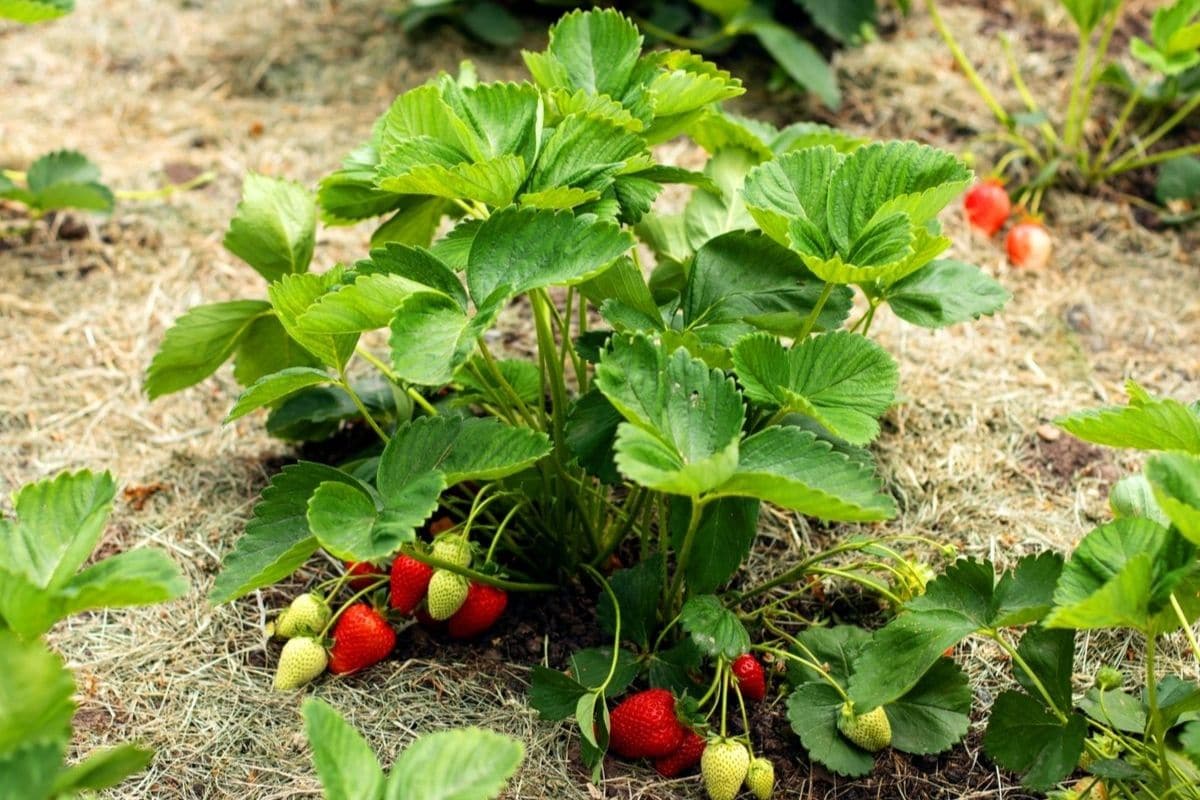
There are three main areas that fall into Zone 9: California, Texas, and Florida. This simple post will help you choose a good strawberry variety for your area if you are a Zone Niner. To find out which Zone you are in, see the Zone Map on this Strawberry Planting Guide.
Jump to:
Zone Nine Strawberries
Growing strawberries in Zone Nine is do-able. The major areas that fall within Hardiness Zone 9 are coastal and central California, much of Florida, and the southern coast of Texas. The desert of the Southwest U.S.A. is also Zone 9, but strawberries are more difficult to grow there, particularly in Nevada. The dry regions require ample amounts of irrigation. Florida and California, however, are well-suited for Zone 9 strawberry plants. A lot of the popular varieties are patented in those two states.
Zone 9 Strawberry Plants for California
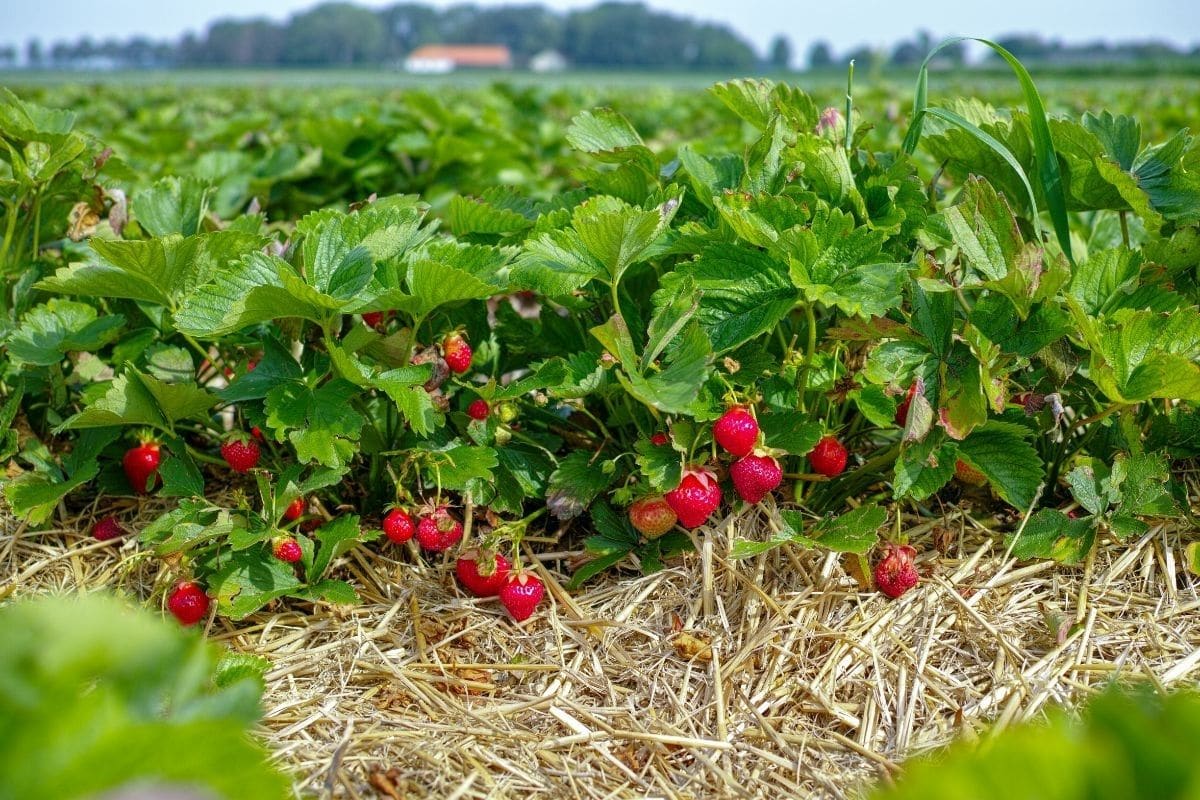
1. Albion – plants are tolerant to changing weather, yield multiple harvests as an everbearer, and produce dark red, tasty strawberries.
2. Camarosa – a short-day junebearer that produces early and has good storage properties.
3. Ventana – produces very early in the season (even earlier than Camarosa). Flavor and shelf life are good.
4. Others: Aromas, Camino Real, Diamante
Zone Nine Strawberry Plants for Florida
1. Sweet Charlie – this variety was developed in the early 1980s in Florida, and it is a real winner. It smells sweet and tastes even sweeter. It also has good disease resistance. (for a profile, click here: Sweet Charlie Strawberry Plants)
2. Other good choices: Strawberry Festival, Treasure, Winter Dawn, Florida Radiance
3. Oldies-but-goodies that will still produce: Selva, Oso Grande
Zone 9 Strawberry Plants for Texas
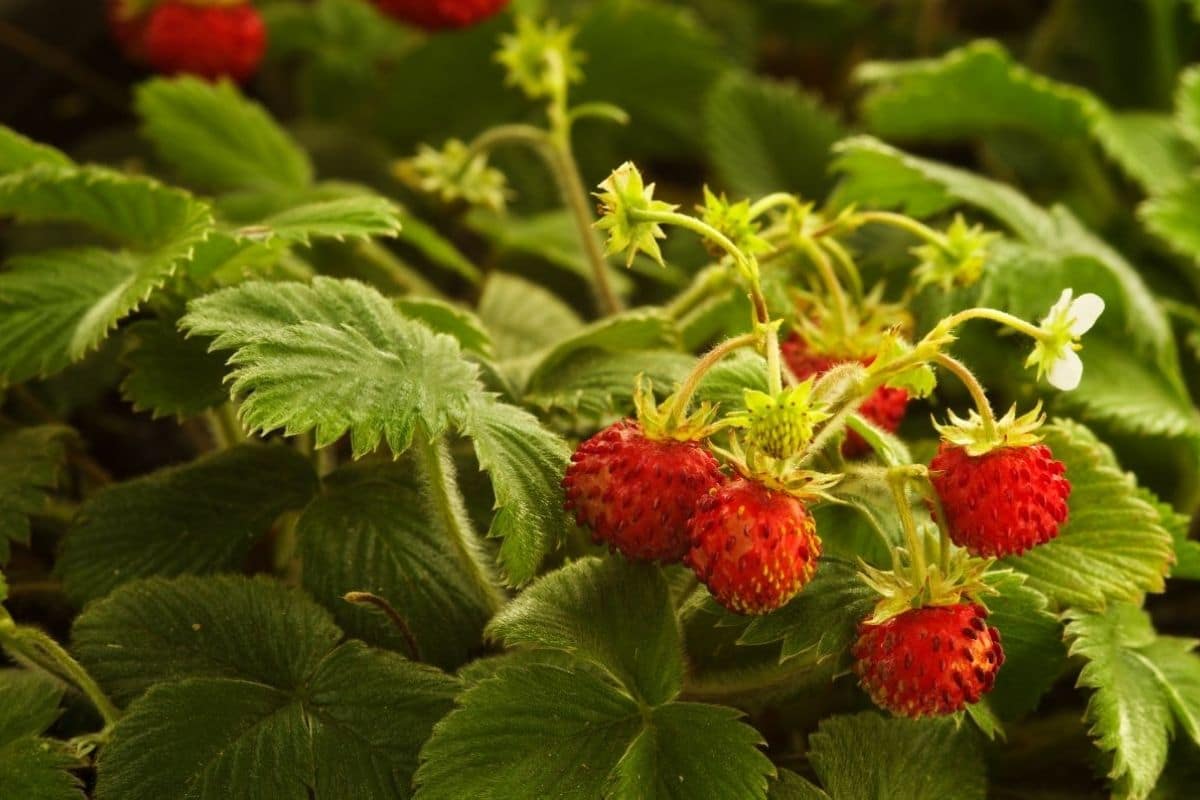
1. Chandler – very likely the best strawberry variety for growing in South Texas. For a profile, click here: Chandler Strawberry Plants.
2. Others: Douglas, Sequoia (both of these varieties will fruit in the early spring).
Growing Strawberries in Zone 9
When it comes to growing strawberries in Zone 9, picking the right strawberry variety is critical. Be sure to refer to the Growing Strawberries reference page for all the how-to as well. A great deal of Zone 9 strawberry growers will treat their berries as an annual instead of a perennial. They plant in the fall and harvest in the next growing season. Tighter spacing is also employed as compared to northern layouts, and the plants are usually allowed to succumb to the heat of the peak summer months.
Living in Zone Nine doesn’t mean you can’t grow your own strawberries. Just pick an appropriate variety and care for your plants well! Get Zone 9 strawberries today!

Bruce says
Which ever bearing strawberries do you recommend for coastal CA(San Francisco)? I have had good success with Tristan, Eclair, Delizz and several others.
Considering refreshing my pots with Festival, Toscana, Eclair, Seascape, Albion and Mara De Bois. The coastal fog is a mitigating factor in both freezes and heat waves.
Tristan growes very well for me and its not even in my zone range technically. We used to be zone 8B but now considered 10B. This makes shopping by zone range very confusing. Thanks
Mary Ward says
If those varieties have proven successful for you, I wouldn’t try to fix something that isn’t broken. If you are looking for some new varieties to add, this piece will probably help: https://strawberryplants.org/strawberry-varieties-by-state/
Barbara says
I am moving to Tampa and want to try growing strawberries. We are a family of two. How many plant should I allow for in my garden? I hope to freeze some.
Thank you
Mr. Strawberry says
Barbara,
Hopefully, this should help. Good luck!
marie says
Why is it so difficult as well as expensive to find bare root strawberry plants for Central Florida at the time they need to be planted? Lowes/ Home depot – lucky to find one plant at $4.99. Degroot sells some appropriate for here packaged in a box, but they were rotted. On line companies mostly do not ship them in the fall, or are out if stock. Rarely can I find Festival or Sweet Charlie, recommended. Am I missing an obvious source?
Christy says
How long do strawberry plants last in zone 9? Do we need to buy new plants every year?
Mr. Strawberry says
Christy,
It depends. Some of the more heat-tolerant varieties can make it as perennials. Most of the commercial cultivators treat them as annuals, however. Good luck!
Olivette fisher says
I live in Brownsville Tx. What type of strawberry would grow well in my area? Thank you.
Mr. Strawberry says
Olivette fisher,
Use this tool. Good luck!
Mary says
I live about 30 miles east of Houston, TX. My husband built me a 6 layer pyramid strawberry tower due to too much clay soil that doesn’t drain well.
Which variety would work best for our area and pyramid container.
Mr. Strawberry says
Mary,
As long as they are watered appropriately, the Chandler variety would likely be a good option for you. Good luck!
Pamela Bourque says
I live about 40 miles north of Lake Charles LA. I have found 30 types of strawberry that would grow well in south Texas, south Louisiana, Mississippi, Alabama, and Florida. Why are you only suggesting 1?
Mr. Strawberry says
Pamela Bourque,
Share your expertise with the rest of us! Which varieties has you proved in your location? Thanks!
Jason Pyktel says
I live in Portland oregon what strawberry hybrids and or early growing and prennial as well strawberry plants can I grow? Where zone 9 & think 9b.
I noticed early girl tomato’s grow early and was hoping same for strawberries.
Mr. Strawberry says
Jason Pyktel,
This should help. Good luck!
Marie Ronald says
Should I be buying everbearing for Central Florida to plant in first part of November? If I bought June bearers, when would they bear in zone 9? I am having trouble finding plants that say zone 9, so is zone 8 good enough? Why don’t the stores such as Lowes carry bareroot strawberries in the late fall if that is when they are planted in Florida?
Mr. Strawberry says
Marie Ronald,
Most commercial growers will use day-neutral varieties for winter growing in Florida, either everbearing or June-bearing. Lowes and other big-box stores won’t carry them because most gardeners won’t buy them in the fall and won’t be successful if they did. However, it can be done! Whichever variety you choose, just make sure it is specified as a day-neutral variety. Otherwise, it won’t grow well for you. Good luck!
Lisa says
I live in a suburb of Phoenix, AZ and want to know what everbearing strawberries will grow in this area. I read the above, but they don’t seem to say they grow in the low desert in AZ
Mr. Strawberry says
Lisa,
You’ll likely have to give them extra attention in your location due to the heat (and they might not thrive, regardless), but if you want to give it a go, you can try Ozark Beauty and/or Quinault (they are both everbearing). Good luck!
NMarie says
Without reading message, after message and still not finding the info I need – I would like to know when strawberries ripen in zone 9 Florida. Some of your posters say they can’ take the heat of summer and die, then others posters state June bearers are kept as annuals and bear the following year. I would like to be able to pick berries sometime between November and April. Is this possible?
Mr. Strawberry says
NMarie,
Many Florida growers plant their crops when the weather is still cool/colder in late winter and harvest either in March or April. By the time full-blown summer temperatures hit, strawberries don’t do as well in Zone 9. Good luck!
Stephen says
I’m growing Ozark in zone 9a/9b in winchester, ca. I’ve had basically no crop. I started them from bare root in feb, now its august and nada! They grow well and I’ve protected them from bugs and water them so that they wont dry out in the heat of the day. What time of year should I expect crops from the ozark?
Mr. Strawberry says
Stephen,
The first year can be taxing on the strawberry plants. You might get a small crop as the weather cools, but I’d look for your best crop next spring. Good luck!
Art Cummings says
I live in zone 9 in the Central Valley of California. I see from several websites that for hot climates like zone 9 it is best to do an early fall planting so it will be harvested in early winter. But it is recommended to harvest when temperatures are between 60 and 80. Winters in the Central Valley regularly average in the 30’s at night and mid 50’s in the day. So it seems to me strawberries would not do well with planting schedule. Please advise.
Mr. Strawberry says
Art Cummings,
Planting short-day June-bearing varieties as annuals is how most commercial operations grow strawberries. They treat them as annuals. By planting plug plants in the fall, they are able to set and harvest a crop as you describe. However, for the home gardener, it is best to plant either bare-root or plug plants and expect a harvest the following year. More here. Good luck!
Thomas Glenn says
We live in Las Vegas, NV. What is the best strawberry plant is best suited for zone 9 ? We will be planting in pots and using starter plants.
Any info will be welcomed.
Tom
Mr. Strawberry says
Thomas Glenn,
See this for Zone 9 Strawberries. Good luck!
Doug Bashford says
Here in HOT Fresno CA, (fruit basket of America,) I know of nobody who will buy coastal strawberries while our local fruitstand Chandlers or Albions are still available. The firmer, better shelf-life Albions don’t have the superior taste nor deep-red color of the delicate Chandlers, but sadly, seem to be gaining favor among the growers. Every spring our local paper even runs an article telling us where to find the shifting local strawberry stands!
Mr. Strawberry says
Doug Bashford,
Thanks for the information!
Heather says
Thank you for the great information on this site. I am planning to grow hydroponic strawberries in a tower and am wondering what varieties would be best. We live in Southern California in Zone 9 and have trouble with powdery mildew in other plants.
Straw Berry says
Heather,
You can find better warm weather varieties among these. Check the strawberry varieties page for others that have resistance/tolerance to powdery mildew. That pain in the neck, in particular, can be difficult to get rid of in wet conditions. Good luck!
liz says
Hello , I live just south of Sacramento, ca. I grew strawberries in some 8″ raised beds yr’s ago and stopped because I just could not keep the ants out of the center crowns,and they had other problems. Last spring I had the great luck to find in a garage sale a heavy duty welded strawberry tree like construction that holds 12″ by 12″ black pots (12 of them) and it is on wheels, I can rotate it for good sun, can push it up the patio to a warm corner against the house and cover it with a quilt in the recent frosts. I carefully mixed the soil to meet their needs and picked off the flowers in the summer and I am getting some winter berries, that are of real good size that ripen slowly , are sweet enough and I like how they are kind of crunchy. Just had to tell someone how great it is.
1. In this area when do I start feeding them, how and what? I like to try to limit my use of nitrogen.
2. Many of the berries I got in the late summer and fall when I let the plants bear have a soft texture that ruins them for me. I have Sequia, Albion and Quinalt, varieties that the local nursery says he gets from the local strawberry farmers. Is the soft texture always going to be when the whether is warm? And what variety should I plant when I change out my plants after a few yr’s. I am excited about the berries I will get in the early spring. Thank you so much. I wish there was a site like this for every different thing I grow in zone 9.
Straw Berry says
liz,
As to your questions, see here for help on how to grow strawberries, and as for the variety to choose for your location, see this post: Zone 9 Strawberries. Good luck!
Coni Lucas says
I have been purchasing strawberries in a small town east of Sarasota fl named Arcadia. These are by far the most beautiful, sweet, deep red ALL the way to the green part. No white at the top on 90%of them. I know they are grown on a Mennonite farm but can’t get any other info.
Do you have any idea what the name is of this type is
Thank you
Straw Berry says
Coni Lucas,
I don’t have any way of telling which variety they are growing. You can always check with the folks from whom you get them to see if they know. If they do well in Florida, it is likely that they are one of the recommended Florida varieties. Good luck!
Aung Myint says
Hi, seems like u can help me for advice. I live in mountain area which is sunny in morning upto 3pm. After 3pm, it’s misty. Temperature is 20’c lowest and 27’c highest. I wonder if strawberry can be grown in my area with mist and which variety is suitable for my area. Thanks in advance.
Straw Berry says
Aung Myint,
It sounds like your climate is not optimal for growing strawberries. The mist and warm temperatures will likely create an environment suitable to the pathogens that plague strawberry plants. If you try, I’d recommend choosing varieties that are highly resistant to fungal infections. But, even still, I think it will be hard to sustain strawberries in your location. Sorry!
Javier says
I wish to plant strawberries myself but I live in Puerto Rico. If the southernmost tip of Florida is considered zone 10 then I guess so is Puerto Rico. Is this correct? If so then what strawberry varieties are good for this zone if any?
Mr. Strawberry says
Javier,
I’m not familiar with the different growing zones in Puerto Rico, but I do know that it is generally considered too warm to successfully grow strawberries. If you try it, you might want to try the Chandler variety that has a history of doing acceptably in hotter climates. Good luck!
m wolf says
Thinking of growing strawberries. I live just north of Tampa FL. My back yard borders a 4 acre blueberry farm and on cold evenings when they water to protect the blueberries. I can get a layer of ice on my truck windshield the mist from 4 acres causes me to get ice when others around me don’t . will this help me to protect the plants or hurt them ?. Not sure if I should plant in the ground or in planters that can be moved or covered .
Mr. Strawberry says
m wolf,
The blueberry farmers are actually using a technique to protect their plants. It also should not damage strawberries. Good luck!
Will says
I’m in south central texas, I planted 30 plants last fall they did real well thru winter and spring but are starting to die will they come back from the roots?
Mr. Strawberry says
Will,
No, not if they die. Sorry!
Organicfoodie says
This website is very helpful. I recently purchased a book on biodynamic farming, which explains herbs you can plant near strawberries to help them thrive. Try borage!
Mr. Strawberry says
Organicfoodie,
Indeed! You can read more about that here: Companion Planting Strawberries.
Olivia says
I love this website!!! Thanks so much for providing these tips.My first strawberry garden went horribly wrong then,I went to this website and I grew another garden. They turned out perfect. Thanks Again
Mr. Strawberry says
Olivia,
I’m glad everything went well on the second go-around, and I’m glad we were able to help! Thanks for the kind words.
Lady Bren says
I have spent the last hour or so reading many of the posts on this site ~ thank you so much.
We currently have 5 healthy plants in a topsy-turvy (wish I had read that article a few weeks ago) and had hoped to be able to move them to a traditional bed for future use. We live in NE florida so if I’m reading things properly there’s no way for us to have these plants as perennials?
Mr. Strawberry says
Lady Bren,
You’re welcome, glad you have benefited! It is not impossible to keep strawberry plants as perennials in Florida. It just takes a bit more effort. The FL temperatures often don’t get cold enough to induce a lengthy dormancy in the plants. This shortens their lifespan and stresses them, making them more susceptible to diseases as well. Being in NE FL, you might be able to do it. They will probably do better in a traditional bed than in the planter. Once this growing season is over, you may want to try transplanting them and see how it goes. Good luck!
ed says
what bout alpines in texas i got seedlings sprouting right now ive been through this site alot but had never seen that zone nine needs to plant from dec to feb so dang can i put them out now or wait til they have some wat of a crown and some true leaves? im supp. them with rhizotonic made by canna. they’ve all sprouted within the last few days so hopefully there growin at a fast pace im gna transplant into a kiddie pool fill with compost and organic soil along with organic supplements .then do i use mulch or straw
Mr. Strawberry says
ed,
Alpines might have some difficulty in Texas. They prefer milder climates. But, to try, go ahead and get them in the ground and mulch with clean straw or pine needles. Good luck!
Dan says
I live on the West Coast of Florida. Technicaaly in Zone 10 but close to Zone 9. I have a shaded residential lot and want to grow Strawberries in a stacked container so I can move to the sun as needed. I would like a recomendation on a variety, when to plant and the mix of soil. Can you help ?
Thanks
Dan
Mr. Strawberry says
Dan,
Most commercial growers in Florida use the plasticulture method with short-day June-bearing varieties. Soil and planting for the home gardener are discussed on the Growing Strawberries reference page. Good luck!
Bob says
I am getting ready to start my first strawberry plants. I plan to grow them hydroponically, not sure what specific system yet but most likely a drip tower using coconut fiber as the growing medium. What cultivars do you suggest for South Florida (an hour south of Tampa)? We sometimes get one or two overnight frosts a year at my house, only half mile to the gulf of mexico. I think I want an everbearing or day-neutral variety.
Mr. Strawberry says
Bob,
The best strawberry varieties for use in hydroponic or aeroponic systems are the day-neutral varieties. Two of the best day-neutral strawberry varieties are Tribute and Tristar. But, as far south as you are, you might be able to get by with most varieties, although the typical short-day June-bearing varieties grown commercially in your area will not produce for as long as the day-neutral varieties will. Good luck!
Lysa says
I also planted strawberries from seed obtained from store bought fruit. I have several sprouts and they are indeed taking forever to grow. Is there an optimal temperature I should try to maintain? Also, I have noticed that my leaves do not resemble the ones shown in most strawberry plant pictures. Why is this? You can view my sprout and its leaves at http://lysasgarden.blogspot.com/2012/01/strawberry-sprout-pictures.html though these pictures only show 1 true leaf and the rest are the cotyledons.
Mr. Strawberry says
Lysa,
Good news! There is nothing apparently wrong with your strawberry seedlings at all. Strawberry seedlings usually do fine at room temperature. They are temperate and can usually do well even outside in the late winter or early spring, as long as the temperature isn’t too cold. The leaflets of the seedling will continue to grow and mature until they do resemble other mature strawberry leaflets. Just be patient! If you keep them alive and growing, they will end up looking like most other strawberries. Good luck!
jo says
Thank you for answering my post. Knowing it takes longer by seed than by runners or buying already established potted plants makes me feel better. Since I asked the question I have noticed that most of the plants have grown some and some even produced a few runners, yet I feel I’m far behind in my progress. (I will by no means be ready for the Florida Strawberry Festival in Feb. which is a very big event in Tampa along with the State Fair.) Again thank you for answering back. I feel perhaps I’m on the right track and will see my strawberry patch come to bloom in the spring or early summer. I appreciate your time.
jo says
I’m growing strawberry plants from seeds I extracted from a store bought strawberry in july of 2011. I put the seeds in the freezer for about 3 to 4 weeks, then into starting peat pots. I transplanted about 60 of the seedlings in my strawberry garden in late october and early november. They are growing, but very slowly. I had to put screening over them at night to keep wild life from eating them and that seemed to work, yet I’m concerned about how slow they seem to be growing. I fertilized the ground weeks before planting with 10-10-10, and I water everyday. Could I be over watering them, or could they be in a stage of dormancy. I’ve never grown strawberries before so I know very little about the subject. I live in central Florida where planting in the fall is suggested, yet this slow growth concerns me and I really don’t know what time dormancy occurs here. This time of year nights can get down in the 40’s them warm up into the 70 and 80’s. Am I doing something wrong or is this natural growth. This started as an experiment to see if I could do this from seeds I extracted myself, now I’m hooked. Please advise me about this subject and the future requirements to seed this venture come to bloom. Thanks for your time.
Mr. Strawberry says
Jo,
Most strawberry varieties are hybrids and will not grow true from seed. See the Strawberry Varieties page and the Strawberry Seeds page for more information on that. Also, strawberry plants started from seed do take much longer to grow than strawberry runner plants. So, they are probably growing just like they should. Strawberry seedlings are truly tiny when they germinate and do take quite a while to establish themselves.
Matt Tyler says
I am growing my first strawberries I got 4×8 raised beds and I’m in zone 9 I’m in North Florida and Jacksonville Duval County and I bought I bought ones that were for high heat but I also got a couple specialty kinds is it all right to enter mix those strawberries in the same bed or should I keep them separated
Melissa says
Good question, as I’m currently considering buying several of each type that my local nursery offers, to see which do best. I suspect that we should be okay doin this, since we will not be trying to save their seeds.
maurice verschell says
Just bought a strawberry plant in St Augustine last week. It was doing fine for a week, gorgeous green large leaves and some fruit. Today most of the leaves just wilted (drouped). I gave it adequate water. What are the problems
Mr. Strawberry says
maurice,
It is hard to say for certain. If the plant was started and grown indoors and just recently placed outdoors without “hardening” the plants by exposing them to direct sunlight incrementally, the exposed leaves could have been killed. If this is the case, more should grow from the crown to replace the dead leaves. This taxes the plant somewhat, but it should survive. If your plant is afflicted by one of the many strawberry diseases or pests (see the Strawberry Plant page for more details), it might be on its way to meet the plant grim reaper. A good many nurseries and stores that sell live plants have a guarantee that the plants they sell will live for at least a certain period of time. If your plant does indeed die, see if you can get a refund or exchange from the nursery from which it was purchased.